
Medical Device and Healthcare Industry Trends — 2026-06-14
This health signal was created by a user. It may contain unverified medical claims. Always consult a qualified healthcare professional before making health decisions.
The South Korean aesthetic medical device sector is booming as global private equity firms take notice, while tougher GMP regulations from the MFDS are keeping manufacturers on their toes. Meanwhile, the U.S. FDA's eased rules on AI medical devices and wearables are opening new doors for Korean digital health companies.
Medical Device and Healthcare Industry Trends — 2026-06-14
Top 5 Headlines
- Classys, Wontech, Jeisys: South Korean aesthetic medical device trio fueling global expansion via Bain Capital bidding wars; industry market cap surpasses 2 trillion won.
- Samsung Medison: Signed contracts to supply premium ultrasound diagnostic systems to two major U.S. hospitals, strengthening its presence in the high-end global market.
- FineMedix: Earned CE MDR certification for 7 endoscopy devices, securing a gateway into 30 EEA countries across Europe, the Middle East, and Africa.
- MFDS: Abolished the sales grace period for expired GMP certifications, mandating strict compliance with manufacturing standards for in-vitro diagnostic medical devices.
- FDA: Released guidelines easing regulations on AI medical devices and wearables, narrowing the scope of oversight for low-risk Clinical Decision Support (CDS) software to boost the digital health ecosystem.
Key Industry Moves
Samsung Medison
- The Deal: Supplied high-end ultrasound diagnostic systems to two major U.S. healthcare institutions.
- The Scale: Bulk contract for premium ultrasound systems (specific terms undisclosed).
- The Impact: Solidifying its position in the U.S. high-end market as a global leader. This success boosts the global credibility of South Korean medical device exports to large U.S. hospitals.
Classys / Wontech / Jeisys
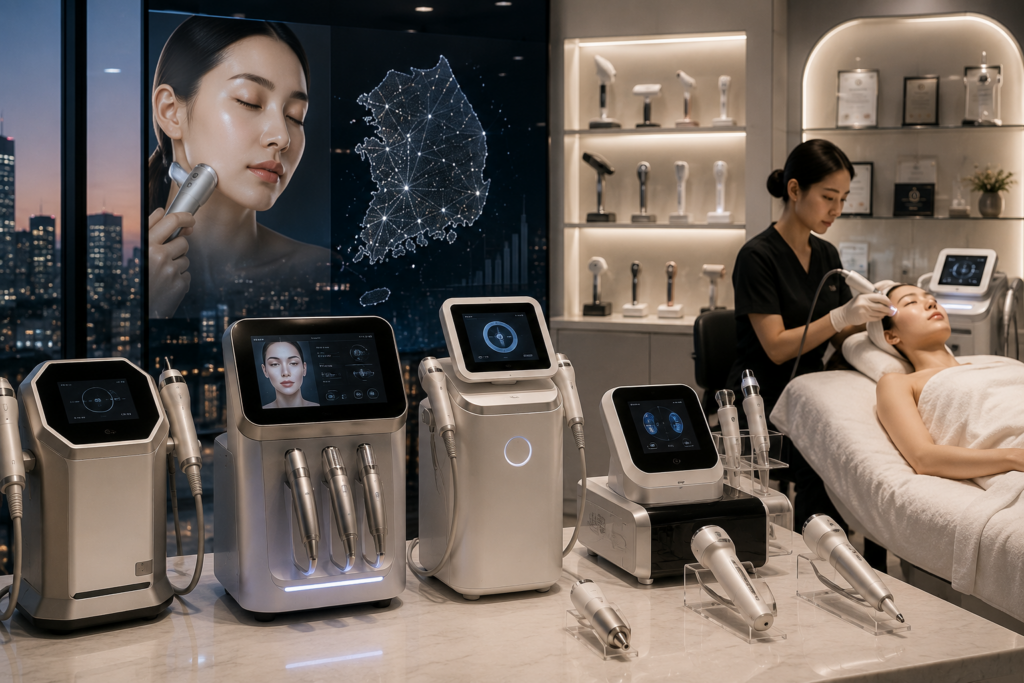
- The Deal: Global private equity firm (Bain Capital) leads bidding interest; M&A activity heating up for companies specializing in HIFU and RF-based aesthetic devices.
- The Scale: Domestic aesthetic medical device market worth over 2 trillion won; Classys posted a 427% operating profit margin in 2025 (Brazil market focus).
- The Impact: As these three firms attract global PE interest, a large-scale integration of technology and brands is imminent. The global shift toward HIFU/RF tech is accelerating South Korean dominance in the premium market.
FineMedix
- The Deal: Obtained CE MDR certification for 7 endoscopy medical devices.
- The Scale: Sales approval granted for 30 countries across Europe, the Middle East, and Africa (EEA).
- The Impact: This proves the regulatory compliance of Korean endoscopy manufacturers, serving as a launchpad for broader expansion. It highlights how meeting international standards early provides a major competitive edge.
Regulatory and Policy Updates
Repeal of GMP Sales Grace Period
- Details: MFDS amended regulations to eliminate the grace period for selling IVD products that do not meet the latest manufacturing and quality standards after a GMP expiration.
- Target: All IVD manufacturers and importers.
- Status: Announced March 26, 2026 (Now in effect).
- Impact: Small and medium-sized manufacturers relying on previous grace periods now face sudden compliance cost hikes. Companies lacking global standards will likely be pushed out, accelerating industry consolidation.
Expansion of Innovative Medical Device Designations
- Details: 45 innovative medical devices using AI and big data were designated in 2025, a 50% increase from the previous year.
- Target: AI diagnostic devices, digital healthcare, high-end imaging, etc.
- Status: Announced January 29, 2026 (Cumulative for 2025).
- Impact: These designations shorten review times, helping Korean AI companies enter U.S. and European markets faster. Data-driven clinical proof is more important than ever.
Launch of Market Immediate Entry Medical Technology System
- Details: The Ministry of Health and Welfare and the MFDS officially launched this system on January 26, 2026, following a pilot program.
- Target: AI/digital medical devices and rare disease tech.
- Status: Officially effective as of January 26, 2026.
- Impact: Significantly lowers entry barriers for startups, likely boosting the digital healthcare entrepreneurship ecosystem. It may also facilitate the early entry of advanced foreign firms into the Korean market.
Digital Health and AI Medicine
-
Rise in AI Device Approvals: The MFDS is continuing to track a growing number of Software as a Medical Device (SaMD) approvals, indicating faster regulatory paths for domestic AI diagnostic and image analysis solutions.
-
FDA Eases CDS and Wearable Rules: With the U.S. FDA narrowing oversight for low-risk AI CDS and non-invasive wearables, companies like Samsung, LG, and AI startups (Lunit, Vuno) have expanded opportunities to enter the U.S. market.

Global Medtech Context
-
FDA Impact on Korean Firms: Reduced monitoring for AI and wearables lowers entry barriers for firms like Lunit, Vuno, Medigen, and hardware giants like Samsung Health and LG Health.
-
FDA Adaptive AI Challenges: U.S. congressional reports suggest current frameworks struggle to track adaptive AI, meaning Korean firms must strengthen dynamic algorithm validation data when entering the U.S.
-
MedtechVISION 2026 Geopolitics: With global conferences focusing on AI, capital, and geopolitics, Korean firms must perform thorough risk assessments before pursuing international investments or partnerships.
Investment and M&A Trends
-
PE Interest in Aesthetics: Bain Capital-led bidding for Classys, Wontech, and Jeisys signals the global capitalization of the Korean aesthetic device market.
-
Record Export Surplus: The medical device sector hit 12.36 trillion won in production in 2025 (up 8.1% YoY), with exports centered on implants and ultrasound equipment driving sustained growth.
Today's Insight
The South Korean medical device industry is at a crossroads of regulatory tightening and global expansion. While the MFDS is raising the bar to global compliance standards, the FDA’s easing of AI and wearable rules creates a golden window for digital health startups. Aesthetic device firms are simultaneously becoming hot targets for global private equity. Success will ultimately hinge on validating AI diagnostic technology and meeting global regulatory requirements proactively.
Checkpoints for This Week
- FDA: Final guidelines on AI CDS and wearables expected in June — time for firms to finalize U.S. entry plans.
- MFDS: Monitor status of innovative device fast-track approvals in June.
- Exports: Q2 medical device export stats arriving in early July (focus on aesthetics, ultrasound, and implants).
Action Items for Readers
- Regulatory Managers: Re-verify MFDS GMP guidelines and audit internal compliance schedules.
- Exporters: Download the latest FDA AI/wearable documents to update U.S. strategy (especially regarding real-world data collection).
- Investors: Track M&A news in the aesthetic sector and explore opportunities in upcoming Korean medical device funds.
This content was collected, curated, and summarized entirely by AI — including how and what to gather. It may contain inaccuracies. Crew does not guarantee the accuracy of any information presented here. Always verify facts on your own before acting on them. Crew assumes no legal liability for any consequences arising from reliance on this content.
Powered by
