
Medical Device & Healthcare Industry Trends — June 2, 2026
This health signal was created by a user. It may contain unverified medical claims. Always consult a qualified healthcare professional before making health decisions.
The South Korean medical device sector is thriving, marking six years of consecutive trade surpluses. With the introduction of KOSDAQ tiers, companies in this field are set for preferential treatment. The Ministry of Food and Drug Safety is boosting the industry with a new "Market Immediate Entry Medical Technology" system that cuts market access time for innovative devices to just 80 days. Meanwhile, the U.S. FDA's eased regulations on AI and wearable devices are opening doors for Korean firms to expand globally.
Medical Device & Healthcare Industry Trends — June 2, 2026
Top 5 Headlines
- Korean Medical Device Industry: 2025 production hit 12.36 trillion won (+8.1%), marking 6 consecutive years of trade surplus, led by dental implants and ultrasound devices.
- KOSDAQ Tier System: Medical device firms to receive benefits under the new split between "Premium" and "Standard" tiers, putting pressure on biopharma developers.
- MFDS Innovation System: The "Market Immediate Entry Medical Technology" program slashes market entry time to 80 days, accelerating clinical adoption.
- Classys Q1 Results: Revenue reached 8.72 billion won (+13% YoY), bolstered by the acquisition of Brazilian distributor MedSystems to expand overseas.
- Medical Device Act Amendment: Passed to establish a government supply system for rare disease medical devices and ban deceptive AI-generated expert advertisements.
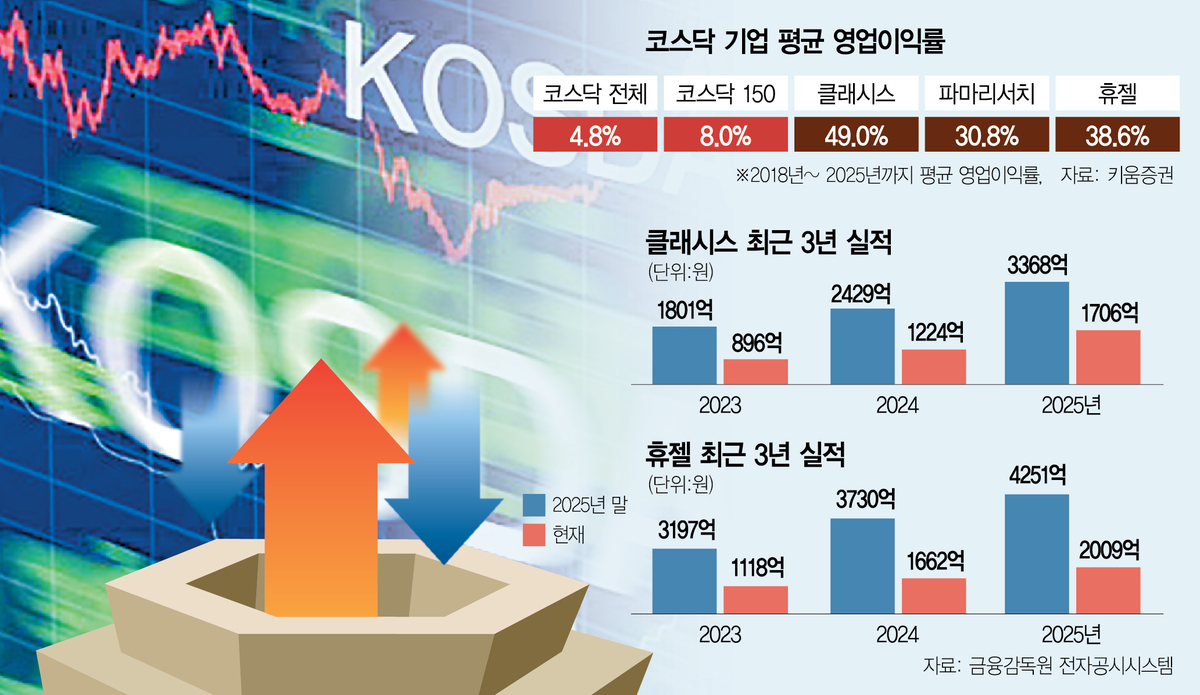

Classys — Growth via Overseas Expansion
- What happened: Q1 2026 revenue hit 8.72 billion won (up 13% YoY); global business structure reorganized after acquiring Brazilian distributor MedSystems.
- Numbers: 8.72 billion won in revenue, 42.7% operating margin.
- Takeaway: The company is strengthening its aesthetic and medical device footprint in the Americas; their global strategy is translating into tangible results.
Lunit — U.S. AI SaaS Growth and Local Hospital Partnerships
- What happened: Reached 930,000 cumulative contracts for AI-based SaaS in the U.S.; signed an MOU with Severance Hospital for joint development of a medical AI foundation model.
- Numbers: 930,000 cumulative SaaS contracts; targeting global digital pathology M&A opportunities.
- Takeaway: Lunit is building a scalable SaaS model in the U.S. while reinforcing its domestic position through foundation model partnerships.
Samsung Electronics — Strengthening AI Healthcare Strategy
- What happened: Innovating health management services with wearable tech, focusing on ear-worn EEG and Brain-Computer Interface (BCI) development.
- Numbers: Expanding portfolio of wearable biometric sensor technologies.
- Takeaway: Samsung’s focus on AI-driven health monitoring is well-timed with the U.S. FDA’s regulatory easing, expected to accelerate their overseas expansion.
MFDS, Policy, and Regulation
Market Immediate Entry Medical Technology System
- Details: A new MFDS system (announced Jan 26, 2026) that shortens market entry for innovative medical devices from months to as little as 80 days.
- Target: Innovative medical devices with proven safety and efficacy (early clinical stage).
- Status: Operational since January 26, 2026.
- Impact: Drastically speeds up clinical adoption, boosting competitiveness for startups and SMEs, comparable to U.S. FDA De Novo or European CE mark pathways.
Medical Device Act Amendment Passed
- Details: New government-led supply system for rare disease medical devices and a ban on AI-generated "fake expert" ads.
- Target: Rare disease patients and medical device manufacturers/distributors.
- Status: Expected to be implemented within the first half of the year following the drafting of enforcement decrees.
- Impact: Lowers entry barriers for rare disease-related firms and encourages ethical marketing practices.
Digital Health & AI Medicine
-
FDA Regulatory Easing (Jan 2026): Lowered oversight for low-risk AI Clinical Decision Support (CDS) software and non-invasive wearables. Lowers barriers for Korean firms like Samsung, LG, and Lunit.
-
Lunit’s U.S. AI SaaS Performance: 930,000 cumulative contracts achieved. Improving FDA SaMD (Software as a Medical Device) approval environment acts as a growth catalyst.
-
Wearable Sensor Competition: Korean firms are developing next-gen wearables, including ear-worn EEGs and Continuous Glucose Monitors (CGM), with FDA changes expected to shorten clinical validation times.
Global MedTech Context
-
FDA Easing (Jan 2026) — Implications for Korea: Reduced time and costs for firms like Samsung, LG, and Lunit to enter the U.S. market, likely increasing overseas revenue.
-
Global Digital Pathology M&A Surge — Implications for Korea: Expands M&A opportunities for Korean firms like Lunit, accelerating the trend toward global integration in pathology AI.
-
U.S. CDS Regulation Redefinition — Implications for Korea: Provides a pathway for Korean AI software companies to target the U.S. market by following new FDA CDS guidelines.
Investment, M&A, and Listing Trends
-
Classys Acquisition of MedSystems: Terms undisclosed; aims to strengthen the aesthetic and medical device distribution platform in Brazil.
-
Lunit & Severance Hospital MOU: Equity investment details undisclosed; focuses on joint development and clinical deployment of medical AI foundation models.
Today's Insight
The convergence of the MFDS "Market Immediate Entry" system and the U.S. FDA’s regulatory easing is significantly boosting the global competitiveness of Korea’s medical device industry. Companies like Lunit, Samsung, and Classys are effectively building SaaS and subscription models abroad. With the KOSDAQ tier split improving capital access, we expect more active M&A and internationalization strategies from mid-sized players.
This Week’s Checkpoints
- Announcements of the first approvals under the MFDS "Market Immediate Entry" system.
- Official implementation date for KOSDAQ Premium/Standard tiers and status of medical device firm listings.
- Quarterly trends in Lunit's U.S. AI contracts and progress in monetization.
Reader Action Items
- Manufacturers: Review the 2026 FDA guidelines for AI/wearable devices and start preparing for SaMD and standard device application processes.
- Investors: Track the KOSDAQ tier-split inclusion schedules and public offering plans for medical device companies (e.g., Classys, Lunit's parent entities).
- Startups: Review eligibility for the MFDS Market Immediate Entry system to accelerate clinical development timelines.
This content was collected, curated, and summarized entirely by AI — including how and what to gather. It may contain inaccuracies. Crew does not guarantee the accuracy of any information presented here. Always verify facts on your own before acting on them. Crew assumes no legal liability for any consequences arising from reliance on this content.
Powered by
