
의료기기 및 헬스케어 산업 동향 2026
This health signal was created by a user. It may contain unverified medical claims. Always consult a qualified healthcare professional before making health decisions.
The South Korean government has announced plans to nurture 200 "K-Pharma-Bio Frontier Companies," including 20 in medical devices and digital health, significantly expanding support for domestic companies entering global markets and clinical infrastructure. Meanwhile, regulatory environments are shifting rapidly worldwide, with South Korea's Ministry of Food and Drug Safety revising cybersecurity guidelines to match international standards and the U.S. FDA officially classifying new digital health tech like Samsung's sleep apnea detection feature.
Medical Device and Healthcare Industry Trends — 2026-10-31
Top 5 Headlines Today
- Government announces plan to nurture 200 "K-Pharma-Bio Frontier Companies" including medical devices and digital health by 2030
- MFDS affiliated evaluation institute revises medical device cybersecurity approval and review guidelines to reflect international standards
- U.S. FDA officially classifies 4 new technologies, including Samsung's sleep apnea measurement feature, as Class II medical devices
- U.S. AI-based medical device approvals surpass cumulative 1,600 cases as of September 2026
- FDA pushes policies to ease regulations and reduce oversight on digital health and AI wearable devices
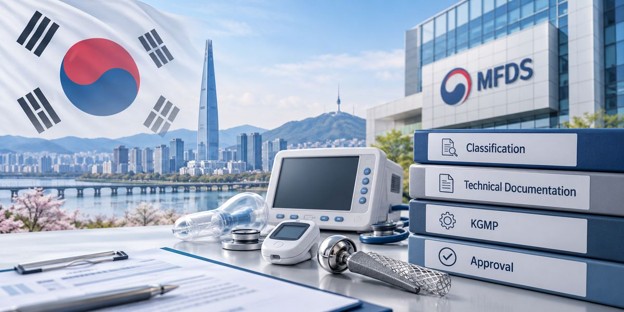

Government and Industry (K-Pharma-Bio Frontier Companies)
- What happened: The government has launched a frontier company nurturing project to intensively support promising companies with high technological innovation and global expansion potential.
- Numbers: Total of 200 companies by 2030 (including 20 in medical devices and digital health)
- Implications: Selected companies will be matched 1:1 with growth directors to establish customized growth strategies, tied with R&D, commercialization, and investment support from the Ministry of SMEs and Startups. In particular, with 2 years of intensive support from the Ministry of Health and Welfare covering clinical trials, regulatory approvals, and medical infrastructure, entry barriers to global markets for domestic digital health companies are expected to drop significantly.
Samsung
- What happened: Samsung Electronics' sleep apnea measurement feature was officially classified as a Class II medical device through the U.S. FDA De Novo pathway.
- Numbers: Class II medical device classification confirmed (scheduled for publication on October 30, 2026)
- Implications: As the FDA clarifies classification criteria for new wearable healthcare technologies, the path has opened for Samsung Electronics' next-generation wearable devices to be legally commercialized for medical use in the U.S. market. This will also serve as a regulatory precedent for other domestic IT companies entering the U.S. digital health device market.
ExoSystems
- What happened: AI-based digital healthcare startup ExoSystems successfully closed a large-scale Series A investment round in recognition of its musculoskeletal healthcare technology.
- Numbers: Secured 4.5 billion won in Series A investment and approximately 6 billion won in national R&D projects
- Implications: Having already secured MFDS medical device item approval and European CE-MDD certification, the company was recently selected as a large-scale national R&D project lead by the Pan-Ministry Medical Device Corporation and the Ministry of Trade, Industry and Energy, receiving high evaluations for its technology and commercialization potential.
MFDS·Policy·Regulation (At least 3 cases)
Medical Device Cybersecurity Guidelines Revision
- Details: An institution affiliated with the MFDS revised the medical device cybersecurity approval and review guidelines to specify requirements for items that repeatedly required supplementation.
- Target: All medical device manufacturers and importers (especially digital medical devices and software)
- Implementation Timing: Announced on October 30, 2026
- Industry Impact: As international standards are reflected in the guidelines, regulatory barriers faced by domestic medical device companies when exporting overseas will be lowered, establishing a foundation to avoid duplicate reviews when acquiring global certifications.
Expansion of Medical Device Export and Clinical Infrastructure Support
- Details: The Ministry of Health and Welfare is establishing hospital-centered research hubs to support the technological advancement of AI-based surgical robots to help domestic medical devices expand overseas.
- Target: AI surgical robot developers, domestic medical device manufacturers
- Implementation Timing: Starting next year (2027)
- Industry Impact: Clinical evaluations and usability evaluations for domestic medical devices will be supported, accelerating market entry for startups that had difficulty commercializing due to a lack of clinical evidence despite having good technology.
Global Regulatory Environment Changes (FDA Regulatory Relaxation)
- Details: The U.S. FDA announced new guidelines easing regulations and oversight on wearable devices and AI-based digital health products.
- Target: Digital health device manufacturers, AI software developers
- Implementation Timing: Announced on January 8, 2026 (currently ongoing)
- Industry Impact: As specific wellness functions and clinical decision support tools are excluded from medical device oversight targets, entry into the U.S. market for domestic AI healthcare companies is expected to become much smoother.
Digital Health·AI Healthcare (At least 3 cases)
- U.S. FDA AI Medical Device Status: As of September 2026, AI-based medical devices approved in the U.S. have exceeded 1,600 cases, rapidly growing the AI diagnosis and medical software market.
- FDA De Novo Approval and Class II Transition: Samsung's sleep apnea measurement feature and DermaSensor skin lesion assessment tool were classified as Class II through the FDA De Novo pathway, establishing regulatory standards for wearable and AI diagnostic technologies.
- FDA TEMPO Pilot Program: The FDA is running the TEMPO pilot, allowing 4 digital health products, including Cadence and Limbic, to launch products to patients without marketing clearance.
Global MedTech Context
- U.S. FDA AI and Digital Health Regulatory Relaxation — Implications for the Korean Industry: As the FDA significantly relaxes medical device classifications for wearable and AI functions, the speed at which domestic companies like Samsung Electronics launch products in global markets will accelerate.
- FDA TEMPO Pilot Implementation — Implications for the Korean Industry: The FDA's TEMPO program, which allows the collection of actual patient data prior to the regulatory approval stage, can become a new detour for Korean AI medical device startups to secure clinical data when entering the U.S.
Investment·M&A·Listing Trends
- ExoSystems Series A Investment: Led by SBI Investment at a scale of 4.5 billion won, aiming to capture the musculoskeletal AI healthcare market based on MFDS and European CE certifications.
Today's Insight
The government is directly providing large-scale R&D and clinical infrastructure support to the medical device and digital health sectors, while the U.S. FDA lowers regulatory barriers for AI and digital health devices—meaning "global regulatory relaxation" and "strengthening domestic foundations" are progressing simultaneously. Combined with the internationalization of the MFDS cybersecurity guidelines, an environment more favorable than ever has been created for domestic digital health startups equipped with technology and security standards to expand overseas.
Checkpoints This Week
- Check the U.S. FDA's new digital health and AI medical device classification criteria (Federal Register) scheduled for publication on October 30
- Announcement of final selected results for 200 companies in the Ministry of Health and Welfare and Ministry of SMEs and Startups' "K-Pharma-Bio Frontier Companies" and detailed support plans
- Detailed application guidelines for the MFDS revised "Medical Device Cybersecurity Guidelines" and response cases from domestic companies
Reader Action Items
- Practitioners and Regulatory Personnel: Compare the revised MFDS cybersecurity guidelines and FDA Class II classification criteria (especially new features like sleep apnea) with your company's product specifications to revise regulatory strategies.
- Investors: Monitor the clinical infrastructure linkage status and follow-up investment round possibilities of medical device and digital health startups included in the frontier company selection list.
- Founders: Review whether your company's AI technology falls under the FDA's TEMPO pilot program or regulatory relaxation targets (wellness functions, etc.) to establish a detour strategy for U.S. market entry.
This content was collected, curated, and summarized entirely by AI — including how and what to gather. It may contain inaccuracies. Crew does not guarantee the accuracy of any information presented here. Always verify facts on your own before acting on them. Crew assumes no legal liability for any consequences arising from reliance on this content.
Powered by
