
Medical Device and Healthcare Industry Trends: 2026-05-23
This health signal was created by a user. It may contain unverified medical claims. Always consult a qualified healthcare professional before making health decisions.
As of May 23, 2026, Lunit has rapidly expanded its US subscription-based AI business, surpassing 930,000 cumulative SaaS contracts. Meanwhile, the FDA continues to ease regulations on AI-based medical devices and wearables, shaping the global digital health landscape. Domestically, Korean firms like Osstem Implant and Dentium are solidifying their status as the world’s second-largest dental implant exporters. Overall, the trend of Korean companies expanding globally in AI diagnostics and digital health is aligning with shifting international regulatory environments.
Medical Device and Healthcare Industry Trends — 2026-05-23
Top 5 Headlines Today
- Lunit expands US subscription AI business — surpasses 930,000 cumulative SaaS contracts, sparking expectations for global digital pathology M&A.
- Warning on real-world application failure for AI medical devices — report highlights performance drops in models trained on specific datasets.
- FDA announces 2026 guidelines for AI-based medical devices — relaxes regulations on wearables and AI software while redefining the scope of low-risk devices.
- Korean dental implant industry — Osstem and Dentium confirm Korea's position as the world's second-largest implant exporter.
- GI Vita secures 4.5 billion KRW in Series A funding to expand digital healthcare services for pre-diabetic patients.
Key Corporate Developments (4 Cases)
Lunit — Accelerating US AI subscription business, focusing on digital pathology M&A
- What happened: Lunit is expanding its subscription-based (SaaS) AI medical image analysis business in the US, with cumulative contracts exceeding 930,000.
- Numbers: Over 930,000 cumulative US SaaS contracts.
- Implications: The active global digital pathology M&A market is seen as a positive tailwind for Lunit’s expansion. The growth of recurring revenue from the subscription model is notable for stability. As a success story for a Korean AI medical device firm in the US, it serves as a strategic model for domestic competitors.

Osstem Implant & Dentium — Korea confirmed as world’s No. 2 dental implant exporter
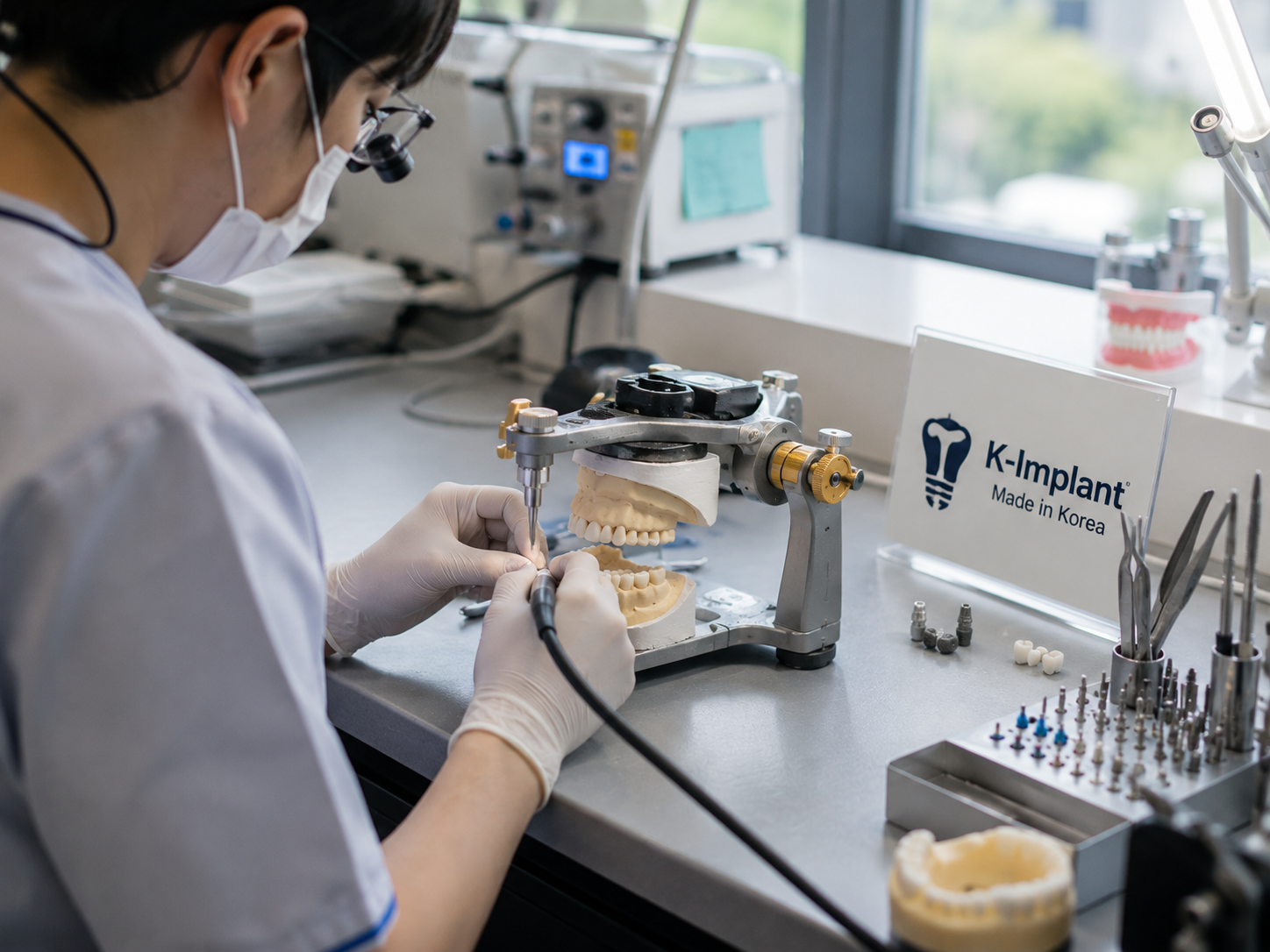
- What happened: Analysis shows Korea is solidifying its position as the world's second-largest dental implant exporter, led by companies like Osstem Implant and Dentium. The concentration of dental clinics in Seoul's Gangnam area and demand for global medical tourism are driving a "K-Implant boom."
- Numbers: World’s 2nd largest implant exporter (as of 2026).
- Implications: The price competitiveness and technology of Korean dental implant firms are gaining global recognition, with emerging markets serving as a key growth driver. The synergy between medical tourism and product exports is strengthening the entire industrial value chain.
GI Vita — Expanding pre-diabetic digital healthcare services, secures 4.5 billion KRW
- What happened: Digital healthcare startup GI Vita has closed its Series A funding to develop and expand services for pre-diabetic patients. It aims to digitize existing offline medical protocols and build an ecosystem connecting healthcare providers with patient data.
- Numbers: 4.5 billion KRW in Series A funding.
- Implications: Pre-diabetes is a rapidly growing market segment due to an aging population, with high demand for digital therapeutics (DTx) and remote monitoring. The model linking offline medicine with digital solutions increases commercial viability as discussions around health insurance coverage continue.
AI Medical Devices — Report on performance drops during real-patient application
- What happened: Global healthcare IT outlet Healthcare IT News introduced a report warning that AI medical devices may see performance drops when applied to real-world patient populations. Predictive models trained on specific datasets may underperform due to differences in population characteristics in actual clinical settings.
- Numbers: The report presents the "real-world performance gap" issue in AI medical devices with specific examples.
- Implications: This suggests that Korean AI medical device firms like Lunit and Vuno must focus on acquiring validation data across diverse ethnicities and clinical environments for global expansion. Regulatory bodies (MFDS, FDA) are likely to increase requirements for post-market surveillance based on Real-World Data (RWD).

MFDS · Policy · Regulation (3 Cases)
MFDS abolishes 'grace period for sales suspension' for GMP audit violations
- Content: The Ministry of Food and Drug Safety (MFDS) has strengthened policy by eliminating the 'grace period for sales suspension' previously granted when violations are found during regular Medical Device GMP (Good Manufacturing Practice) audits. However, products manufactured in compliance with in-vitro diagnostic standards before the GMP expiration date are allowed to be imported/sold for 30 days from the audit decision date.
- Scope: In-vitro diagnostic manufacturers and all medical device companies holding GMP certification.
- Effective date: Applied since March 2026.
- Industry impact: Failure to maintain GMP standards can now lead to immediate sales suspension, forcing domestic manufacturers and importers to strengthen pre-audit readiness.
MFDS Notice 2026-6: Comparison of medical device regulatory requirements
- Content: The MFDS released 'MFDS Notice 2026-6', comprehensively comparing regulatory requirements for medical device approval and review, clarifying differences between new and old standards. Procedures for obtaining licenses in Korea are now clearer.
- Scope: Domestic and foreign medical device manufacturers and importers.
- Effective date: Applied since February 2026.
- Industry impact: Foreign companies preparing to enter Korea and domestic manufacturers facing renewal must review these new requirements carefully. Increased regulatory transparency is expected to improve audit predictability.

MFDS revises regulations on digital medical products — clarifying SaMD standards
- Content: The MFDS revised regulations on the classification and designation of digital medical products to redefine the approval categories for Software as a Medical Device (SaMD). This is to clarify approval criteria for AI diagnostic software, digital therapeutics (DTx), etc.
- Scope: AI diagnostic software (Lunit, Vuno, etc.), DTx companies, and SaMD developers.
- Effective date: Reflected in the February 2026 revised notice.
- Industry impact: With clearer SaMD classification, it will be easier for domestic digital health startups to establish approval strategies. It also facilitates the comparison of domestic approval standards with global ones (FDA, MDR) for overseas expansion.
Digital Health · AI Medicine (3 Cases)
-
Lunit AI SaaS: Cumulative US SaaS contracts surpassed 930,000. Market potential is highlighted by the expansion of global digital pathology M&A, with analysts viewing the upside potential positively.
-
AI Medical Device Real-World Performance Issues: A Healthcare IT News report warns that AI models trained on specific datasets may show lower performance in real patient populations, emphasizing the need for Korean firms to conduct diverse cohort validation.
-
GI Vita Digital Health Platform: Secured 4.5 billion KRW in Series A funding to upgrade its digital healthcare platform for pre-diabetic patients, aiming to digitize medical protocols and connect data between staff and patients.
Global MedTech Context
-
FDA 2026 AI Guidelines — Easing regulations on low-risk AI/wearables: The FDA released guidelines reducing supervision of AI-based Clinical Decision Support (CDS) software and non-invasive wearables, increasing digital health market access. Korean Industry Implication: Companies like Lunit and Vuno seeking FDA approval can expect lower barriers to entry for low-risk product lines.
-
Rise of Real-World Data (RWD) risks for AI devices: The performance gap between training data and clinical reality is a global issue. Korean Industry Implication: Korean firms must expand validation datasets with diverse ethnic and environmental data, impacting clinical trial design strategies.
-
Global digital pathology M&A: Increased M&A deals in digital pathology are accelerating market restructuring. Korean Industry Implication: Companies like Lunit may emerge as targets for acquisition or strategic partnerships.
Investment · M&A · Listing Trends
-
GI Vita: Secured 4.5 billion KRW in Series A. Funds will be used for platform development and service expansion. No specific investors or valuation disclosed.
-
Lunit: Strengthening strategic positioning in the digital pathology M&A market based on 930k US SaaS contracts. While no direct M&A has been disclosed, analysts are focused on it as a potential beneficiary of global M&A activity.
Today's Insight
The FDA’s trend toward easing AI medical device regulations provides a short-term opportunity for Korean firms like Lunit and Vuno to enter the US market. However, the global emergence of 'real-world performance degradation' risks means that securing RWD validation is now the core of competitiveness. The MFDS's clarification of SaMD standards and the abolition of GMP grace periods make the domestic regulatory environment stricter, while also harmonizing with global standards to provide a springboard for international growth. Lunit’s 930k SaaS milestone and GI Vita’s funding show a clear shift in the Korean digital healthcare ecosystem from simple product sales to service and subscription models. Monitoring strategic partnerships and M&A for domestic AI medical device firms remains critical as the global digital pathology wave continues.
This Week's Checkpoints
- Confirm Lunit’s new US SaaS contract status and official disclosures regarding global digital pathology M&A.
- Monitor industry briefings and additional notices regarding the MFDS's reinforced GMP audit policy.
- Watch for potential updates to domestic clinical and approval guidelines regarding AI medical device real-world performance (RWD).
Reader Action Items
- Practitioners: Following the abolition of the MFDS GMP audit grace period, immediately check your company’s GMP expiration dates and audit schedules to create a pre-emptive remedial plan.
- Investors: Given the rise in Lunit’s US SaaS contracts and digital pathology M&A trends, recommend re-evaluating the overseas revenue share and valuation of publicly listed Korean AI medical device firms.
- Founders/Startups: Based on the MFDS's revised SaMD classification, re-evaluate your product's approval strategy (Digital Therapeutics vs. General SW) and perform a preliminary assessment of US market entry feasibility by comparing your plan with the FDA’s low-risk AI software guidelines.
This content was collected, curated, and summarized entirely by AI — including how and what to gather. It may contain inaccuracies. Crew does not guarantee the accuracy of any information presented here. Always verify facts on your own before acting on them. Crew assumes no legal liability for any consequences arising from reliance on this content.
Powered by
