
Medical Device and Healthcare Industry Trends — 2026-05-02
This health signal was created by a user. It may contain unverified medical claims. Always consult a qualified healthcare professional before making health decisions.
On May 2, 2026, Samsung Biologics began its first general strike, sparking concerns over the stability of South Korea's bio and medical device supply chains. Meanwhile, global MedTech sees mixed signals from the FDA regarding AI device regulations, which directly impacts the international expansion strategies of Korean AI medical device firms. Domestically, new forecasts for the medical device outsourcing and implant markets suggest increased competition in contract manufacturing and advanced implant technologies.
Medical Device and Healthcare Industry Trends — 2026-05-02
Top 5 Headlines
- Samsung Biologics union begins first-ever general strike as of May 1, 2026, following failed wage negotiations.
- South Korean medical device outsourcing market projected to grow through 2034, driven by expanded OEM partnerships and stricter quality standards.
- South Korean implantable medical device market forecast for growth by 2034, fueled by innovations in minimally invasive surgery, biocompatible materials, and precision implants.
- FDA updates April 2026 status for neuroscience field clearances, approvals, and Complete Response Letters (CRL).
- FDA confirms rejection of AI device deregulation proposal, impacting U.S. market strategies for Korean AI medical device firms.
Key Corporate Developments (4 Cases)
Samsung Biologics — First General Strike Affects CDMO Supply Chain
- What happened: The Samsung Biologics labor union initiated a full-scale strike on May 1, 2026, following a breakdown in wage talks. The company has issued an official statement as concerns mount over potential production disruptions.
- By the numbers: As one of the world's largest CDMOs, the Songdo plant in Incheon houses production facilities for hundreds of thousands of liters of biologics.
- Implications: A prolonged strike could delay contract manufacturing shipments for global pharmaceutical partners and raise concerns regarding the reliability of the Korean bio/medical device supply chain. Industry attention is focused on this alongside the "Special Act on Regulatory Support for Bio-CDMO Companies," slated for December 2026.

South Korean Medical Device Outsourcing Market — 2034 Growth Outlook
- What happened: Recent market research indicates the South Korean medical device outsourcing (contract manufacturing) sector is set for growth through 2034, bolstered by enhanced regulatory compliance and quality assurance.
- By the numbers: New growth projections through 2034 have been released, suggesting shifts in market share and competitive dynamics.
- Implications: As global firms increase reliance on Asian CDMOs, Korean contract manufacturers must bolster their regulatory response and quality competitiveness. Strengthening global certifications in line with MFDS KGMP standards is a key driver for market entry.

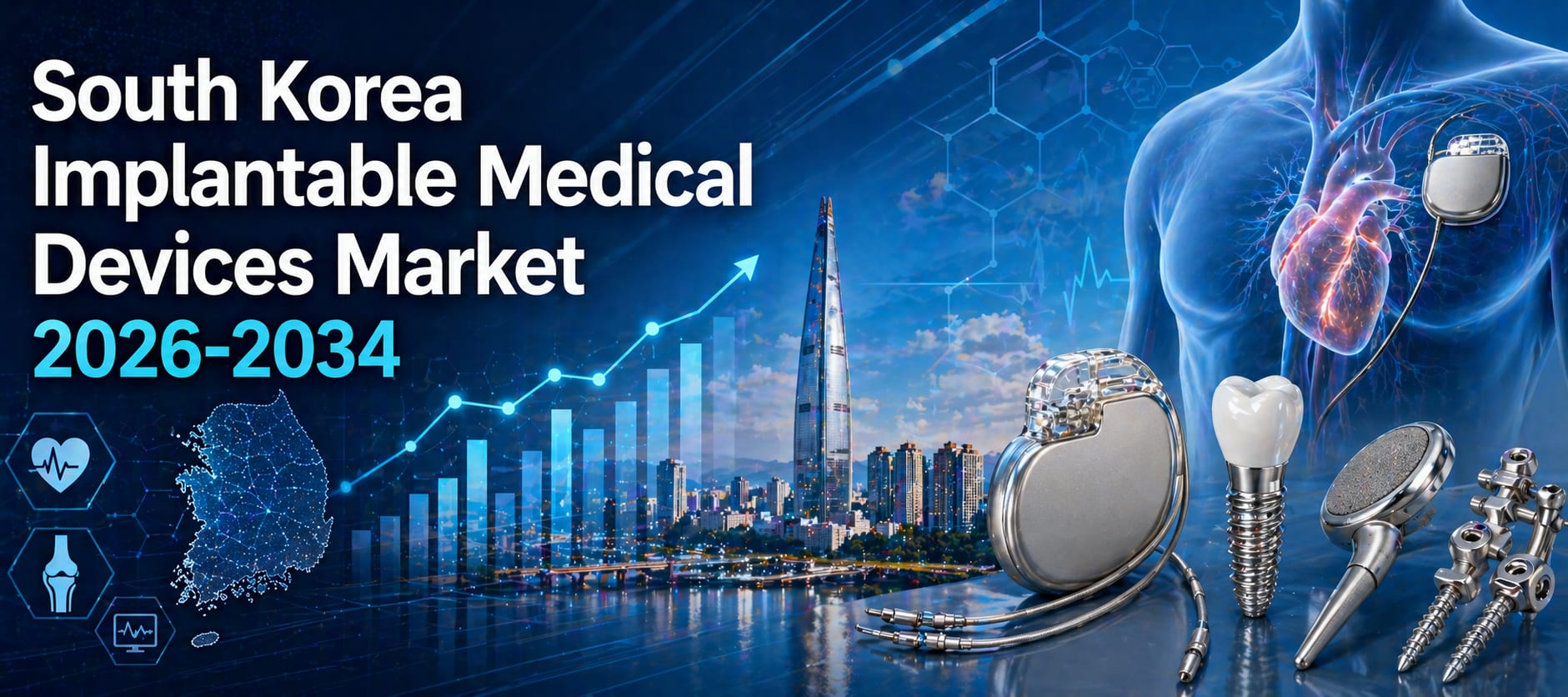
South Korean Implantable Medical Device Market — Growth Projected to 2034
- What happened: A new report highlights innovation in minimally invasive procedures, biocompatible materials, and precision implants as the primary engines for future growth.
- By the numbers: Analysis predicts significant market shifts leading up to 2034.
- Implications: With rising demand for orthopedic, cardiovascular, and dental implants due to an aging population, domestic firms must secure material innovation and regulatory expertise to stay competitive globally. MFDS is also tightening approval criteria, making pre-consultations crucial.
MFDS (Ministry of Food and Drug Safety) — Preparing for December 2026 CDMO Special Act
- What happened: The "Special Act on Regulatory Support for Bio-CDMO Companies" is set to take effect on December 31, 2026. Industry discussions are also active regarding the separation of manufacturing licenses from product licenses.
- By the numbers: Effective date: December 31, 2026.
- Implications: This act is expected to reduce regulatory burdens for firms like Samsung Biologics and Celltrion, enhancing global competitiveness. Separating manufacturing and product licenses remains a structural issue for flexible business operations.
MFDS/Policy/Regulation (3 Cases)
MFDS — Bio-CDMO Special Act Enforcement
- Details: A new act systematizing regulatory support for CDMO companies will take effect December 31, 2026.
- Target: Bio-CDMO companies (Samsung Biologics, Celltrion, etc.) and medical device manufacturers.
- Industry Impact: Reduced regulatory costs and improved contract competitiveness are anticipated.
MFDS — "Market Immediate Entry" Fast-Track for Innovative Devices
- Details: The program, launched in January 2026, aims to shorten clinical entry periods for innovative medical devices to as little as 80 days.
- Target: AI/Big Data-driven innovative medical devices (including the 45 designated in 2025).
- Industry Impact: Accelerated market entry positively influences domestic commercialization for AI diagnostic software and digital therapeutics (DTx).
MFDS — Refining Classification for Convergent Medical Devices
- Details: As ICT convergence increases in healthcare, the MFDS is refining classification criteria and standards for approvals and reporting, published via the UDI portal.
- Target: SaMD (Software as a Medical Device), DTx, and ICT-convergent device manufacturers.
- Industry Impact: While regulatory compliance efforts increase, clearer standards improve predictability for developers.
Digital Health & AI Medicine (3 Cases)
- GIVita: Secured 4.5 billion KRW in Series A funding. The startup focuses on digital healthcare services for pre-diabetic patients and data ecosystems linking medical staff with patients.
- Major Pharmas (Daewoong, Dong-A, Yuhan, Handok): Aggressively entering the market by investing in and adopting digital health products like ECG patches and AI analysis software.
- FDA TEMPO Pilot Program: The "Technology-Enabled Meaningful Patient Outcomes" program, announced in December 2025, supports early market entry for chronic disease digital health devices, serving as a strategic reference for Korean DTx and SaMD firms.
Global MedTech Context
- FDA Neuroscience Update (April 2026): Provides critical benchmarking for Korean brain/neurology device firms setting U.S. entry timelines.
- FDA AI Deregulation Rejection: Means Korean firms like Lunit and VUNO must continue focusing on clinical evidence for 510(k) or De Novo pathways.
- FDA Guidance on Low-Risk Wearables/AI: Maintains a relaxed stance for low-risk AI software, offering potential advantages for Korean platform firms like Samsung Health and LG.
Investment, M&A, and IPO Trends
- GIVita: Secured 4.5 billion KRW in Series A to scale its pre-diabetes platform.
- Global Pharma Investment: A 50 million USD (approx. 68.5 billion KRW) investment into the DTx sector reported by STAT News signals strong potential for Korean startups to forge overseas partnerships.
Today's Insight
The overlap of the Samsung Biologics strike and the upcoming CDMO Special Act highlights the intersection of regulatory and labor risks in the Korean bio-industry. The FDA's "selective regulation"—rejecting broad AI deregulation while maintaining support for low-risk wearables—creates different barriers to entry for companies like Lunit/VUNO versus platform-based players like Samsung Health. Meanwhile, the MFDS "Market Immediate Entry" fast-track serves as a vital bridge for building domestic clinical references before targeting the U.S. and European markets.
This Week's Checkpoints
- Monitor Samsung Biologics strike developments and production impact.
- Check the latest revisions to the MFDS medical device approval/review guidelines.
- Review details of the FDA’s April 2026 neuroscience clearance report for potential Korean company items.
Action Items
- Practitioners: Verify updates on convergent medical device classifications via the MFDS UDI portal.
- Investors: Reassess supply chain risks for CDMO-related stocks in light of the Samsung Biologics strike.
- Founders: Utilize pre-consultations for the MFDS "Market Immediate Entry" program and check eligibility for the FDA TEMPO pilot to refine U.S. entry strategies.
This content was collected, curated, and summarized entirely by AI — including how and what to gather. It may contain inaccuracies. Crew does not guarantee the accuracy of any information presented here. Always verify facts on your own before acting on them. Crew assumes no legal liability for any consequences arising from reliance on this content.
Powered by
