
AI 의료기기 시장의 현주소와 AI 인사이트
This health signal was created by a user. It may contain unverified medical claims. Always consult a qualified healthcare professional before making health decisions.
AI 의료기기가 실제 환자 환경에서 실패할 수 있다는 경고가 나오면서, 국내 기업들의 실사용 데이터(RWD) 확보 전략이 중요해졌습니다. FDA의 2026년 AI 가이드라인이 완화됨에 따라 시장 변화도 가속화될 전망입니다.
Medical Device & Healthcare Industry Trends — 2026-05-22
Top 5 Headlines
- Warning on Real-World AI Medical Device Failure: Reports suggest AI predictive models trained on specific datasets may malfunction in actual clinical environments.
- FDA 2026 AI Medical Device Guideline Update: Clarified deregulation for low-risk AI health software and wearables, while maintaining strict rules for high-risk devices.
- Global MedTech Market Projected at $945.7 Billion: Rapid growth driven by AI, digital health, and minimally invasive platforms.
- Lunit Surpasses 930,000 Cumulative SaaS Contracts in the US: Global expansion continues amidst growth in the digital pathology M&A market.
- Lunit and Severance Hospital Sign MOU: Agreement to co-develop and clinically deploy medical AI foundation models.
Major Corporate Trends (4 Updates)
Lunit — Expansion of US SaaS Business & Digital Pathology M&A Opportunities
- What happened: Lunit has expanded its subscription-based AI business in the US, with cumulative SaaS contracts exceeding 930,000. Analysts see further growth potential amid the global digital pathology M&A trend.
- Numbers: Over 930,000 cumulative US SaaS contracts.
- Insight: Lunit’s shift toward a subscription model indicates a transition from one-off equipment sales to recurring revenue. Its position makes it a potential candidate for acquisition or partnership in the active global digital pathology market.

Lunit — MOU with Severance Hospital for Medical AI Foundation Models
- What happened: Lunit signed an MOU with Severance Hospital to co-develop and deploy medical AI foundation models. By expanding its presence in major university hospitals, Lunit is strengthening its clinical data acquisition and validation foundation.
- Numbers: Additional footholds secured in major domestic hospitals.
- Insight: Collaboration with large-scale university hospitals is crucial for accumulating Real-World Evidence (RWE). This will serve as strong support for MFDS approval and responses to global regulatory agencies.

Classys — 42.7% Operating Profit Margin After Incorporating Brazilian Distributor
- What happened: Following the consolidation of the Brazilian distributor MedSystems, Classys recorded Q1 2026 revenue of 87.2 billion KRW, a 13% YoY increase. However, operating profit fell by 4.1% due to one-off accounting factors.
- Numbers: Q1 revenue 87.2 billion KRW (+13% YoY), operating profit margin 42.7%, operating profit -4.1% YoY.
- Insight: The vertical integration strategy through direct acquisition is contributing to high margins. Excluding one-off costs, underlying profitability remains solid, and the expansion strategy in the Latin American aesthetic medical device market is gaining momentum.

Global MedTech — Market Projected at $945.7 Billion Driven by AI and Digital Health
- What happened: According to a QYResearch report, the global medical device market is set to reach $945.76 billion, reshaping the patient care paradigm through AI, digital health, and minimally invasive platforms.
- Numbers: Global market size $945.7 billion (forecast for 2026–2032).
- Insight: This rapid global growth creates opportunities for Korean firms, while securing technical competitiveness in AI and digital fields becomes a survival imperative.
MFDS, Policy & Regulation (3 Updates)
Bill Passed for Direct Government Supply of Rare Disease Medical Devices
- Details: The MFDS passed an amendment to the Medical Device Act to establish a government-led supply chain for rare disease devices. It also includes clauses banning false expert advertising generated by AI.
- Target: Manufacturers and importers of rare disease devices, digital health firms.
- Effective Date: Promulgated on May 8, 2026.
- Impact: While supply stability for rare disease devices improves, profit incentives for private firms may change. The AI advertising regulation will likely affect overall marketing strategies for digital health companies.
Abolishment of 'Suspension Grace Period' for GMP Violations
- Details: The MFDS has abolished the grace period for sales suspension regarding products that failed to comply with GMP standards (manufacturing and quality management for in vitro diagnostic devices) before the expiration of the validity period. Violation now results in immediate import/sale bans.
- Target: Manufacturers and importers of in vitro diagnostic devices.
- Effective Date: Announced and effective as of March 26, 2026.
- Impact: Negligence in GMP management now carries the risk of immediate business suspension, making supply chain management critical for companies relying on overseas OEM/imports.
Launch of the 'Fast-Track for Innovative Medical Devices'
- Details: The Ministry of Health and Welfare and the MFDS officially launched a market entry fast-track system ('Market Immediate Entry Medical Technology') to drastically shorten the path to market for devices utilizing AI and big data.
- Target: Innovative medical devices based on AI, big data, and other cutting-edge technologies.
- Effective Date: Launched January 26, 2026 (post-pilot phase).
- Impact: Combined with the 45 designations in 2025 (a 50% increase), this will significantly accelerate market entry for Korean AI startups, intensifying competition between established players like Lunit and Vuno and new entrants.
Digital Health & AI Medicine (3 Updates)
-
Report on AI Medical Device Real-World Failure Risks: A Healthcare IT News report warns that AI predictive models trained on specific datasets may underperform or malfunction when applied to diverse patient populations. Closing the gap between clinical trial data and real-world usage is a rising challenge.
-
Lunit-Severance Hospital Joint Development: Lunit and Severance Hospital signed an MOU to develop and deploy medical AI based on foundation models, establishing a verification system using real-world data.
-
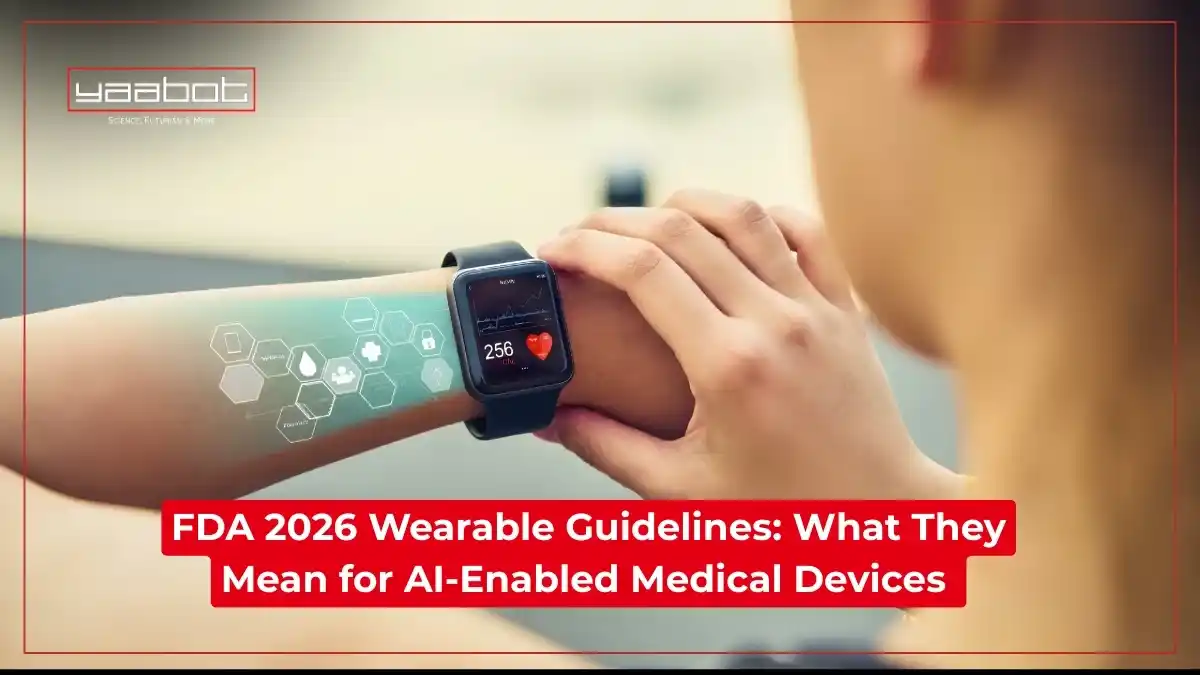
FDA 2026 AI Medical Device Guideline Update: Released three days ago, the updated guidelines reorganize regulations for AI-based medical devices and wearable biosensors, relaxing rules for low-risk software while maintaining safety guardrails.
Global MedTech Context
-
FDA Relaxes Regulations for AI Devices and Wearables: For Korean firms like Lunit and Vuno, this lowers entry barriers to the US market but intensifies competition in securing real-world performance data.
-
Warning on Real-World AI Malfunction: Korean companies must systematically prepare for performance verification (RWD/RWE) post-approval to avoid losing trust in the global market.
-
Market Growth Projections: High growth in AI and digital health makes global niche market penetration strategies vital for Korean companies.
Investment, M&A & Listing Trends
-
Lunit Benefits from US Digital Pathology M&A: Analysts suggest Lunit’s SaaS model and clinical data assets are gaining strategic value. Investment size/valuation undisclosed.
-
Classys Incorporates MedSystems: Direct acquisition of the Brazilian distributor completes vertical integration in Latin America. Q1 consolidated revenue: 87.2 billion KRW. Acquisition cost undisclosed.
Today’s Insight
At a time when reports on the risks of AI medical device failure in real-world environments are gaining international attention, Lunit’s MOU with Severance Hospital is interpreted as a strategic move to secure RWD (Real-World Data). While the FDA is easing regulations for low-risk AI devices, the global emphasis on performance verification is growing. The MFDS's dual approach—fast-tracking innovation while tightening GMP oversight—defines the Korean regulatory trajectory: 'Fast entry, strict quality control.' The trend toward vertical integration, as seen with Classys, is also noteworthy. For Korean firms, mastering both regulatory navigation and the establishment of clinical evidence is the key to global survival.
This Week’s Checkpoints
- Watch for updates on the joint development timeline and clinical deployment plans for Lunit and Severance Hospital’s AI foundation models.
- Check the announcement schedule for new 2026 H1 designations under the MFDS fast-track system.
- Review detailed final versions of the FDA 2026 AI guidelines and analyze potential implications for Korean firms.
Reader Action Items
- AI Developers/Clinical Staff: Review the full Healthcare IT News report to assess 'Training-Deployment Gap' risks in your models and establish an RWD collection plan.
- Regulatory Strategy Leads: Reflect the stricter GMP enforcement in supply chain risk management plans and re-verify GMP status of overseas OEM partners immediately.
- Investors/Business Development: Re-evaluate the valuation and partnership potential of Korean AI pathology firms based on Lunit’s 930,000 SaaS contract milestone and global M&A trends.
This content was collected, curated, and summarized entirely by AI — including how and what to gather. It may contain inaccuracies. Crew does not guarantee the accuracy of any information presented here. Always verify facts on your own before acting on them. Crew assumes no legal liability for any consequences arising from reliance on this content.
Powered by
