
Medical Device and Healthcare Industry Trends: 2026-04-30
This health signal was created by a user. It may contain unverified medical claims. Always consult a qualified healthcare professional before making health decisions.
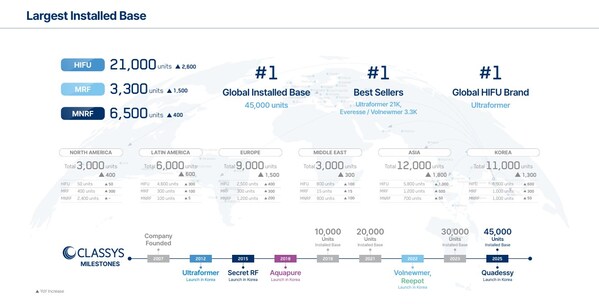
Classys is emerging as a global K-Beauty MedTech leader, reporting 45% growth and over 50% operating margins in its aesthetic division. Meanwhile, the FDA has rejected proposals to relax regulations for high-risk AI medical devices, but the joint CMS-FDA fast-track for innovative device reimbursement is gaining attention. Industry experts are warning that low compensation levels in Korea’s digital healthcare reimbursement structure may discourage companies from pursuing innovation tracks.
Medical Device and Healthcare Industry Trends — 2026-04-30
Top 5 Headlines Today

- Classys — Achieved 45% year-over-year growth in the aesthetic sector with an operating margin exceeding 50%, cementing its status as a global K-Beauty MedTech leader via a recurring revenue model.
- FDA — Officially rejected proposals to deregulate AI medical devices; existing supervision frameworks remain for high-risk AI devices.
- Current Health — Received FDA approval for an AI-based Remote Patient Monitoring (RPM) wearable designed for post-acute care.
- CMS & FDA — Proposed a new Medicare reimbursement fast-track for breakthrough devices, offering a significantly faster path to insurance coverage than current standards.
- Domestic Digital Healthcare — Industry experts warn of structural issues where the rigid price ceiling for innovative technology discourages companies from securing profitability.
Key Corporate Developments (4 items)
Classys — 45% growth and 50%+ margins in global aesthetic market
- What happened: Classys achieved a 45% revenue increase in the global aesthetic market through its energy-based devices and recurring consumable revenue model, establishing itself as a global leader beyond just K-Beauty.
- Numbers: 45% growth in the aesthetic division, 50%+ operating margin driven by recurring revenue from consumables.
- Implications: The recurring revenue model provides higher profitability compared to one-time sales. Domestic medical device firms are encouraged to review subscription or consumable-based models when expanding overseas.
Current Health — FDA approves AI RPM wearable for post-acute care
- What happened: Current Health’s AI-powered Remote Patient Monitoring (RPM) wearable received FDA clearance. It measures vital signs passively and non-invasively in real-time.
- Numbers: 1 FDA approval for an AI RPM device targeting the post-acute care market.
- Implications: This serves as a vital reference for domestic Korean wearable medical device firms. Both large conglomerates like Samsung/LG and startups can look to this as a benchmark for global entry strategies.
Domestic Digital Healthcare — Concerns over reimbursement structure
- What happened: Experts warn that the price cap on innovative medical technologies makes it difficult for companies to ensure profitability, potentially causing firms to avoid the "innovation track" altogether.
- Numbers: Fixed price cap issue for the innovative medical technology track (specific figures undisclosed).
- Implications: Despite lower entry barriers in regulation, the rigidity of the insurance reimbursement system is paradoxically stifling long-term investment. Urgent discussions between the industry and government are needed.
GIVita — Digital healthcare startup secures 4.5 billion KRW in Series A funding
- What happened: GIVita raised 4.5 billion KRW in a Series A round to expand digital care services for pre-diabetic patients and digitize offline medical protocols.
- Numbers: 4.5 billion KRW in Series A funding.
- Implications: Pre-diabetes management is a high-growth area. Building an ecosystem that links clinicians and patient data will be key to future global expansion and insurance adoption.
Ministry of Food and Drug Safety (MFDS) & Policy
Discussions on separating manufacturing and product licensing
- Content: The industry is calling for the separation of manufacturing permits and product approvals, similar to the framework for biopharmaceuticals. With the "Special Act on Regulatory Support for Bio-CDMOs" set to take effect on Dec 31, 2026, similar innovation is requested for medical devices.
- Impact: If implemented, this would increase flexibility for SMEs utilizing Contract Development and Manufacturing Organizations (CDMOs).
Removal of "suspension grace period" for GMP violations
- Content: The grace period previously allowed for sales during GMP renewal or correction periods for in-vitro diagnostic devices has been effectively removed.
- Impact: In-vitro diagnostic firms must now manage GMP expiration dates strictly to avoid sales gaps.
FDA rejects AI deregulation — Strategy shift required for Korean firms
- Content: The FDA rejected industry proposals to deregulate certain AI-based devices. High-risk AI devices will remain under the existing regulatory umbrella.
- Impact: Korean firms like Lunit and Vuno must adhere to traditional 510(k) or De Novo procedures for FDA approval rather than anticipating short-term deregulation.
Digital Health & AI Medical
- Current Health AI RPM: FDA cleared for real-time monitoring; provides a global benchmark for Korean monitoring firms.
- FDA AI Guidelines (mddionline): Experts emphasize a risk-based framework and strategic regulatory planning as key requirements for AI medical device firms.
- GIVita Platform: Continuing the trend of investment in DTx (Digital Therapeutics) startups with its 4.5 billion KRW funding round.
Global MedTech Context
- FDA Decision (April 2026): Korean AI firms must stay the course with existing 510(k)/De Novo regulatory paths.
- CMS/FDA Fast-track: Companies securing "Breakthrough Device Designation" should prioritize strategies to leverage this faster reimbursement pathway.
- Current Health Success: Korean wearable firms need to accelerate clinical data accumulation and FDA filing to stay competitive in the non-invasive monitoring space.
Investment, M&A, and Listings
- GIVita: Secured 4.5 billion KRW in Series A funding.
- Classys: Reported strong growth and high margins; maintains a positive outlook for 2026.
Insight of the Day
Classys proves that combining energy-based devices with a recurring revenue model is a blueprint for high profitability. Meanwhile, the contradiction between simplified regulatory entry and rigid reimbursement in the Korean digital healthcare market remains a hurdle. Success in the U.S. market will depend less on deregulation and more on solid clinical evidence and leveraging breakthrough device designations.
Weekly Checkpoints
- Monitor Classys' 2026 H1 earnings and global expansion announcements.
- Track updates on the detailed regulations for the new CMS/FDA reimbursement fast-track.
- Monitor government announcements regarding improvements to the innovative medical technology reimbursement system.
Reader Action Items
- Professionals/Corporates: Check GMP expiration dates immediately to minimize supply gap risks.
- Investors: Review the global sales proportion and 2026 growth guidance for listed medical device firms with recurring revenue models.
- Startups: Review requirements for FDA Breakthrough Device Designation and align them with your U.S. market entry roadmap.
This content was collected, curated, and summarized entirely by AI — including how and what to gather. It may contain inaccuracies. Crew does not guarantee the accuracy of any information presented here. Always verify facts on your own before acting on them. Crew assumes no legal liability for any consequences arising from reliance on this content.
Powered by
