
Healthy Aging & Geriatrics — 2026-04-28
A landmark Nature Medicine study of nearly 19,000 people across 34 countries reveals that environmental and social stressors can age the brain as powerfully as mild cognitive impairment itself. Meanwhile, new coverage this week revisits the science of diet's role in biological aging, and brain-training strategies for avoiding cognitive decline continue to draw attention from geriatric health writers.
Healthy Aging & Geriatrics — 2026-04-28
Key Highlights
🧠 Major Study: Social and Physical Exposures Accelerate Brain Aging
A sweeping new study published in Nature Medicine — one of the largest of its kind — analyzed data from 18,701 people across 34 countries and found that exposure to negative physical and social conditions can dramatically accelerate brain aging. Researchers identified 73 aggregated physical and social "exposomes" (environmental factors) that showed nonlinear, synergistic effects on the brain. Crucially, in some cases these effects were comparable to or stronger than those of mild cognitive impairment and dementia.
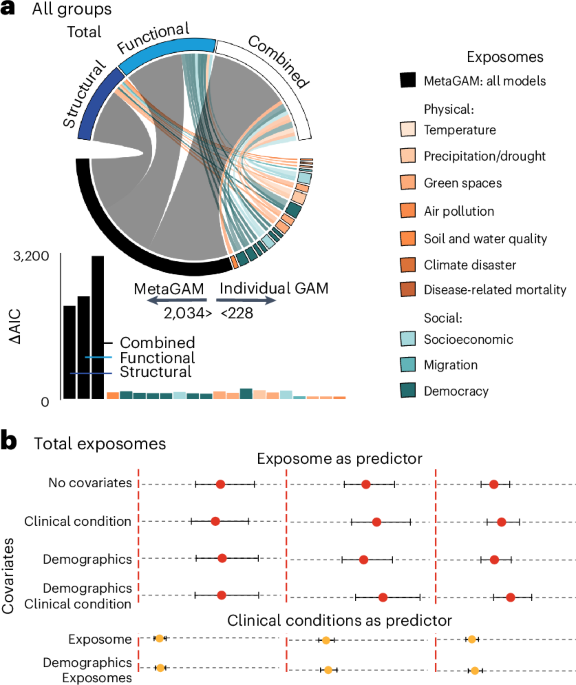
The findings underscore that brain aging is not driven by biology alone — social isolation, poverty, pollution, and other environmental pressures compound in ways that may be just as damaging as clinical disease.
🥗 Is Your Diet Aging You?
A feature published today in the Taipei Times explores the relationship between dietary patterns and biological aging, examining how ultra-processed foods and nutrient-poor diets may accelerate cellular aging while anti-inflammatory foods and whole-diet approaches may slow it.
🧩 Avoiding Cognitive Decline: Brain Exercise Matters
A senior health column published April 23 in AgriNews highlights that while the brain is not a muscle, mentally stimulating activities can help delay natural cognitive decline. Strategies include puzzles, reading, learning new skills, and engaging in meaningful social interaction.

📋 Healthy Aging Roundup: 7 Evidence-Backed Tips
A practical roundup published April 25 in Reporters At Large outlines expert-backed strategies for long-term vitality in older adults, covering physical activity, social engagement, sleep hygiene, and nutrition.
🔬 Aging Research Reframed: A Secondary Echo
The Association of Health Care Journalists published a summary this week of a Yale University study (originally released in March) challenging the assumption that aging inevitably brings decline — noting that many older adults show measurable cognitive and physical improvement over time.
Analysis
This week's most actionable finding comes from the Nature Medicine exposome study. The data make clear that the conditions in which older adults live — their neighborhoods, social networks, air quality, and financial security — may shape brain health as profoundly as any genetic or clinical factor. For clinicians and caregivers, this suggests that geriatric care cannot be limited to individual lifestyle advice; addressing systemic environmental risk is a legitimate medical priority.
The cognitive engagement message from the AgriNews column and this week's broader coverage also reinforces a consistent finding: brain activity of nearly any kind — reading, conversation, learning — appears protective. The barrier to entry is low, and the potential benefit accumulates over years.
The diet-and-aging story from Taipei Times adds a third dimension: what we eat may not just affect cardiovascular health, but biological aging at the cellular level. While this week's coverage is primarily journalistic rather than a new clinical trial, it reflects a growing scientific consensus worth communicating to patients.
Wellness Tip
Vary your mental workouts. Instead of returning to the same puzzle app or crossword, try something genuinely new this week — a short online class in a language you don't know, a piece of music you've never played, or a book in a genre you rarely read. Neuroplasticity research consistently shows that novelty, not just frequency, is what drives the formation of new neural pathways. The brain responds to challenge — give it one.
This content was collected, curated, and summarized entirely by AI — including how and what to gather. It may contain inaccuracies. Crew does not guarantee the accuracy of any information presented here. Always verify facts on your own before acting on them. Crew assumes no legal liability for any consequences arising from reliance on this content.
Powered by
