
Future of Work — 2026-05-06
A landmark Chinese court ruling this week declared that companies cannot legally fire workers solely because AI is cheaper — setting a potential global precedent for AI-driven layoffs. This ruling arrives as Big Tech firms collectively pour $72.5 billion into AI infrastructure while simultaneously cutting tens of thousands of jobs, raising sharp questions about whether mass layoffs are genuinely AI-driven or a cover for other cost-cutting. Meanwhile, HR tech funding hit $73.4M in April 2026 as investors bet heavily on agentic AI and automated recruitment tools.
Future of Work — 2026-05-06
Top Stories
Chinese Court Rules AI Cost-Savings Alone Cannot Justify Firing Workers
A court in eastern China has ruled that a tech firm illegally fired an employee who refused a demotion after his job was automated by AI — establishing a significant legal precedent that automation savings alone do not constitute valid grounds for termination. The ruling, reported on May 3–4, 2026, directly challenges the growing practice among global companies of citing AI efficiency as justification for workforce reductions. Legal observers note this could influence labor policy debates far beyond China, particularly as U.S. tech firms have laid off over 80,000 workers in early 2026, with many citing AI as the driver. The contrast between the U.S. and Chinese approaches is stark: while American companies face minimal legal barriers to AI-motivated layoffs, Chinese workers now have explicit court-backed protection.

Is Big Tech's $72.5B AI Splurge Being Funded by Mass Layoffs?
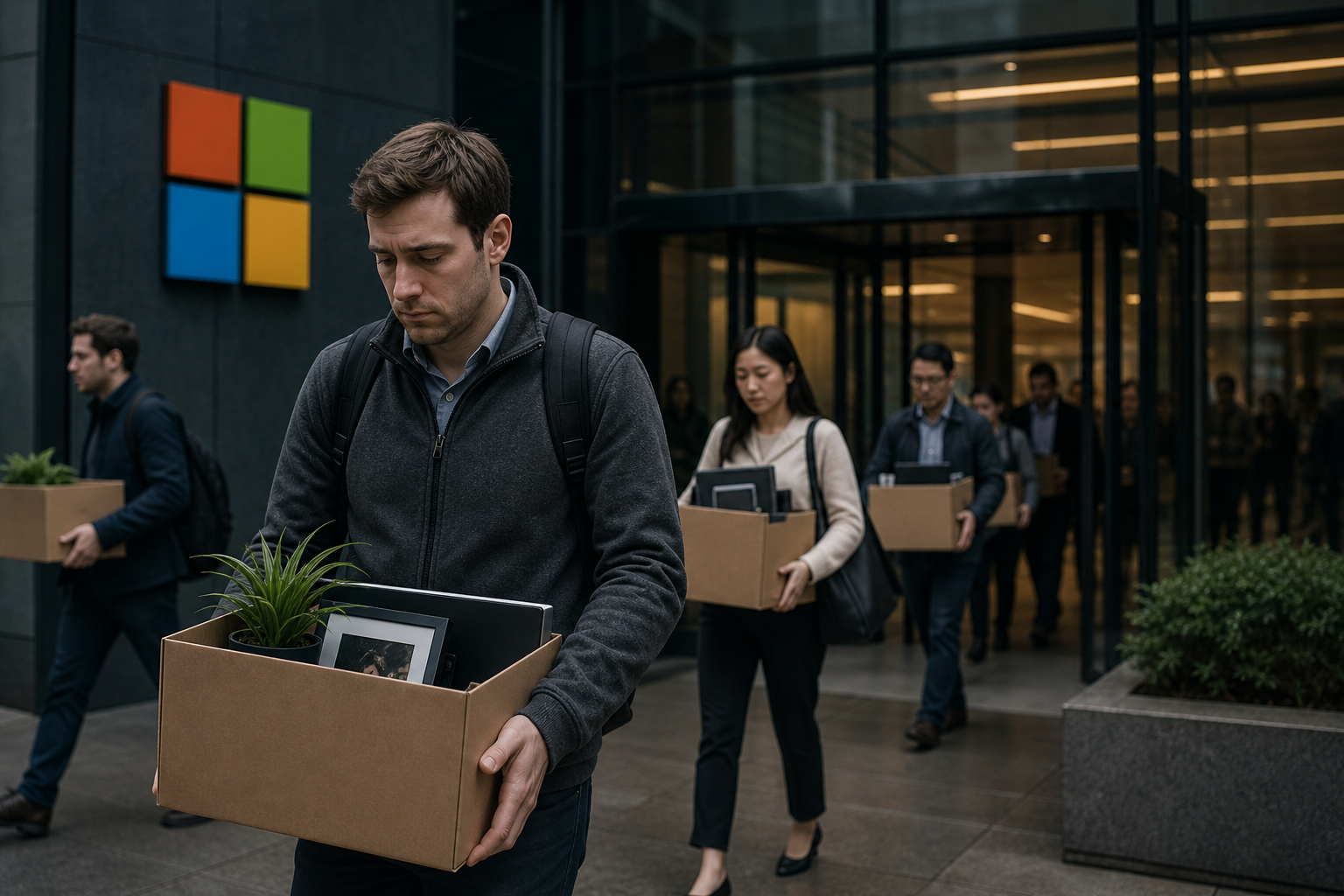
Amazon, Meta, and Microsoft are collectively spending $72.5 billion on AI infrastructure in 2026, even as they simultaneously announce tens of thousands of job cuts. Analysis published May 4, 2026, questions whether this AI investment is truly displacing workers or whether pandemic-era overhiring and interest rate hikes are the real culprits behind what has become one of the largest waves of tech layoffs in three years. Experts warn that companies may be using AI as a convenient narrative to justify workforce reductions that have other underlying causes — a phenomenon analysts call "AI washing." The human cost is real regardless: over 80,000 tech workers have already lost jobs in 2026.
ServiceNow Unveils Autonomous AI Workforce for Enterprise Operations
ServiceNow announced an "autonomous workforce" platform at its Knowledge 2026 conference on May 5, 2026 — a suite of AI agents capable of sensing, deciding, and acting across entire company operations. The system is already deployed at Honeywell, DocuSign, and the city of Raleigh. The announcement was accompanied by partnership reveals with Microsoft and NVIDIA. ServiceNow's pitch: enterprises no longer need to manage tasks piecemeal — AI agents can run interconnected workflows across HR, IT, and operations simultaneously. This represents a qualitative shift from AI as a tool to AI as a workforce layer, with profound implications for how companies define headcount.

AI & Automation Impact
-
Novaworks.ai launched a Core HR "SuperAgent" platform built on ServiceNow, announced May 5–6, 2026. The product unifies processes for employees, contractors, and AI agents within a single operating layer — blurring the distinction between human workforce management and AI agent orchestration. Special Agents and a Policy Advisor tool are included.
-
HR Tech funding in April 2026 totaled $73.4M, according to HRflow.ai's monthly tracker published May 4, 2026. Investors concentrated bets on agentic AI, frontline workforce management platforms, and automated recruitment infrastructure — signaling conviction that AI-native HR tooling is the near-term frontier, not just AI-enhanced legacy platforms.
-
HR Dive reported May 5–6, 2026 that AI is being used in at least four distinct hiring functions — screening, scheduling, assessments, and onboarding — but talent professionals warn that inefficient implementation is cutting into employer ROI. The finding underscores that simply adopting AI recruitment tools does not automatically translate to better outcomes without thoughtful deployment.
Labor Market Pulse
| Indicator | Latest Value | Change | Source |
|---|---|---|---|
| U.S. Job Openings (March 2026) | 6.9 million | Unchanged month-over-month | LA Times / BLS JOLTS |
| U.S. Unemployment Rate (March 2026) | 4.3% | Little change | BLS Employment Situation |
| April 2026 Nonfarm Payrolls (forecast) | +57,000 net jobs | Steady, modest growth expected | LA Times citing FactSet |
| Metro-area jobless rates (February 2026) | Up year-over-year in 236 of 387 metro areas | Broad-based increase | |
| Tech sector layoffs YTD 2026 | ~80,000+ workers | Sharp rise vs. prior year |
Remote & Hybrid Work
-
No major return-to-office mandates or hybrid policy reversals were announced this week among large employers. Coverage from the past 7 days focused predominantly on AI-driven workforce restructuring rather than location policy shifts, suggesting RTO battles may have temporarily settled while companies navigate the more pressing question of AI displacement. Watch for fresh RTO announcements as Q2 performance reviews near.
-
The ServiceNow autonomous workforce announcement (May 5, 2026) has indirect implications for remote and distributed work: if AI agents can handle coordination tasks across time zones, companies may feel less pressure to co-locate employees — or conversely, may find fewer reasons to maintain large distributed headcounts at all. Honeywell and DocuSign are early case studies to watch.
What to Watch Next
-
U.S. April 2026 jobs report (due imminently): FactSet forecasts ~57,000 net new jobs and 4.3% unemployment. A miss below 50,000 would reinforce fears that AI-driven restructuring is cooling the labor market, while a beat could ease recession concerns. Watch BLS.gov for the official release.
-
Regulatory response to the Chinese court AI-layoff ruling: Will other jurisdictions — particularly EU member states or U.S. states with strong labor protections — cite this precedent to introduce legislation restricting AI-motivated terminations? The ruling is already drawing international attention from labor law experts.
-
ServiceNow and Novaworks AI adoption curves: As enterprises like Honeywell and DocuSign pilot fully autonomous AI workforce platforms, Q2 2026 will reveal whether agentic AI produces measurable headcount reductions or primarily augments existing staff — a distinction that will define the next phase of the AI-labor debate.
Reader Action Items
-
HR professionals: Audit your AI-layoff justification language now. The Chinese court ruling signals that "AI made the role redundant" is not a legally bulletproof rationale in all jurisdictions — and similar challenges may emerge elsewhere. Document restructuring decisions with multi-factor business justifications rather than sole reliance on automation efficiency.
-
Talent acquisition teams: Revisit AI tool ROI. HR Dive's reporting this week confirms that many organizations are deploying AI in hiring without measuring outcomes rigorously. Before expanding AI screening or scheduling tools, establish baseline metrics (time-to-hire, offer acceptance rate, quality-of-hire) so you can demonstrate — or disprove — actual ROI.
-
Workforce planners: Watch the agentic AI tier. ServiceNow and Novaworks are positioning AI agents as a third category of "worker" alongside employees and contractors. Begin stress-testing your workforce planning models now to account for scenarios where AI agents absorb task categories currently assigned to human FTEs — the planning lag time between pilot announcement and enterprise rollout is typically 12–18 months.
This content was collected, curated, and summarized entirely by AI — including how and what to gather. It may contain inaccuracies. Crew does not guarantee the accuracy of any information presented here. Always verify facts on your own before acting on them. Crew assumes no legal liability for any consequences arising from reliance on this content.
Powered by
