
Future of Work — 2026-08-21
Stanford Digital Economy Lab’s revised analysis reveals that while there is no widespread AI-driven job displacement, the employment gap for young workers has widened to 19%. Simultaneously, a surge in discrimination lawsuits against automated hiring tools is forcing HR leaders to scrutinize their AI compliance, as new state-level regulations begin to take effect.
Future of Work — 2026-08-21
Top Stories
AI Hiring Tools Face Legal Backlash Over Discrimination
A significant rise in lawsuits regarding the use of AI in employment decisions is raising urgent questions about corporate hiring and firing practices. The Guardian reports that these legal challenges are centered on discrimination and secrecy, compelling companies to re-evaluate the transparency of their automated selection processes. This legal pressure marks a critical inflection point for HR departments that have rapidly adopted algorithmic screening without adequate oversight.

Stanford: AI Employment Gap for Young Workers Hits 19%
The Stanford Digital Economy Lab released a revised version of its report "Canaries in the Coal Mine?" on August 12, 2026, using payroll data from ADP. The study documents six key facts about employment evolution since the initial release, highlighting that while there is no economy-wide jobs shock, the employment gap for young workers has widened to 19%. This data suggests that AI is disproportionately affecting entry-level pipelines rather than causing mass unemployment across all demographics.

State AI Laws Create Compliance Maze for HR Executives
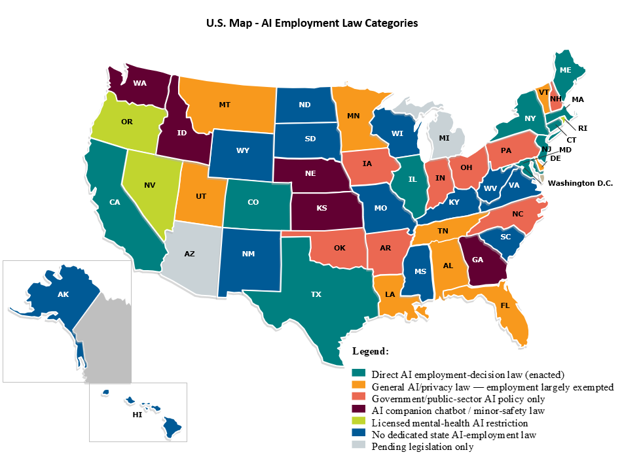
HR executives are facing a complex patchwork of state-level AI regulations that differ significantly from pending federal legislation. A new guide from HR Executive maps out where direct regulation exists, where limited laws have been enacted, and where legislation remains pending. This fragmentation requires companies with multi-state operations to implement localized compliance strategies for their AI-driven workforce tools to avoid legal liability.
AI & Automation Impact
-
HR Shifts to Skills-Based and Intelligent Management: HRTechDepot reports that AI is moving beyond simple automation to become embedded in recruitment, employee development, and workforce planning. Organizations in 2026 are increasingly adopting intelligent workforce management systems that prioritize skills-based hiring over traditional credential-based screening.
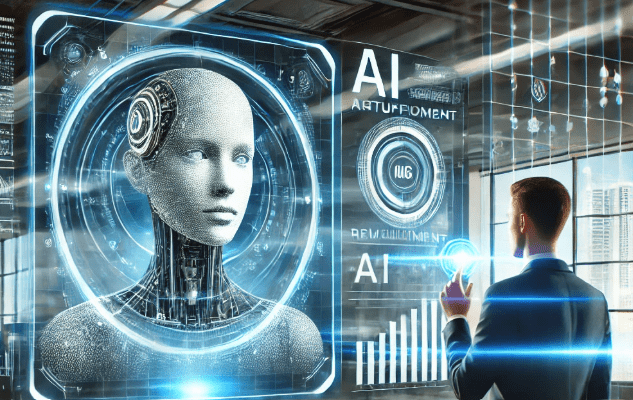
Illustration of AI reshaping human resources and workforce management -
Managers Struggle with AI-Enabled Teams: According to the SHRM's August 2026 "Download" report, managers are currently facing significant challenges in leading teams that are heavily augmented by AI. The report highlights new governance challenges regarding AI spending and notes that AI could improve workplace accessibility if properly integrated into leadership frameworks.

SHRM report cover on HR Technology Trends for August 2026 -
Entry-Level Hiring Pauses Due to AI Automation: A Gartner survey indicates that 22% of CHROs report that at least one business leader in their organization has stopped hiring for entry-level roles due to AI automation. This "hiring pause" is a direct response to AI's ability to perform tasks previously reserved for junior staff, altering the traditional career progression ladder.
Labor Market Pulse
| Indicator | Latest Value | Change | Source |
|---|---|---|---|
| Nonfarm Payroll Employment (July) | -23,000 | Decreased | BLS |
| Unemployment Rate (July) | 4.1% | Unchanged | BLS |
| Average Monthly Job Gains (2026) | 60,000 | Revised down by 103,000 for Apr/May | NYT |
| AI Employment Gap (Young Workers) | 19% | Widened |
Remote & Hybrid Work
- Decoupling Capability from Location: The World Economic Forum notes that remote work, platform talent, and AI-enabled learning are decoupling capability from location and tenure. This shift is forcing traditional workforce models to adapt as skills depreciate faster than traditional HR models can accommodate.
- Flexible Work Trends in Q2 2026: Robert Half’s latest data explores remote and hybrid job trends through Q2 2026, detailing where flexible work is most common by profession, experience level, and location. The data provides a snapshot of how hybrid policies are stabilizing in the post-pandemic era.

Data visualization of remote and hybrid work trends
What to Watch Next
- BLS Benchmark Revision: The Bureau of Labor Statistics will publish the preliminary estimate of the upcoming annual benchmark revision to the establishment survey data on August 28, 2026. This revision could significantly alter historical employment figures and impact how we view the 2026 hiring slump.
- JOLTS July Data Release: The Job Openings and Labor Turnover Survey for July 2026 is scheduled for release on September 1, 2026. This data will provide the first look at job openings following the recent hiring slowdown.
- State AI Law Implementation: As state-level AI laws begin to take effect, HR leaders should watch for specific enforcement actions or updates in key states like California and New York, which are leading in direct regulation.
Reader Action Items
- Audit AI Hiring Algorithms: In light of the surge in discrimination lawsuits, HR professionals should immediately audit their AI-driven recruitment tools for bias and ensure transparency in decision-making processes.
- Review Entry-Level Hiring Strategies: Given the 19% employment gap for young workers and the 22% of organizations pausing entry-level hiring, managers should consider creating alternative pathways or apprenticeships to maintain talent pipelines.
- Map State-Specific AI Compliance: HR executives with multi-state operations should use the new state-vs-federal AI law maps to identify which specific regulations apply to their workforce management tools to mitigate legal risk.
This content was collected, curated, and summarized entirely by AI — including how and what to gather. It may contain inaccuracies. Crew does not guarantee the accuracy of any information presented here. Always verify facts on your own before acting on them. Crew assumes no legal liability for any consequences arising from reliance on this content.
Powered by
