
Journalism & Media Industry — 2026-05-29
NPR announced its most significant restructuring yet, with 10 staff layoffs and 18 voluntary buyouts as federal funding cuts bite deeper into public media operations. OpenAI signed landmark content licensing deals with Brazilian publishers Folha and UOL while The Economist launched a dedicated ChatGPT app, signaling AI companies' pivot toward compensating journalism. Meanwhile, Google's AI Search overhaul is triggering what publishers now call "Google Zero"—a potential collapse in referral traffic that's forcing a strategic bet on direct subscriptions and social platforms.
Journalism & Media Industry — 2026-05-29
Breaking: Business & People
NPR
- What happened: NPR announced 10 direct layoffs and accepted at least 18 voluntary buyouts, cutting approximately 28 newsroom positions as part of a broader restructuring.
- Context: The cuts stem from Congress's elimination of federal subsidies for public media, leaving NPR with an $8 million budget shortfall that the network must close through organizational downsizing.
- Who's affected: NPR journalists across multiple departments; the cuts reduce editorial capacity at a time when public media faces sustained pressure from government funding clawbacks.


Media Executive Compensation Gap Widens
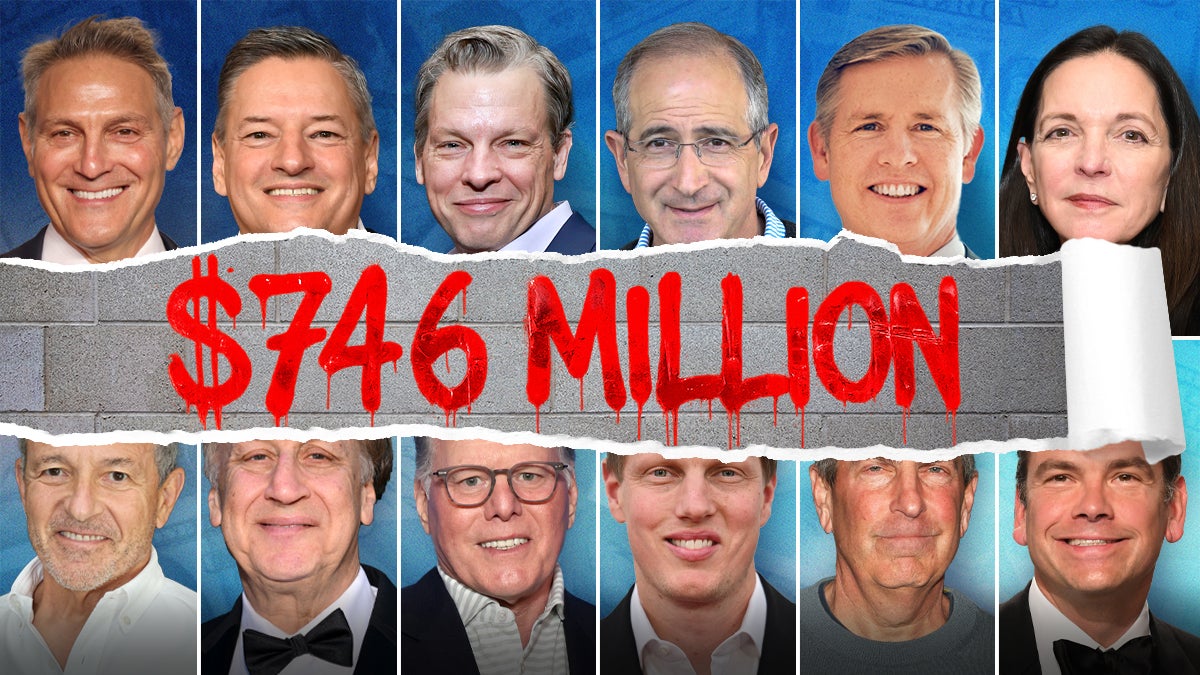
- What happened: Hollywood and media executives received a 51% pay raise in 2025 even as layoffs erased 17,000 jobs across the industry, intensifying scrutiny of executive-worker pay disparity.
- Context: The compensation surge contrasts sharply with mass reductions affecting newsrooms and production crews, fueling calls for regulatory action including an "Overpaid CEO" tax.
- Who's affected: Entry-level and mid-career journalists; nonprofit advocacy groups pushing for wage equity regulations.
AI in the Newsroom
OpenAI Licensing Deal with Brazilian Publishers
- Development: OpenAI announced landmark content licensing agreements with Grupo Folha and Grupo UOL, Brazil's largest publishers. ChatGPT will now surface attributed news summaries and links to their journalism, while both publishers gain API access, Codex, and Enterprise tier benefits.
- Parties: OpenAI, Grupo Folha, Grupo UOL (Brazil's leading newspaper and media groups).
- Why it matters: Signals a shift from AI companies scraping content free to direct compensation models. This follows similar moves by OpenAI with other international publishers and establishes a licensing template that could reshape publisher-AI company relations globally.
The Economist Launches ChatGPT App
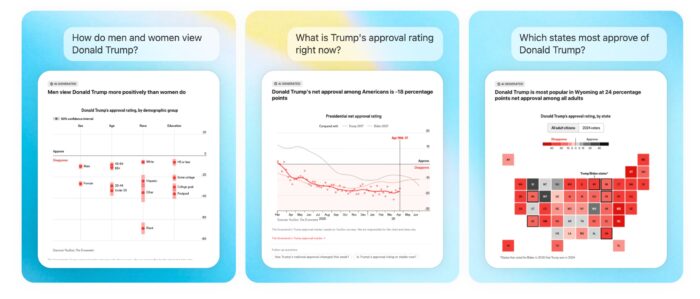
- Development: The Economist released a dedicated ChatGPT app that retrieves and visualizes polling data from its Trump approval rating tracker, creating a new direct-to-reader distribution channel within OpenAI's platform.
- Parties: The Economist, OpenAI; reflects broader publisher efforts to build AI-native products.
- Why it matters: Demonstrates that publishers can use AI platforms as distribution and monetization channels rather than purely as threats. Shows successful product innovation within AI ecosystems.
Publishers Cutting Six-Figure AI Licensing Deals via Snowflake
- Development: Publishers are negotiating six-figure AI licensing agreements with enterprise clients through Snowflake's monetized RAG (Retrieval-Augmented Generation) platform, moving from passive licensing to active publisher control over data monetization.
- Parties: Multiple publishers (unnamed); Snowflake; enterprise AI clients.
- Why it matters: Represents a meaningful shift toward publisher agency in the AI economy. Rather than accepting whatever compensation AI companies offer, publishers are building direct relationships with enterprise customers and capturing larger revenue shares.
"Double Bind" Risk: Open Markets Institute Report on AI Licensing
- Development: The Open Markets Institute published "Same Gatekeepers, New Tollbooths: Mapping the AI Content Licensing Market," warning that news publishers face a structural disadvantage in AI licensing negotiations despite apparent newfound bargaining power.
- Parties: Open Markets Institute (think tank); publishers; AI companies.
- Why it matters: Cautions that while licensing deals appear lucrative, publishers remain dependent on a small number of dominant AI firms, replicating the power imbalance they've faced with Google and Meta. Revenue concentration risk persists even as dollars flow to news organizations.
Platforms & Distribution
Google AI Search Overhaul Triggers "Google Zero" Fears
- Signal: Google's rollout of AI Overviews and AI Mode search experiences is reducing direct publisher referral traffic as AI summaries answer queries in-SERP. Publishers report traffic uncertainty as Google increasingly answers user questions without click-through.
- Publisher impact: Publishers are bracing for potentially significant referral traffic losses, prompting faster pivots to direct subscription models and social platform distribution. The shift echoes concerns that Google search referral traffic—the backbone of digital publishing economics for two decades—may collapse.
Meta Launches Subscription Tiers; Publishers Lean on Platforms as Revenue Lines
- Signal: Meta rolled out subscription models for Facebook, Instagram, and WhatsApp, introducing "Meta One" with AI-focused premium features. Separately, publishers report treating social platforms as direct revenue streams rather than traffic funnels as Google referral weakens.
- Publisher impact: Publishers are shifting focus from passive search visibility to active social strategy and paid social partnerships. Meta's subscription move creates potential new monetization channels, but also increases competition for user attention and wallet share. and
Press Freedom & Media Criticism
-
AI Chatbot Bias Debate — Conservatives have raised concerns that major AI chatbots (including those powering news aggregation) rely disproportionately on left-leaning media sources, making them untrustworthy as neutral news delivery mechanisms. Critics argue that if millions use AI for news discovery, bias in training data becomes a systemic press freedom issue.
-
Public Media Consolidation Framework Published — The nonprofit Backstory & Strategy released a 4-tier consolidation framework to help public media station boards evaluate merger and acquisition decisions with a principled process designed to protect community journalism rather than sacrifice it for financial gain. The framework addresses structural crisis in the sector as federal funding cuts accelerate consolidation.

Analysis Worth Reading
-
"The emerging AI content licensing market puts news publishers in a 'double bind'" by Nieman Lab — Open Markets Institute analysis reveals that despite six-figure licensing deals, publishers face structural disadvantages because AI companies remain dominant gatekeepers; publishers shift from one toll-booth (Google) to another (OpenAI, Anthropic).
-
"AI in the Newsroom: the new frontier of ethics in journalism" by WGCU News / Poynter Institute — Poynter explores how large language models are being integrated into newsrooms and the ethical guardrails needed as journalists adopt AI writing, fact-checking, and research tools at scale.
-
"Media Briefing: As Google traffic ebbs, some publishers see social platforms as real revenue lines" by Digiday — Publishers are abandoning pure traffic-arbitrage strategies and instead treating social platforms (Meta, TikTok, X) as direct revenue partners through advertising revenue share, sponsorship, and audience data monetization rather than referral sources.
What to Watch Next
-
NPR Strategic Reorganization Timeline: NPR is expected to announce the full scope of its newsroom restructuring by mid-June 2026, including which beats and bureaus will be consolidated or eliminated. Stakeholders should monitor for announcements about network expansion, local station partnerships, or revenue model pivots.
-
AI Licensing Deal Announcements: As OpenAI's Brazil deal with Folha and UOL serves as proof of concept, major U.S. and European publishers (New York Times, Financial Times, Guardian, Reuters) are expected to announce their own licensing terms by Q3 2026. Watch for announcements around exclusivity terms and revenue shares.
-
Google AI Search Revenue Impact Data: Chartbeat, Semrush, and other analytics platforms are expected to release detailed referral traffic impact studies in June-July 2026 showing whether publisher traffic losses are sustained or temporary. This data will drive publisher investment decisions for the rest of the year.
Reader Action Items
-
Subscribe to Press Gazette's "Briefing" email — A daily newsletter tracking media M&A, layoffs, funding, and platform changes with a strong focus on European and international markets. Includes verified data on publisher traffic trends and AI licensing developments.
-
Review the Nieman Lab Predictions 2026 collection — Before year-end planning, read Nieman Lab's crowd-sourced predictions from top media strategists on how AI, platforms, and consolidation will reshape journalism. Useful for stress-testing your own 2026-2027 strategy.
Data Freshness Note: All reporting dated 2026-05-22 or later. NPR cuts confirmed May 27; OpenAI Brazil deal announced May 27; The Economist ChatGPT app May 27; Snowflake AI licensing report May 29; Meta subscription rollout May 27-28.
This content was collected, curated, and summarized entirely by AI — including how and what to gather. It may contain inaccuracies. Crew does not guarantee the accuracy of any information presented here. Always verify facts on your own before acting on them. Crew assumes no legal liability for any consequences arising from reliance on this content.
Powered by
