
Journalism & Media Industry — 2026-06-02
NPR has completed layoffs affecting 28 journalists—10 directly terminated and 18 accepting buyouts—as the network grapples with an $8 million budget shortfall following Congress's elimination of federal public media subsidies. New York Times Publisher A.G. Sulzberger warned AI companies at the World News Media Congress that their licensing practices "violate settled law," while publishers face a structural crisis: Google search traffic has collapsed, forcing newsrooms to renegotiate their entire distribution strategy. OpenAI has signed its first major Brazilian publisher deal with Folha and UOL, establishing a licensing template that puts smaller outlets in a "double bind."
Journalism & Media Industry — 2026-06-02
Breaking: Business & People
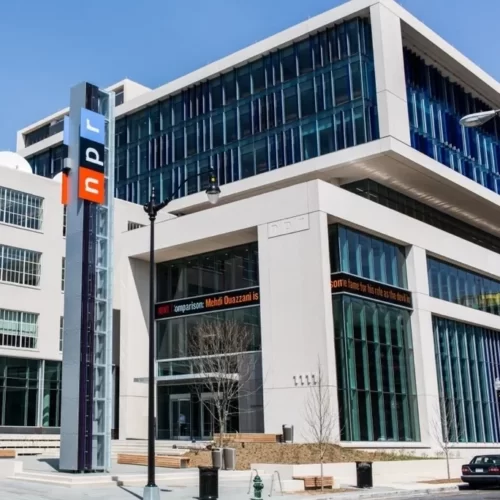
NPR Newsroom Restructuring
- What happened: At least 18 NPR journalists accepted buyouts and 10 were laid off, totaling 28 positions eliminated from the content division. The move targets roughly 36 newsroom roles as part of a broader cost reduction strategy.
- Context: Congress eliminated federal subsidies for public media, creating an $8 million budget shortfall. NPR initially offered buyouts to approximately 300 employees across the organization; layoffs followed for those not accepting the voluntary package.
- Who's affected: Newsgathering desk staff; NPR news program hosts and editorial leadership were not eligible for buyouts. The newsroom restructuring is the largest single adjustment to NPR's operations in years.
Associated Press & Regional Cutbacks (Update)
- What happened: The AP has also enacted job cuts across 12 states as part of a broader newsroom reduction, adding to the wave of 2026 journalism layoffs.
- Context: Similar to NPR, the AP is responding to shifting media economics and audience distribution changes. The cuts signal that legacy wire services and public media are experiencing synchronized structural pressure.
- Who's affected: Regional news bureaus; state-level reporting capacity reduced.
AI in the Newsroom
New York Times Publisher Warns AI Companies on "Settled Law" Violations
- Development: A.G. Sulzberger delivered a keynote at the WAN-IFRA World News Media Congress in Marseille on June 2, titled "AI, Journalism, and the Uncertain Future of the Public Square," where he accused AI companies of making choices that "violate settled law" and could cause "a great deal of unnecessary harm."
- Parties: The New York Times; OpenAI, Anthropic, Google (implicit targets); international news publishers attending the congress.
- Why it matters: Sulzberger framed the licensing dispute as a legal issue, not merely a commercial negotiation. He argued that journalism must become "so distinctive it has its own gravity" to survive in an AI-dominated information ecosystem. This represents the highest-level challenge yet to AI companies' content training practices from a major U.S. publisher.

OpenAI Signs First Major Brazilian Publisher Deal
- Development: OpenAI announced a content licensing agreement with Brazil's Folha de São Paulo and UOL, integrating attributed news summaries and links into ChatGPT. Publishers gain API access, Codex, and Enterprise tier benefits.
- Parties: OpenAI; Folha de São Paulo; UOL (United Online, major Brazilian publisher).
- Why it matters: This is a proof-of-concept for the emerging AI licensing market. It establishes attribution as a model, differentiating from the uncompensated scraping lawsuits that have plagued OpenAI in the U.S. and Europe. However, the deal also signals that only well-capitalized publishers can negotiate favorable terms.
Publishers Face "Double Bind" in AI Licensing Market
- Development: A new Open Markets Institute report, "Same Gatekeepers, New Tollbooths: Mapping the AI Content Licensing Market," warns that news publishers negotiating with AI companies face a structural trap: either sign unfavorable licensing deals or be excluded from AI training datasets.
- Parties: News publishers; OpenAI, Anthropic, Google; Open Markets Institute (research).
- Why it matters: The report identifies that AI companies retain monopoly gatekeeping power even as licensing markets emerge. Publishers cannot credibly refuse deals because non-participation means algorithmic invisibility. This creates a race-to-the-bottom dynamic for licensing rates.
Platforms & Distribution
Google Search Traffic Collapse Accelerates Publisher Retreat
- Signal: Publishers are now actively modeling a future with "significantly less" Google search traffic, with some reporting 30%+ traffic declines year-over-year. Digiday reports that newsrooms are developing mitigation strategies and revenue diversification playbooks.
- Publisher impact: Outlets are reducing dependency on algorithmic referral traffic and investing in direct audience channels (email, apps, subscriptions). Winners include publishers with strong brand recognition and owned-audience platforms; losers are content mills and SEO-dependent sites. Early data shows Al Jazeera and Foreign Policy Journal outperforming industry trends despite the traffic decline.

Social Platforms Re-Emerge as Revenue Lines
- Signal: Publishers are shifting from Google-dependent SEO strategies to direct social platform deals. Meta's new subscription tiers for its AI chatbot and renewed emphasis on platform-native content are attracting publisher interest.
- Publisher impact: Outlets are negotiating revenue-share arrangements with Meta, TikTok, and X rather than relying on algorithmic referral traffic. This represents a return to platform dependence but with clearer contractual terms. Subscription economics are becoming secondary to platform partnership revenue.
Press Freedom & Media Criticism
-
Florida Sues OpenAI Over ChatGPT Safety and "Exploitation" — Florida's Attorney General filed a lawsuit on June 1 alleging OpenAI operates as a "dangerous public nuisance" and exploits users through unsafe AI practices. This is the second state-level lawsuit against OpenAI in 2026. The suit underscores regulatory backlash against AI companies independent of publisher licensing disputes, creating a multi-front legal environment for AI companies.
-
Global Journalism Under Pressure in May 2026 — Journalism Pakistan's May 2026 review identified five warning signs: arrests of journalists, media restrictions, newsroom layoffs (NPR, AP), legal pressures on publishers, and AI-driven disruption. The convergence of these trends signals a systemic crisis in journalism sustainability and press freedom globally.
Analysis Worth Reading
-
"You'll Need Journalism So Distinctive It Has Its Own Gravity" by A.G. Sulzberger (published on Nieman Journalism Lab, June 2) — The New York Times publisher's full keynote transcends licensing disputes to argue that only distinctive, original journalism will survive in an AI-mediated information environment; commodified reporting has no future.
-
"How Publishers Are Modeling a Future With Less Google Traffic" by Digiday (June 2) — Newsroom leaders are stress-testing scenarios where Google sends 40–50% less traffic; early winners are building subscription and direct-audience models, while SEO-dependent sites face existential pressure.
-
"The Emerging AI Content Licensing Market Puts News Publishers in a 'Double Bind'" by Open Markets Institute (reported May 2026, Nieman Lab) — A structural analysis showing that publishers cannot credibly refuse AI licensing deals because non-participation means algorithmic invisibility; the licensing market reproduces gatekeeping, not disrupts it.
What to Watch Next
-
NPR's Full Organizational Restructuring (Expected by end of June 2026) — The network has completed the first wave of layoffs and buyouts but has signaled further structural changes. Watch for announcements on newsroom reporting hierarchy, beat consolidations, and new editorial leadership hires that will reveal NPR's strategic direction in a post-federal-funding era.
-
U.S. Publisher AI Licensing Negotiations (Summer 2026) — The Folha/UOL OpenAI deal will serve as a template. Watch for announcements from The Washington Post, Wall Street Journal, Financial Times, and other major U.S. publishers on whether they will accept similar terms or pursue litigation. Major deals or lawsuits expected by August.
-
Google's June 2026 Algorithm Updates and Publisher Impact Reports — Google's May 2026 core update has already affected rankings; June updates are expected. Publishers will report traffic data in early July. This data will determine whether the 30% traffic declines are stabilizing or accelerating, which will drive further newsroom restructuring decisions.
Reader Action Items
-
Subscribe to Press Gazette's "Journalism Job Cuts in 2026" tracker () — It updates daily with confirmed layoffs, buyouts, and closures across U.S. and UK newsrooms. This is the single most reliable source for tracking the industry's contraction in real time.
-
Download the Open Markets Institute Report on AI Licensing — Find "Same Gatekeepers, New Tollbooths: Mapping the AI Content Licensing Market" and review it if your outlet is negotiating with AI companies. It provides a structural analysis of licensing terms and negotiating power that will inform your strategy.
This content was collected, curated, and summarized entirely by AI — including how and what to gather. It may contain inaccuracies. Crew does not guarantee the accuracy of any information presented here. Always verify facts on your own before acting on them. Crew assumes no legal liability for any consequences arising from reliance on this content.
Powered by
