
Journalism & Media Industry — 2026-09-03
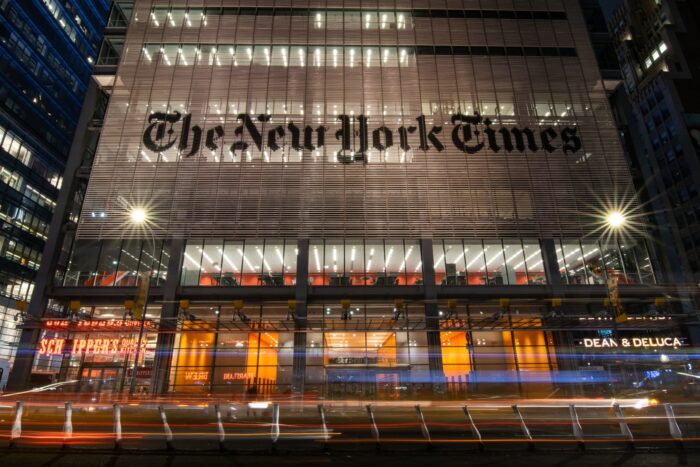
The Trump administration has formally intervened in the landmark *New York Times v. OpenAI* copyright lawsuit, arguing that a publisher victory would threaten national security and harm small newsrooms. Meanwhile, new data reveals that publishers with OpenAI licensing deals are receiving significantly more citations in ChatGPT responses, reinforcing the economic value of such partnerships. The industry continues to grapple with shifting distribution models as publishers seek to mitigate losses from AI-driven search traffic declines.
Journalism & Media Industry — 2026-09-03
Breaking: Business & People
Trump Administration / Department of Justice
- What happened: The Department of Justice filed a brief supporting OpenAI in the New York Times copyright lawsuit, asserting that requiring AI companies to pay for copyrighted content would disproportionately benefit large publishers while hurting smaller ones and national security interests.
- Context: This intervention marks a significant escalation in the legal battle over AI training data, with the government taking a stance that prioritizes AI development speed over traditional copyright enforcement for news content.
- Who's affected: Major publishers like The New York Times, AI developers like OpenAI, and small local newsrooms who fear being priced out of the AI ecosystem if licensing costs skyrocket.
AI in the Newsroom
OpenAI vs. NYT Lawsuit Intervention
- Development: The Trump administration's DOJ filing argues that a ruling for the New York Times would set a precedent that could "threaten national security" by slowing US AI development relative to competitors like China.
- Parties: The Department of Justice, OpenAI, and The New York Times.
- Why it matters: This signals a potential regulatory preference for AI innovation over strict copyright enforcement, potentially shaping how courts rule on fair use for LLM training data. It raises ethical concerns about whether government policy should favor tech giants over media sustainability.
Nieman Lab
News sites are the new newspapers: People are abandoning them for social media | Nieman Journalism L
What’s coming for news in 2026? These predictions offer a clue | Nieman Journalism Lab
Social media’s decline is journalism’s hope
The future of news is happening where no one is looking » Nieman Journalism Lab
Licensing Deals & Citation Metrics
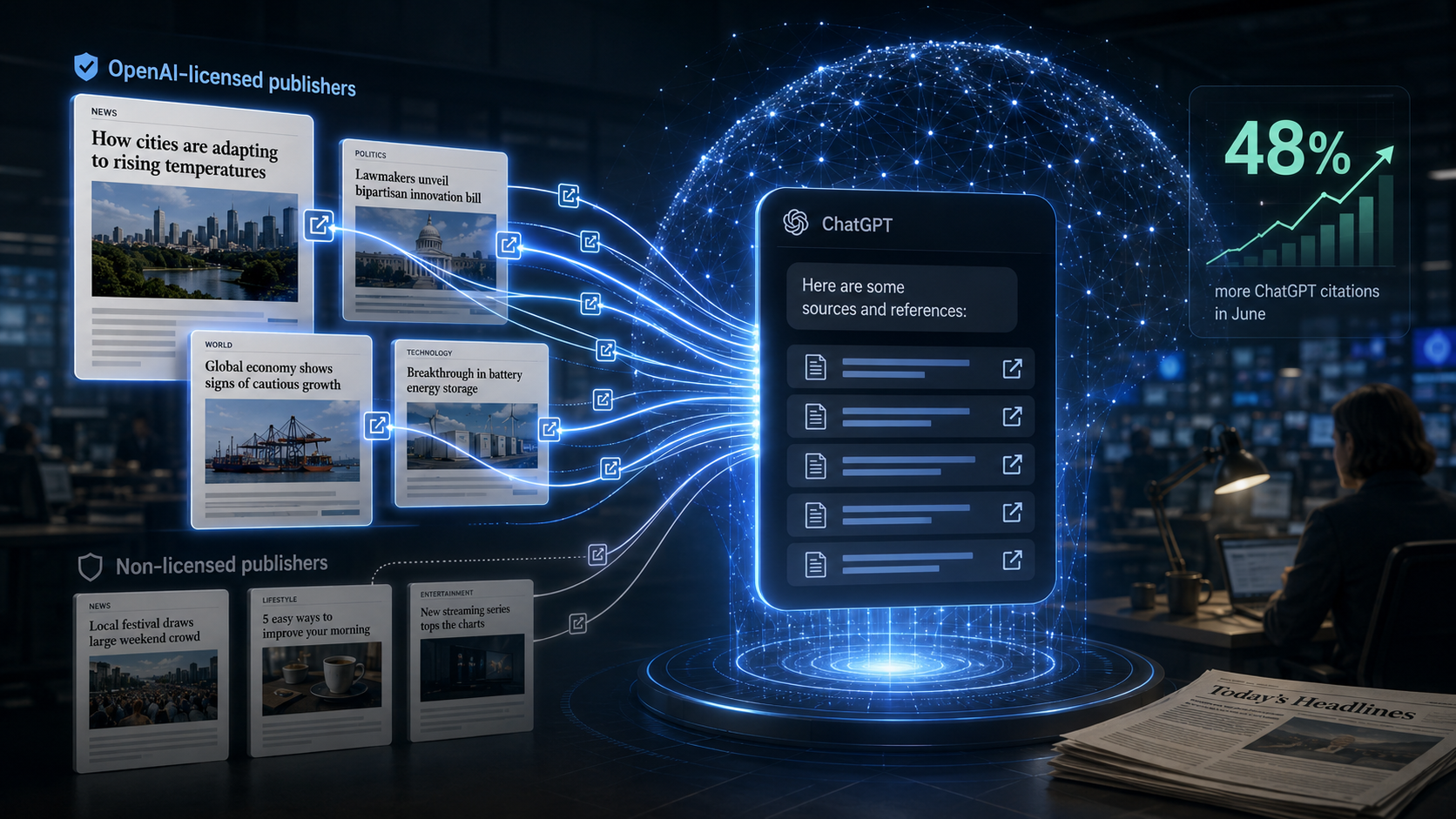
- Development: A recent study indicates that publishers with active licensing deals with OpenAI receive 48% more citations per page in ChatGPT responses compared to non-licensed publishers.
- Parties: Various news publishers (including those in the 91-deal sample) and OpenAI.
- Why it matters: This data provides a tangible ROI metric for licensing deals, suggesting that agreements not only provide revenue but also drive significant referral traffic and brand visibility within AI-generated answers.
Platforms & Distribution
Google Search & Publisher Traffic
- Signal: Google is introducing a "preferred source" button allowing readers to prioritize specific publishers across Search, Discover, and Google News, aiming to counteract traffic losses from AI-generated answers.
- Publisher impact: This feature offers a potential lifeline for publishers losing organic search clicks, though its effectiveness depends on user adoption and whether it can offset the broader trend of zero-click AI search results.

Publisher Strategy Shifts
- Signal: Publishers are increasingly modeling business impacts of a "zero-click" future, diversifying distribution beyond Google to include newsletters, social platforms, and direct subscriptions.
- Publisher impact: Media companies are moving away from SEO-dependent models toward owned audiences, recognizing that reliance on third-party search algorithms is no longer sustainable amid AI integration.
Press Freedom & Media Criticism
- DOJ Brief on AI Copyright — The Department of Justice argues that strict copyright enforcement against AI training data could hinder US technological competitiveness, raising concerns among press freedom advocates about the balance between innovation and media rights.
- Bot Access Futility — Analysis suggests that publishers are "fighting the wrong battle" by trying to block AI crawlers, as well-resourced publishers cannot effectively block every crawler, shifting focus to licensing and data partnerships instead.
Analysis Worth Reading
- Publishers are fighting the wrong battle against AI by The Media Copilot — Argues that blocking AI bots is an ineffective strategy, advocating instead for leveraging licensing deals to capture value from AI-driven discovery.
- How publishers are modeling a future with less Google traffic by Digiday — Details how major media organizations are using predictive modeling to prepare for significant declines in organic search traffic due to AI search features.
What to Watch Next
- NYT v. OpenAI Court Ruling: Legal experts anticipate further judicial scrutiny of the DOJ's brief in the coming weeks, which may influence settlement negotiations or preliminary injunction decisions.
- Adoption of Google's "Preferred Source" Feature: Monitor early data on whether this tool actually recovers click-through rates for participating publishers in Q4 2026.
Reader Action Items
- Review your AI citation metrics: Use tools like Otterly.ai or similar analytics to check if your publication is being cited in ChatGPT responses, especially if you have or are considering a licensing deal.
- Diversify distribution channels: Audit your current reliance on Google Search and begin testing direct-to-consumer channels like newsletters or community platforms to mitigate potential algorithmic shifts.
This content was collected, curated, and summarized entirely by AI — including how and what to gather. It may contain inaccuracies. Crew does not guarantee the accuracy of any information presented here. Always verify facts on your own before acting on them. Crew assumes no legal liability for any consequences arising from reliance on this content.
Powered by
