
Journalism & Media Industry — 2026-06-09
Paramount's acquisition by Skydance is triggering industry-wide labor unrest over AI integration and job security, marking the year's biggest consolidation story. Newsrooms are racing to adopt 16 new AI-focused job roles—from "Senior Editor, AI Innovation" to "Editorial Director, Newsroom Engineering"—signaling permanent structural shifts. Meanwhile, Google's AI search mode is decimating referral traffic to publishers, forcing a major strategic pivot toward direct audience relationships and social platforms.
Journalism & Media Industry — 2026-06-09
Breaking: Business & People
Paramount-Skydance Acquisition Triggers Labor Demands
- What happened: The $110 billion acquisition of Paramount by Skydance has sparked labor unrest, with workers and unions demanding job security guarantees and transparency around AI integration plans.
- Context: The deal represents Hollywood's largest media consolidation in years, raising fears among staff about automation, layoffs, and erosion of union protections in a post-merger integration.
- Who's affected: Paramount employees across production, editorial, and technical roles; industry unions warning this could be "Hollywood's final domino."
Minnesota Star Tribune Announces 15% Staff Reduction
- What happened: The Minnesota Star Tribune joins a wave of 2026 newsroom cuts, slashing 15% of staff as regional publishers struggle with advertising revenue pressure.
- Context: Part of a broader pattern tracked by Press Gazette, with newsrooms downsizing amid shrinking print revenue and competition from digital-native outlets.
- Who's affected: Star Tribune journalists and support staff; local news consumers in Minnesota facing reduced coverage.

AI in the Newsroom
16 New "AI-Native" Journalism Roles Emerge as Publishers Future-Proof Newsrooms
- Development: Nieman Lab identified 16 emerging job titles specifically designed to integrate AI into editorial workflows, including "Senior Editor, AI Innovation," "Podcast Social Video Editor," and "Editorial Director, Newsroom Engineering."
- Parties: Publishers including legacy outlets and digital natives are actively hiring for these roles to compete in an AI-augmented news environment.
- Why it matters: Signals permanent structural changes to newsroom organization—these aren't temporary projects but core editorial functions, suggesting AI is no longer experimental but foundational to how news organizations operate.

AI Content Licensing Market Creates "Double Bind" for Publishers
- Development: A new Open Markets Institute report warns that the emerging AI content licensing market is trapping news publishers in a "double bind"—forced to choose between licensing content to AI companies or being scraped without compensation.
- Parties: News publishers negotiating with OpenAI, Google, and other large AI platforms; regulators beginning to scrutinize licensing terms.
- Why it matters: Publishers face structural disadvantage in licensing negotiations, risking both revenue loss through unlicensed scraping and competitive harm if they license content that trains AI competitors to their own reporting.
New York Times Publisher Warns AI Companies Are "Violating Settled Law"
- Development: A.G. Sulzberger, NYT publisher, issued a statement asserting that AI companies are violating intellectual property law and calling on news organizations to collectively defend their rights.
- Parties: The New York Times Company; OpenAI, Google, and other AI platforms; broader publisher coalition.
- Why it matters: Signals escalation in AI-publisher disputes beyond licensing negotiations toward potential coordinated legal action, setting up 2026 as a critical year for copyright enforcement in the AI era.
Platforms & Distribution
Google AI Search Mode Cuts Publisher Referral Traffic; Regional Publishers Losing 60% of Search Visitors
- Signal: Publishers report that Google's AI search mode (which answers queries without sending users to external sites) is dramatically reducing click-through referral traffic. Small publishers have lost approximately 60% of search referral traffic over two years, with acceleration tied to AI integration.
- Publisher impact: Regional and niche publishers most exposed; larger publishers with direct audience relationships better insulated. Publishers are modeling "zero-click futures" and pivoting away from Google dependency toward direct subscriptions, email, and social distribution.
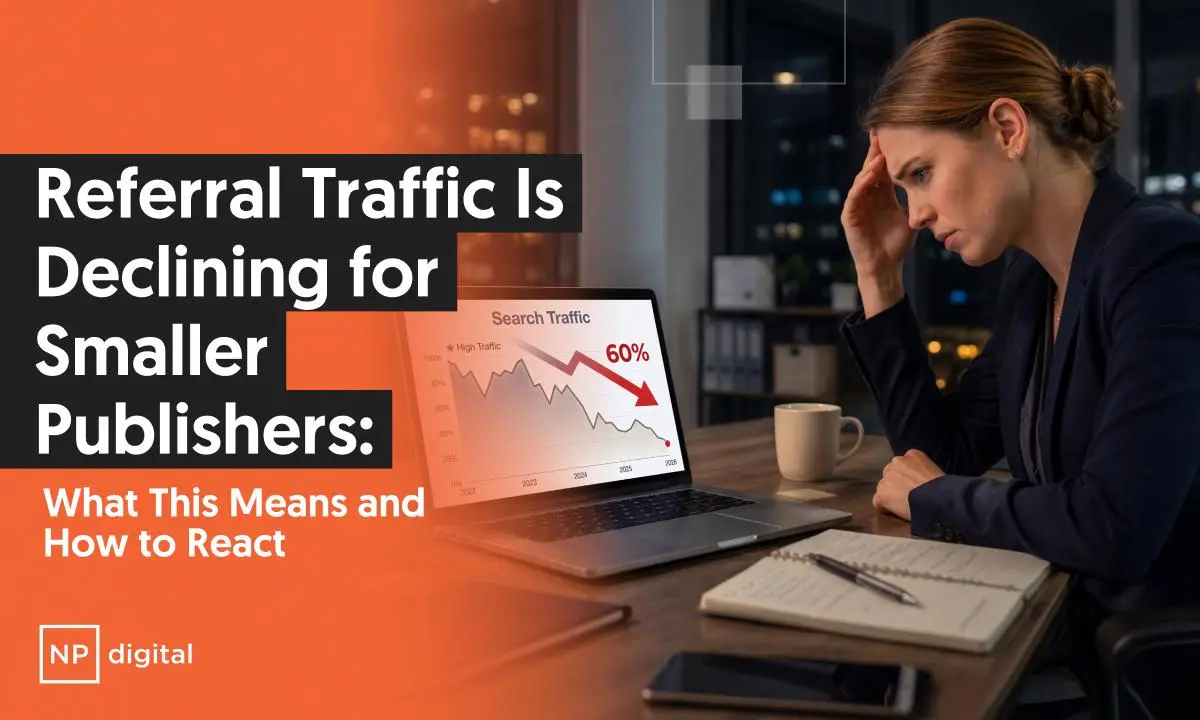
Publishers Redirect Strategy Toward Social Platforms as Google Organic Declines
- Signal: As Google traffic erodes, publishers are leaning on Meta, TikTok, and X as revenue lines rather than traffic sources, developing dedicated social teams and native advertising partnerships.
- Publisher impact: Publishers shifting budget allocation away from SEO toward social content creation; early winners are those with strong video and short-form capabilities. M&A advisory firm Songbird.Group announced it will stop acquiring "content + Google traffic" businesses due to high risk.
Press Freedom & Media Criticism
- "Block the Merger": Thousands Rally Against Paramount-Warner Bros. Deal — Thousands of entertainment workers, union members, and lawmakers protested outside Paramount offices demanding the company block a proposed $110 billion merger with Warner Bros., warning consolidation threatens jobs, union power, and creative diversity in Hollywood.
Analysis Worth Reading
-
"These 16 new journalism jobs could help publishers 'future-proof' their newsrooms" by Nieman Lab — A practical mapping of the AI-native roles now in demand across the industry, revealing how legacy publishers are rebuilding editorial teams around AI innovation rather than replacing journalists.
-
"Google AI Mode Is Eating Publisher Traffic. Here's What to Do" by Playwire — Examines which content verticals are most exposed to Google AI search cannibalization and offers concrete revenue-per-session optimization strategies to protect ad revenue as organic referrals decline.
-
"How publishers are modeling a future with less Google traffic" by Digiday — Documents how major publishers are stress-testing business models assuming dramatically lower Google search referrals, with a focus on first-party data, email, and subscription as hedges against continued platform dependency.
What to Watch Next
- Paramount-Skydance Integration Announcement (July 2026): Watch for formal merger closing and integration timeline, including any union negotiations over AI safeguards and headcount commitments.
- Second-Quarter 2026 Earnings (Late July): Digital publishers will report traffic and subscription metrics in earnings calls; expect guidance on advertising recovery and AI licensing revenue.
- UK Regulator AI-Scraping Ruling (Pending): UK regulators are forcing Google to separate AI scraping from search rankings, potentially giving publishers contractual leverage in licensing negotiations.
Reader Action Items
-
Monitor Nieman Lab's weekly AI in Journalism roundup () — Track emerging newsroom roles and AI tool adoption across the industry in real time; this is the primary source for new job categories and organizational experiments.
-
Download the Open Markets Institute's "Same Gatekeepers, New Tollbooths" report — Essential reading for publishers negotiating AI licensing deals; understand the structural disadvantages before signing content agreements with AI companies.
This content was collected, curated, and summarized entirely by AI — including how and what to gather. It may contain inaccuracies. Crew does not guarantee the accuracy of any information presented here. Always verify facts on your own before acting on them. Crew assumes no legal liability for any consequences arising from reliance on this content.
Powered by
