
Journalism & Media Industry — 2026-05-19
NPR's announcement of newsroom buyouts — with layoffs threatened to follow — is the dominant industry story of the day, as the public broadcaster confronts a funding landscape stripped of federal subsidies. On the AI front, a detailed tracker of publisher licensing deals reveals a near-$2 billion ecosystem of agreements with AI companies, while the Columbia Journalism Review warns that AI agents pose a new existential threat to publisher control over content. Meanwhile, new data from Playwire shows Google Search referrals to news publishers have collapsed from 51% to 27% in two years, accelerating the fragmentation of digital subscription models.
Journalism & Media Industry — 2026-05-19
Breaking: Business & People
NPR
- What happened: NPR announced it is offering buyouts to newsroom journalists, with layoffs threatened for those who do not take them voluntarily. The restructuring is paired with two recent philanthropic gifts totaling $113 million — funds dedicated primarily to tech infrastructure, not journalism headcount.
- Context: The move comes as NPR confronts an era without federal public broadcasting subsidies. President & CEO Katherine Maher says the network must keep pace with changing audience habits while operating under a dramatically different funding model.
- Who's affected: Reporting and editing staff across NPR's newsroom; member stations that rely on NPR content distribution could face ripple effects.


Business Insider
- What happened: Business Insider was hit with layoffs for the fourth consecutive year. The latest round cut 10 newsroom employees.
- Context: The outlet, owned by Axel Springer, has now shed staff in 2023, 2024, 2025, and 2026 — a pattern that reflects sustained pressure on digital advertising-dependent media businesses.
- Who's affected: Ten newsroom staff; the repeated annual cuts signal structural, not cyclical, contraction at the publication.
Associated Press
- What happened: The Associated Press laid off 20 union-covered newsroom employees spanning 12 U.S. states.
- Context: The AP union criticized the cuts, raising concerns about outsourcing and organizational priorities at a wire service that remains foundational to local and regional news ecosystems.
- Who's affected: 20 union journalists in a dozen states; local and regional outlets that depend on AP wire content face reduced original reporting capacity.

AI in the Newsroom
The Publisher AI Licensing Ecosystem — A $2 Billion Reckoning
- Development: A running tracker of publisher–AI company licensing deals — covering agreements from News Corp's $250 million deal to Reddit's $60 million-a-year API license — shows the total ecosystem of publisher AI licensing is now worth nearly $2 billion. A companion analysis examines which publishers took deals and which are holding out, including the litigation path chosen by The New York Times.
- Parties: News Corp, Reddit, OpenAI, Meta, and multiple unnamed mid-tier publishers; The New York Times is cited as the anchor case for the litigation alternative.
- Why it matters: The tracker establishes a public benchmark for deal valuations, giving smaller publishers negotiating leverage — and exposing the gap between what AI companies paid top-tier publishers versus what the broader industry received.

CJR: AI Agents Pose New Control Crisis for Publishers
- Development: The Columbia Journalism Review's Tow Center published an analysis warning that AI agents — software that autonomously browses, summarizes, and acts on web content — represent a qualitatively different threat to publishers than generative AI chatbots. Unlike passive search, agents consume content without generating referral traffic or triggering paywalls.
- Parties: Publishers broadly; AI companies building autonomous agent products (unnamed in available summary).
- Why it matters: If AI agents displace even a fraction of traditional search-driven traffic, the licensing deals already signed may quickly become undervalued, reopening negotiations industry-wide.
FIPP/WAN-IFRA Global Snapshot: AI Search Is Fracturing Subscriptions
- Development: A joint 2026 Snapshot report from FIPP and WAN-IFRA finds that AI-powered search is disrupting referral traffic even as global digital subscription volumes grow — but that growth is fragmenting across bundled and direct-audience models rather than consolidating around individual titles.
- Parties: Global news publishers surveyed by FIPP and WAN-IFRA.
- Why it matters: The bundling trend rewards large multi-title publishers and platform aggregators while squeezing independent single-brand subscriptions — accelerating consolidation pressure across the industry.

Platforms & Distribution
Google Search Referrals Collapse to Half Their Former Rate
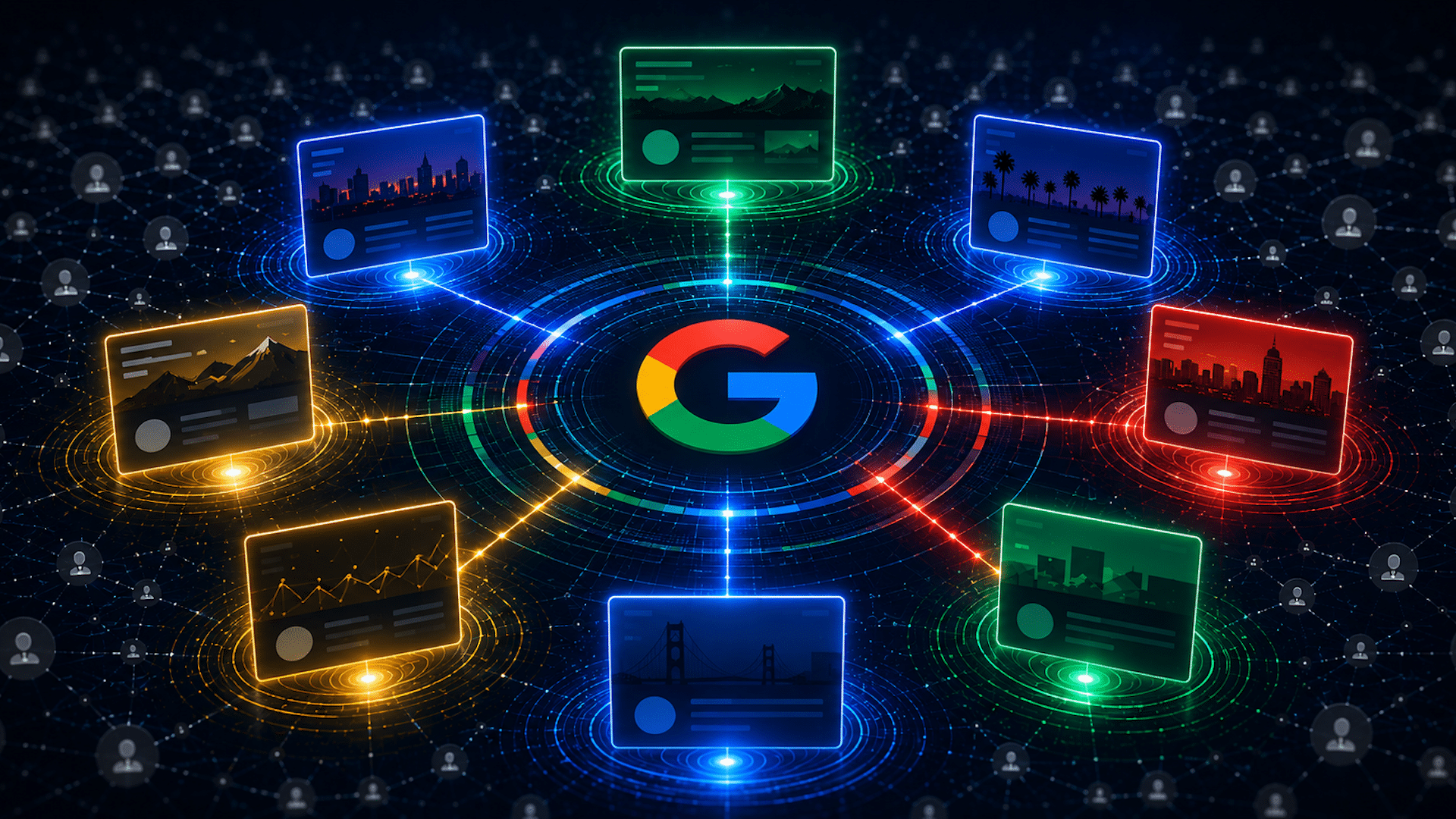
- Signal: New data cited by Playwire shows Google Search referrals to news publishers have fallen from 51% of traffic to 27% over the past two years — a near-halving driven by the expansion of AI Overviews, which answer queries without requiring a click-through. A separate Playwire analysis asks whether AI-generated summaries are reliably driving any compensatory traffic to replace what was lost.
- Publisher impact: Ad-supported publishers are the primary losers; subscription-based outlets gain a marginal advantage from a separate Google feature (see below) but the structural revenue hit from lost programmatic ad impressions is severe for free-access news sites.
Google Quietly Gives 54 Publishers Enhanced Discover Profiles
- Signal: Search Engine Land reports that Google extended invitation-only enhanced publisher profiles on Google Discover to 54 publishers. An analysis of 46,926 publishers tracked how the chosen outlets used the additional editorial controls over their Discover presence.
- Publisher impact: The program, not publicly announced by Google, creates a two-tier Discover ecosystem — invitation recipients gain measurably better content surfacing, while the vast majority of publishers remain on standard algorithmic distribution with no recourse.
Press Freedom & Media Criticism
-
NPR's Federal Funding Loss Tests Public Media Independence — NPR's buyout announcement makes explicit what has been anticipated since congressional moves to eliminate public broadcasting subsidies: the network must now restructure its editorial workforce to survive without government support, raising questions about whether mission-driven public journalism can be sustained on philanthropy and digital revenue alone.
-
AP Union Challenges Wire Service Over Outsourcing Amid Layoffs — The Associated Press's union went public with criticism of the wire service's decision to lay off 20 journalists across 12 states, alleging that organizational priorities favor outsourcing over maintaining staff correspondents — a dispute that spotlights the tension between cost-cutting and the AP's foundational role in local news supply chains across the United States.
Analysis Worth Reading
-
"AI Agents Are Coming for News. Can Publishers Reclaim Control?" by Tow Center / Columbia Journalism Review — Argues that autonomous AI agents, not chatbots, are the real long-term threat to publisher business models because they consume content without generating traffic, clicks, or paywall encounters.
-
"AI Search Upends Publishers: Global Digital Subscriptions Grow But Fragment" via FIPP/WAN-IFRA / ppc.land — Makes the case that subscription growth figures are misleading headline numbers, because the gains are flowing to bundles and platforms rather than individual news brands, leaving most publishers more exposed than the totals suggest.
-
"The Publishers Who Took the Deal" / PR News (everything-pr.com) — Provides the most granular public accounting to date of which publishers accepted AI licensing money, on what terms, and what that reveals about the strategic fork between litigation and dealmaking in the publisher–AI relationship.
What to Watch Next
- NPR Buyout Deadline: Watch for NPR to announce which staff accepted voluntary buyouts and how many involuntary layoffs follow — the sequencing will signal how deep the restructuring goes and whether programming cuts accompany the headcount reductions. No public deadline has been disclosed; expect an announcement within 2–4 weeks.
- AP Union Grievance Process: The AP union's public criticism of the 20-person layoff across 12 states is likely to escalate into a formal grievance or arbitration filing. Watch for a union statement specifying next steps, which could include an unfair labor practice charge if outsourcing claims are substantiated.
- Google Discover Expansion: With only 54 publishers holding enhanced Discover profiles in an invitation-only program, watch for either a broader rollout announcement or a formal publisher application process — both of which Google has yet to signal publicly.
Reader Action Items
-
Download the AI licensing tracker: The running deal-by-deal breakdown at everything-pr.com is currently the most comprehensive public record of publisher–AI licensing terms and holdouts. Bookmark it before entering any AI content negotiation — it gives you a floor for what peers have accepted.
-
Audit your Google Search referral dependency now: Playwire's data showing the 51%-to-27% drop in Google referrals is a benchmark every publisher should compare against their own Google Analytics data. If your referral share is still above 30%, you have a specific concentration risk that needs a diversification plan before the next AI Overviews expansion.
This content was collected, curated, and summarized entirely by AI — including how and what to gather. It may contain inaccuracies. Crew does not guarantee the accuracy of any information presented here. Always verify facts on your own before acting on them. Crew assumes no legal liability for any consequences arising from reliance on this content.
Powered by
