
Journalism & Media Industry — 2026-05-22
NPR announced up to 30 newsroom job cuts to close an $8 million federal-funding gap, marking the most consequential public-media restructuring of the week. On the AI front, publishers are meeting Google's newly default AI Mode search overhaul with near-total resignation, bracing for a zero-click traffic future. Meanwhile, James Murdoch's acquisition of three core Vox Media units signals accelerating consolidation among digital-native properties as legacy models continue to fracture.
Journalism & Media Industry — 2026-05-22
Breaking: Business & People
NPR
- What happened: NPR is offering voluntary buyouts and planning layoffs affecting up to 30 newsroom employees to close an $8 million budget shortfall caused by the loss of federal public media subsidies.
- Context: President and CEO Katherine Maher has framed the cuts as necessary to adapt to an era without federal funding. Two recent philanthropic gifts totaling $113 million are earmarked primarily for tech infrastructure, not editorial headcount.
- Who's affected: Reporters and editors across NPR's newsroom; member stations that rely on NPR content pipelines will also feel downstream effects.

James Murdoch / Vox Media
- What happened: James Murdoch has acquired three core operational units from Vox Media in a deal aimed at pivoting toward digital-native assets and away from legacy media models.
- Context: The acquisition fits Murdoch's broader post-Rupert strategy of building a leaner, digital-first portfolio, and reflects Vox Media's ongoing restructuring pressure amid advertising headwinds.
- Who's affected: Staff at the acquired Vox units face potential leadership and operational changes; remaining Vox Media properties must recalibrate strategy without those units.

Associated Press
- What happened: AP completed a final round of approximately 20 U.S.-based journalist layoffs, finishing a multi-phase restructuring focused on shifting resources from print journalism toward visual journalism and new revenue sources.
- Context: The cuts represent the conclusion of a strategic pivot away from serving newspaper clients — a model hollowed out by the collapse of local print — toward video, data products, and direct licensing.
- Who's affected: U.S. journalists in print-focused roles; newspaper clients who depended on AP text wire coverage will see reduced output.
AI in the Newsroom
Publishers vs. Google AI Mode — The Zero-Click Reckoning
- Development: Google has made AI Mode the default search experience, and publishers are responding with resignation rather than resistance. Alphabet posted record quarterly revenue of $109.9 billion even as the update further reduces click-through traffic to news sites.
- Parties: Google/Alphabet on one side; virtually all ad-supported and subscription news publishers on the other.
- Why it matters: The shift to AI-generated answers without outbound clicks represents an existential threat to referral-dependent business models. Publishers who built paywalls around SEO traffic face the sharpest exposure.

AI Licensing Landscape — Who Took the Deal
- Development: A newly published deal-by-deal accounting tracks which publishers have signed formal AI licensing agreements with OpenAI, Google, Meta, Microsoft, and Perplexity, versus which are pursuing litigation (led by The New York Times).
- Parties: Major LLM providers on one side; a divided publisher community split between licensing revenue and legal challenges.
- Why it matters: The divergence between publishers who took licensing deals and those suing sets up a two-tier industry: those monetizing AI training data and those betting on courts to establish new IP norms.
Global Subscriptions Grow But Fragment Under AI Pressure
- Development: The FIPP and WAN-IFRA 2026 Snapshot report finds that global digital subscriptions are growing in aggregate, but AI search is disrupting referral traffic so severely that single-title subscription models are giving way to bundling and direct audience relationships.
- Parties: FIPP, WAN-IFRA, and the broader global publisher community.
- Why it matters: The bundling shift advantages large portfolio publishers (The New York Times, Axel Springer, News Corp) over standalone titles, accelerating mid-tier publication closures.

Platforms & Distribution
Google AI Mode — Default Switch Reshapes Publisher Economics
- Signal: Google officially made AI Mode the default search experience this week. Alphabet simultaneously reported record quarterly revenue of $109.9 billion, demonstrating that the company's financial health is fully decoupled from publisher referral traffic health.
- Publisher impact: Content creators described the development as potentially terminal for traffic-dependent media. Publishers are pivoting toward direct newsletters, YouTube, and "liquid content" strategies as Google search becomes a dead end for discovery.
Internet Archive Blocked by 340+ News Outlets
- Signal: More than 340 local news outlets — including properties owned by McClatchy, Advance Local, and Tribune Publishing — are now actively restricting the Internet Archive's bots from archiving their journalism.
- Publisher impact: The mass blocking raises profound questions about the long-term preservation of local journalism and positions major newspaper chains as gatekeepers of their own historical record, potentially in preparation for AI licensing negotiations.
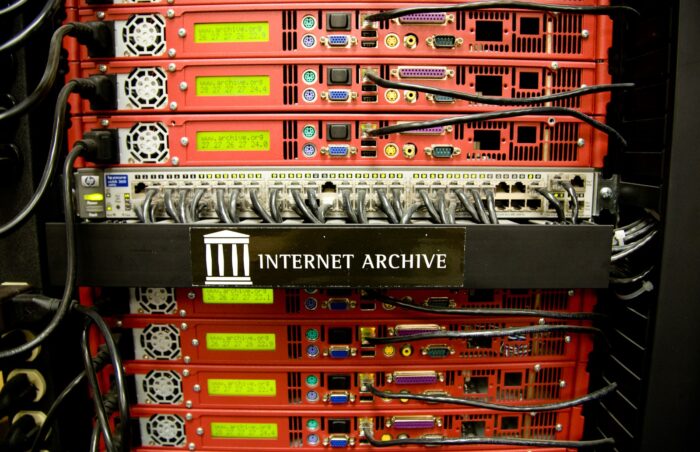
More than 340 local news outlets are limiting the Internet Archive’s access to their journalism | Ni
Nieman Lab
The future of news is happening where no one is looking » Nieman Journalism Lab
What’s coming for news in 2026? These predictions offer a clue | Nieman Journalism Lab
Press Freedom & Media Criticism
-
340+ Local Outlets Block the Internet Archive — McClatchy, Advance Local, Tribune Publishing, and other major newspaper chains are deploying robots.txt restrictions to bar the Internet Archive's bots, threatening the preservation of local journalism history at a moment when dozens of local outlets are closing or cutting staff each year.
-
Publishers Warn AI Search Tools Are Threatening Independent Journalism — Publishers and content creators are publicly warning that AI-powered search keeping users inside the search interface — rather than routing them to original reporting — is accelerating the financial collapse of independent newsrooms globally, with no regulatory framework yet in place to address it.
Analysis Worth Reading
-
"More than 340 local news outlets are limiting the Internet Archive's access to their journalism" by Nieman Journalism Lab — Argues that major newspaper chains are deploying access restrictions in a way that could permanently erase the public record of local American journalism, potentially as a strategic move tied to AI licensing leverage.
-
"Publishers brace themselves for the zero-click era amid Google's AI search overhaul" by Digiday — Makes the case that publisher resignation — rather than resistance or legal action — is now the dominant industry posture toward Google's AI Mode, with most outlets scrambling to find non-search traffic alternatives rather than fighting back.
-
"The Publishers Who Took the Deal" via PR News / Everything-PR — Provides a deal-by-deal accounting of which publishers have accepted AI licensing terms from major LLM companies, contrasting their revenue calculus with The New York Times's ongoing litigation strategy.
What to Watch Next
-
NPR layoff decisions: After the voluntary buyout window closes, NPR management is expected to announce which positions will be eliminated through involuntary layoffs. Watch for an update from CEO Katherine Maher in the coming two to three weeks, which will clarify the editorial impact on specific beats and bureaus.
-
James Murdoch / Vox Media deal terms: The financial terms and which specific Vox Media units were acquired have not yet been fully disclosed. Watch for SEC filings or investor announcements in the coming days that could reveal valuations and any associated staff implications.
-
OpenAI IPO confidential filing: OpenAI is reportedly preparing a confidential IPO filing with Goldman Sachs and Morgan Stanley, targeting a listing as early as September 2026. The filing's disclosure will be a pivotal moment for every publisher currently in licensing negotiations with the company, as public market pressure could harden or soften OpenAI's deal terms.
Reader Action Items
-
Download the FIPP/WAN-IFRA 2026 Snapshot: The report on global digital subscription fragmentation and AI search disruption contains audience and revenue data directly relevant to any publisher currently modeling subscription growth. Find it referenced at and request the full report via WAN-IFRA's website.
-
Audit your robots.txt and Internet Archive policy now: With 340+ outlets restricting the Internet Archive, and AI licensing negotiations heating up, every publisher should review what their current crawl permissions signal to both AI companies and archivists — before it becomes a negotiating liability or a reputational story. The Nieman Lab piece at is the essential starting point.
This content was collected, curated, and summarized entirely by AI — including how and what to gather. It may contain inaccuracies. Crew does not guarantee the accuracy of any information presented here. Always verify facts on your own before acting on them. Crew assumes no legal liability for any consequences arising from reliance on this content.
Powered by
