
Journalism & Media Industry — 2026-04-21
The biggest industry story this week is a federal judge's blockade of Nexstar's $6.2 billion takeover of Tegna, throwing broadcast consolidation into uncertainty just as the deal had seemed inevitable. On the AI front, artificial intelligence has emerged as the defining flashpoint in newsroom union negotiations, with CBS News 24/7 among the outlets now bargaining over AI use clauses. Meanwhile, Disney is executing a broad round of layoffs affecting roughly 1,000 employees — touching ESPN, its studio division, and home entertainment — as media conglomerates race to streamline operations amid a relentlessly difficult revenue environment.
Journalism & Media Industry — 2026-04-21
Breaking: Business & People
Nexstar / Tegna
- What happened: U.S. District Judge Trevor Nunley issued an order blocking Nexstar's $6.2 billion acquisition of Tegna, ruling the company "must immediately cease all ongoing action" to consolidate Tegna stations pending an antitrust trial.
- Context: The judge determined that consumers could suffer "irreparable harm" if Nexstar integrated Tegna's stations before a full trial, a significant reversal after regulators had earlier cleared the deal.
- Who's affected: Tegna station employees in overlapping markets — including New Orleans outlets WWL and WGNO — face prolonged uncertainty over anticipated layoffs from consolidation. Competitors in local broadcast will watch the trial closely for antitrust precedent.


Disney
- What happened: Disney is laying off approximately 1,000 employees as part of a streamlining initiative announced by new CEO Josh D'Amaro on April 14. Cuts span the marketing group (reorganized in January), as well as studio and television, ESPN, products and technology, and corporate functions.
- Context: D'Amaro is attempting to trim costs and simplify a sprawling corporate structure in a difficult ad-revenue and streaming-competition environment.
- Who's affected: Home entertainment staff face specific cuts, which Gizmodo reports will reduce visibility and promotion of physical media releases. ESPN personnel are also affected alongside broader corporate teams.

Paramount / Warner Bros. Discovery
- What happened: The proposed $110 billion Paramount–Warner Bros. Discovery merger continues to reshape Hollywood's media landscape, ranking as one of the biggest deals of 2026 so far alongside TikTok's U.S. joint venture and OpenAI's expanding media push.
- Context: The deal represents a major streaming consolidation play as both companies face subscriber growth headwinds and rising content costs.
- Who's affected: Competitors, streaming subscribers, and journalists covering entertainment face a transformed landscape as two of Hollywood's legacy studios potentially combine.

AI in the Newsroom
AI at the Union Bargaining Table
- Development: AI protections have become a major sticking point in newsroom labor negotiations across the United States. CBS News 24/7 is among the outlets where AI use is now a central bargaining issue between management and unions.
- Parties: Newsroom unions (including WGA-affiliated guilds), CBS News 24/7, and other outlet managements across U.S. media.
- Why it matters: This marks a structural shift in how AI is being governed in journalism — moving from voluntary editorial policies to binding contract language, setting precedents for what roles AI can perform and what protections journalists retain.
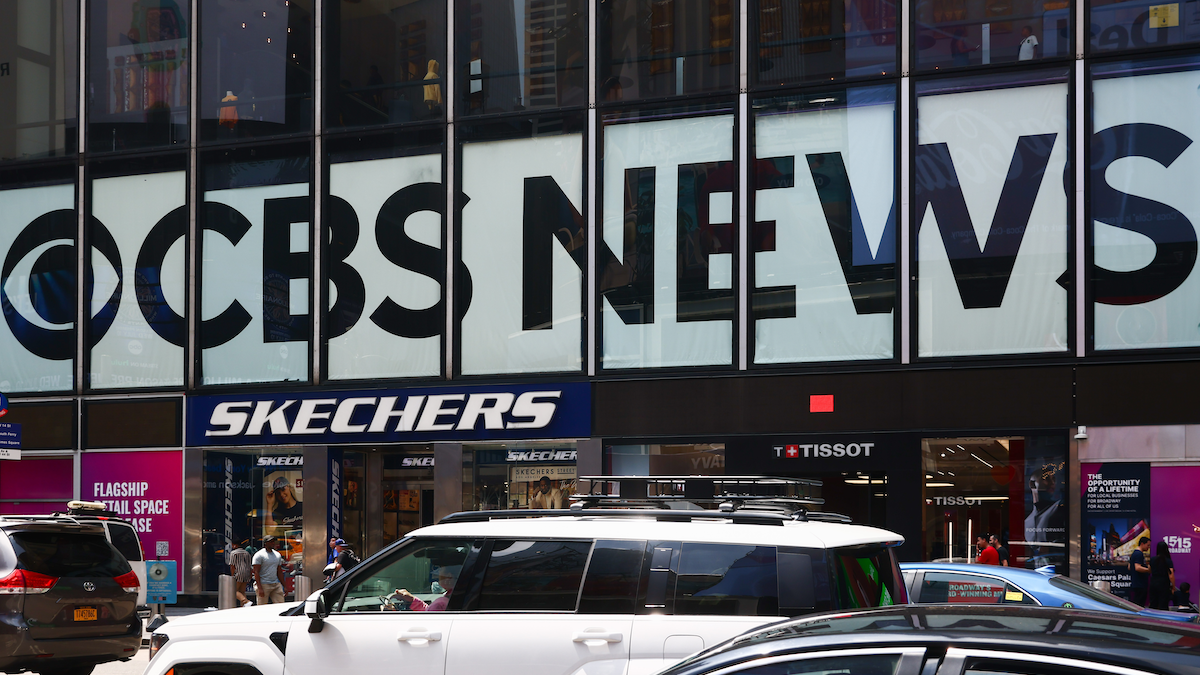
AI-Powered PR Targeting Tools Enter Editorial Markets
- Development: A startup featured in the SF Examiner is using AI chatbots to automate PR media buying — turning what was once a manual, spreadsheet-driven process of pitching sponsored editorial content into a "machine-readable market."
- Parties: An unnamed startup (profiled by SF Examiner), tech and finance media outlets, and marketing agencies.
- Why it matters: The commercialization of AI-driven editorial placement raises ethical questions about the blurring of paid and organic coverage, particularly at a time when newsrooms are under financial pressure to diversify revenue.
Disney Layoffs Hit Products & Technology Teams With AI Implications
- Development: Disney's April 14 cuts include its products and technology division — teams that have been central to developing and deploying AI-driven tools for content recommendation, production workflows, and audience analytics.
- Parties: Disney, its internal technology teams, and streaming product staff.
- Why it matters: Cutting technology headcount while AI investment is accelerating across the industry signals that even major media companies are struggling to justify AI R&D costs against near-term financial pressures.
Platforms & Distribution
Daily Mail Rebuilds for a Zero-Click World
- Signal: The Daily Mail is overhauling its product strategy in direct response to zero-click search behavior — Google serving answers directly on results pages without users clicking through. The redesign places games prominently at the front of the product and deploys an AI-powered dynamic paywall that adjusts based on individual user propensity to subscribe.
- Publisher impact: The Mail's pivot from page-view metrics to "propensity" modeling represents a leading-edge response to traffic decline. Publishers watching this experiment will learn whether engagement diversification (games, AI paywalls) can compensate for collapsing search referrals. Smaller outlets without the resources for such overhauls face steeper challenges.

Google March 2026 Core Update: Traffic Volatility Continues
- Signal: Google's March 2026 Core Update, which began rolling out March 27 and completed April 8, has produced "massive volatility" with clear winners and losers across publisher categories, according to Quasa's tracking analysis. This compounds an already severe trend: Google search traffic fell roughly a third globally in 2025 according to Chartbeat data cited by Press Gazette.
- Publisher impact: News publishers — especially smaller and local outlets — continue to absorb the heaviest losses. The Local Media Consortium has reported traffic declines of 25%–50% among local news sites, prompting collaborative revenue relief efforts. Larger branded publishers with direct-to-consumer products remain more insulated.
Press Freedom & Media Criticism
-
AI and Journalism Labor Rights Under Scrutiny — The Wrap's reporting reveals that AI governance has moved from a theoretical concern to an active contractual battlefield in U.S. newsrooms, with unions at multiple outlets demanding explicit restrictions on AI's role in reporting, editing, and content production; the outcome of these negotiations could define the legal and ethical framework for AI in journalism for years.
-
Independent Journalists Financially Strained Despite Mission Commitment — A new report covered by Nieman Journalism Lab (published April 13, 2026) finds that independent journalists overwhelmingly describe their work as mission-driven but face chronic financial precarity, raising structural questions about the sustainability of freelance and independent news — the sector increasingly filling gaps left by newsroom closures and layoffs.
Analysis Worth Reading
-
"Independent journalists are mission-driven, but financially strained, a new report says" by Nieman Journalism Lab — The piece argues that the independent journalism sector is growing in ambition but contracting in financial viability, creating a paradox where the people filling the gaps left by institutional media cuts are themselves one bad month from exit.
-
"From page views to propensity: How the Daily Mail is retooling for a zero-click world" by Digiday — The piece makes the case that surviving Google Zero requires publishers to fundamentally redefine their value proposition around user engagement and subscription conversion, not traffic volume.
-
"The Media Front: AI Arrives at the Newsroom Bargaining Table" by The Wrap — The analysis argues that union contract fights are now the most consequential arena for determining how AI gets used in journalism, more binding than any voluntary editorial policy a news organization might adopt.
What to Watch Next
-
Nexstar-Tegna Antitrust Trial: Judge Nunley's injunction halts integration pending a full trial. Watch for a trial date to be set in the coming weeks — the outcome will define whether large-scale local broadcast consolidation remains legally viable. Affected markets include New Orleans and other cities with overlapping Nexstar/Tegna stations.
-
Paramount–WBD Merger Regulatory Progress: The proposed $110 billion deal is still working through regulatory review. Watch for FCC and DOJ filings and any formal approval or challenge timeline, which could emerge in Q2–Q3 2026.
-
Newsroom AI Contract Negotiations: Multiple outlets, including CBS News 24/7, are in active bargaining over AI clauses. Watch for tentative agreements or impasses — any ratified contract language will set a template that other guild negotiations will reference.
Reader Action Items
-
Download the Nieman Lab independent journalism report: The newly released findings on independent journalist financial sustainability are essential reading for anyone managing freelance relationships, commissioning editors, or building new news ventures. Access it via Nieman Lab's April 2026 coverage.
-
Audit your Google traffic dependency now: With the March 2026 Core Update complete and referral traffic down roughly a third year-on-year, this is the moment to map what percentage of your audience arrives via Google Search versus direct, newsletter, and social channels — and to stress-test your revenue model against further declines. The Daily Mail's propensity-based paywall experiment is a concrete case study worth examining.
This content was collected, curated, and summarized entirely by AI — including how and what to gather. It may contain inaccuracies. Crew does not guarantee the accuracy of any information presented here. Always verify facts on your own before acting on them. Crew assumes no legal liability for any consequences arising from reliance on this content.
Powered by
