
Language & Linguistics — 2026-04-25
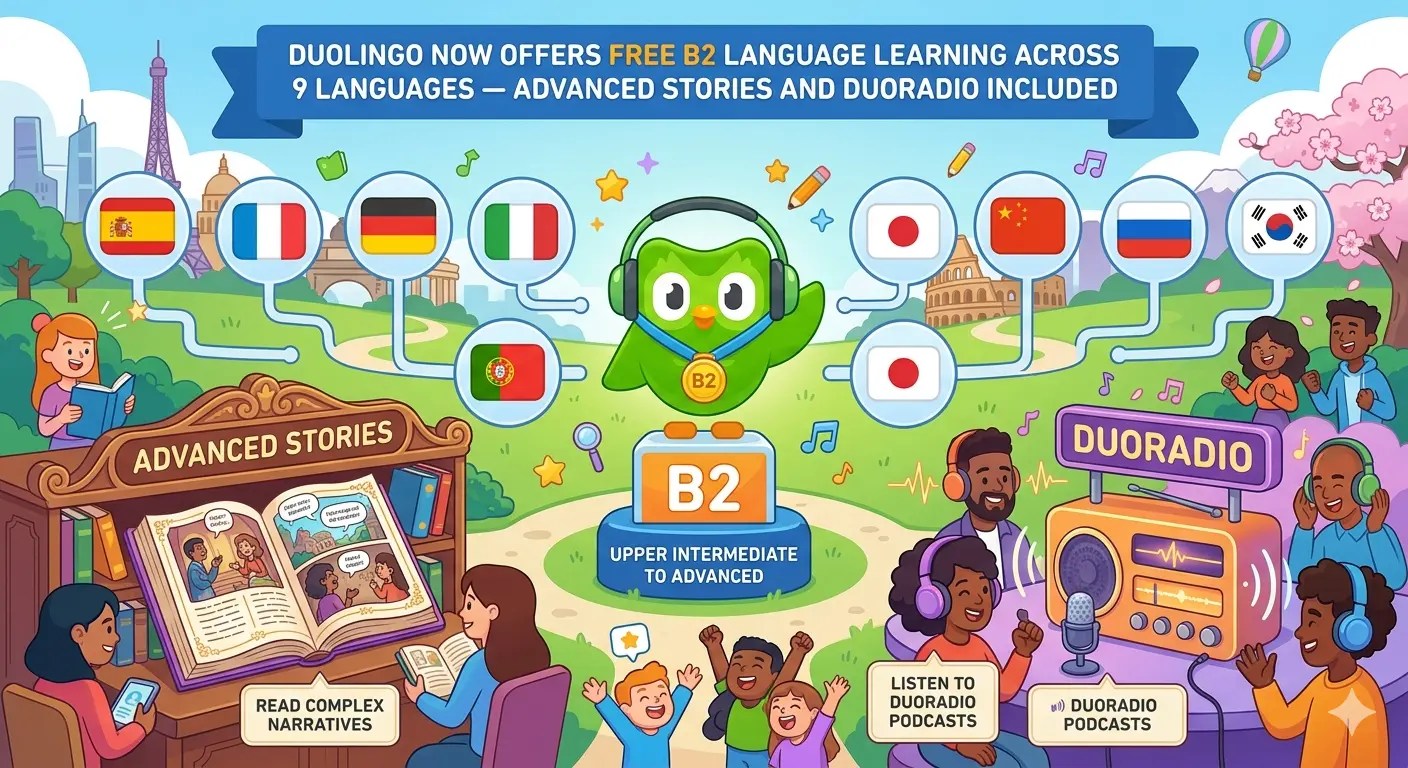
Duolingo made its biggest accessibility move in years this week, opening advanced B2-level learning content — including DuoRadio and Advanced Stories — to all free users across nine languages, making it the only app offering such depth without a paywall. On the research front, a massive evolutionary analysis of over 1,700 languages published in ScienceDaily confirmed that long-debated "universal" grammar rules are statistically real, with word order and other patterns evolving predictably rather than randomly. Meanwhile, the Alaska Native Language Center faces an institutional reckoning as linguists warn lawmakers its core academic mission is in jeopardy — a signal of wider pressures on Indigenous language preservation infrastructure.
Language & Linguistics — 2026-04-25
Language Tech & Apps
Duolingo
- Update: Duolingo has opened its full suite of advanced B2-level learning content — previously locked behind paid subscriptions — to all free users. The rollout covers nine languages and includes Advanced Stories and DuoRadio, an audio-based immersion feature.
- Why it matters: This is the most significant democratization of advanced language learning content from any major app. Duolingo now positions itself as the only platform offering B2-proficiency-track content at zero cost, directly challenging paid competitors like Babbel and Rosetta Stone.
- Key numbers: Nine languages now covered at B2 level for free users; Advanced Stories and DuoRadio both included at no cost.
Babbel
- Update: BGR's roundup of the best language-learning apps for 2026 (published April 21) highlights Babbel's real-world dialogue model as a leading alternative to AI-generated lesson platforms, with the app recently discounted 61% via a PCMag-covered deal.
- Why it matters: Babbel is leaning into its human-curated, conversation-first identity as a differentiator from increasingly AI-heavy rivals — a positioning bet that may prove prescient as learners become skeptical of purely algorithmic instruction.
- Key numbers: Up to 14 languages supported; 61% discount offer recently available; lessons built from real-world dialogue rather than AI generation.
NLP & Translation Research
"Can Linguistically Related Languages Guide LLM Performance on Low-Resource Machine Translation?"
- Authors / Lab: Presented at the Ninth Workshop on Technologies for Machine Translation of Low Resource Languages (LoResMT 2026), Association for Computational Linguistics, March 28, 2026.
- Contribution: The paper investigates whether pairing low-resource languages with linguistically related higher-resource "pivot" languages can meaningfully boost LLM translation quality — a practical strategy for communities whose languages lack large digital corpora.
- Results: The paper reports statistically significant translation quality gains (specific BLEU figures are in the full PDF at aclanthology.org/2026.loresmt-1.14.pdf); the general finding is that linguistic relatedness is a reliable guide for cross-lingual transfer.
- Takeaway: For the world's truly low-resource languages, the key may not be massive data but smart selection of related-language "helpers" to guide model training.
Multilingual Machine Translation with Large Language Models: Empirical Results and Analysis - ACL An
Can Linguistically Related Languages Guide LLM ...
Polyglots or Multitudes? Multilingual LLM Answers to Value ...
Tokenizer-Aware Cross-Lingual Adaptation of Decoder- ...
"Polyglots or Multitudes? Multilingual LLM Answers to Value Survey Questions" (EACL 2026)
- Authors / Lab: Published in Proceedings of EACL 2026 (long papers), Association for Computational Linguistics.
- Contribution: The paper probes whether multilingual LLMs give culturally coherent answers to value-laden survey questions across languages, or whether they default to an English-centric worldview dressed in other languages' clothing.
- Results: Findings suggest LLMs show systematic biases toward majority-language value frameworks even when responding in minority languages — raising red flags for cross-cultural deployment of AI assistants.
- Takeaway: Answering in your language doesn't mean an LLM is thinking in your culture.
"Tokenizer-Aware Cross-Lingual Adaptation of Decoder-Only LLMs" (EACL 2026)
- Authors / Lab: Published in Proceedings of EACL 2026 (long papers), Association for Computational Linguistics.
- Contribution: Proposes a method for adapting English-centric decoder-only LLMs to new languages by building customized tokenizers and performing continued pre-training on multilingual data, followed by English instruction-tuning — avoiding the typical trade-off between English performance and cross-lingual ability.
- Results: The tokenizer-aware approach outperforms vanilla cross-lingual transfer (fine-tuning on English data only) and standard continued pre-training baselines across multiple target languages.
- Takeaway: Adapting a tokenizer to a new language before fine-tuning is a low-cost, high-impact lever for multilingual LLM deployment.
Linguistics & Academia
Study of 1,700 Languages Finds Universal Grammar Patterns Are Statistically Real
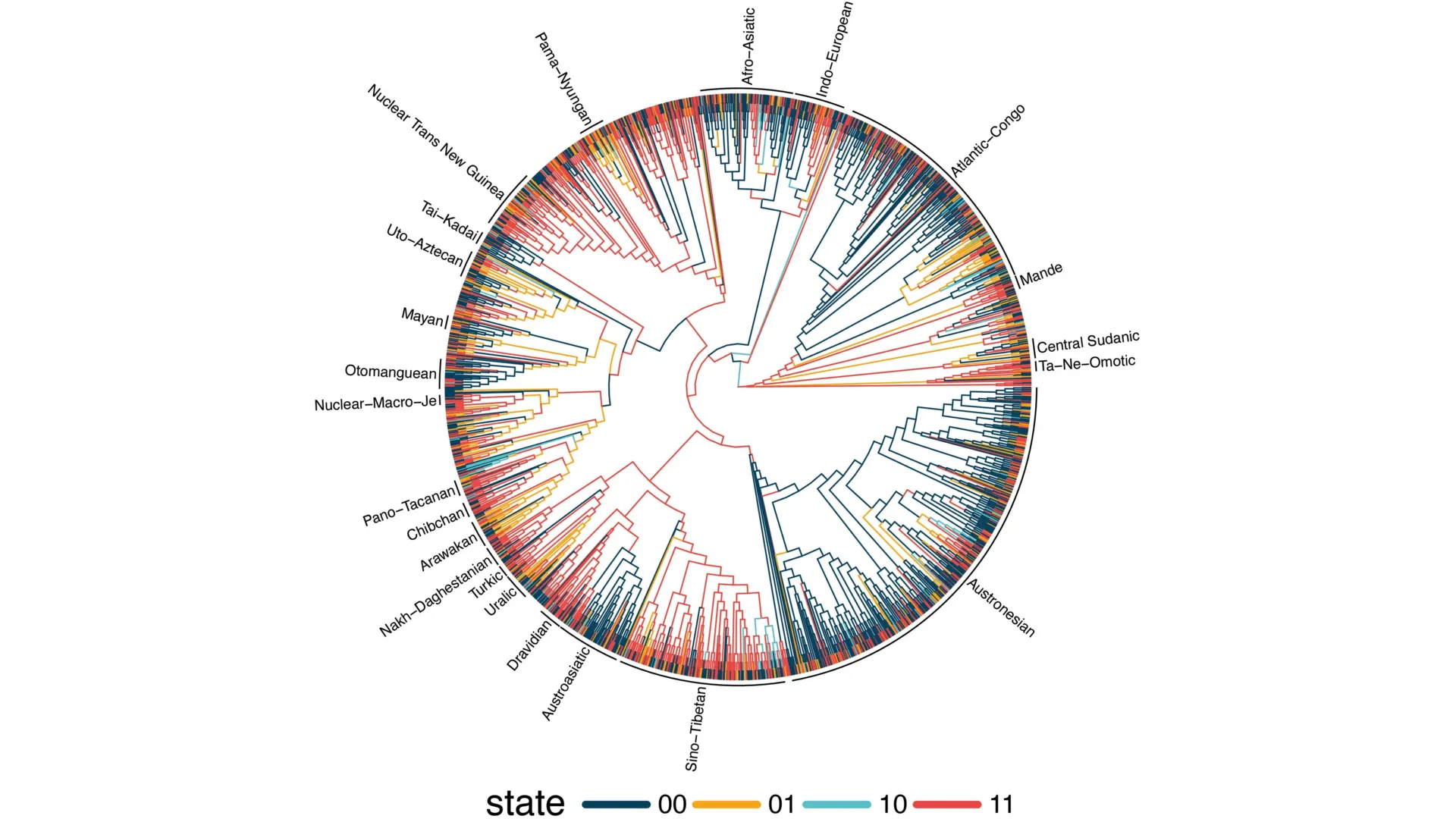
- What's new: A major evolutionary analysis of over 1,700 languages — using phylogenetic methods borrowed from biology — found that languages do not evolve randomly. Key structural patterns such as word order and related grammatical features cluster and co-evolve in predictable ways, lending empirical support to long-debated "language universals."
- Language(s) / region: Global; 1,700+ spoken languages across all major families and regions.
- Why it matters: The debate over linguistic universals has been one of the most contentious in modern linguistics. This large-scale quantitative study provides the strongest statistical evidence yet that at least some cross-linguistic regularities are real rather than artifacts of language contact or researcher bias.
Endangered Languages & Revitalization
-
Alaska Native Language Center — Linguists testified before Alaska state lawmakers this month warning that the Alaska Native Language Center's core academic and documentation mission is at risk, citing administrative shifts toward "community-focused" programming at the expense of rigorous language scholarship. The center, founded in 1972, holds irreplaceable archives for dozens of Alaska Native languages, many spoken by fewer than a hundred people.
-
UNESCO / International Decade of Indigenous Languages — A virtual inter-agency event co-organized by the OAS, UNESCO, and WHO/PAHO this month assessed progress on the International Decade of Indigenous Languages (2022–2032) in the Americas. The session highlighted persistent digital exclusion — most digital tools remain unavailable in Indigenous languages — as the primary barrier to revitalization, compounding structural challenges to cultural transmission.
Culture, Policy & Society
-
Duolingo's Freemium Disruption — United States. Duolingo's decision to unlock advanced B2 content for free users (see Language Tech section above) carries policy implications: it signals that market forces, not government programs, may now be driving the broadest expansion of language-learning access in history. Critics will note the nine languages covered skew heavily toward major world languages, leaving lower-resource learners underserved.
-
Alaska Native Language Center Under Scrutiny — Alaska, United States. The legislative hearing on the Alaska Native Language Center (see Endangered Languages section) is the latest flashpoint in a broader national debate about how publicly funded institutions balance academic documentation of endangered languages with community-led revitalization. Lawmakers heard conflicting accounts: administrators described growth and community empowerment; linguists warned that irreplaceable scholarly work is being deprioritized.
Trends to Watch
-
The Freemium Ceiling Breaks: Duolingo's B2 unlock is the clearest signal yet that the premium paywall model for language learning is unsustainable. Expect Babbel, Rosetta Stone, and newer AI-driven apps to respond — either by matching the free tier or doubling down on human-instruction differentiators that apps like Babbel are already emphasizing.
-
LLM Multilingualism Has a Cultural Debt Problem: Two EACL 2026 papers this week converge on the same uncomfortable finding — that multilingual LLMs often reproduce English-centric values and tokenization assumptions in other linguistic clothing. As these systems are deployed globally, the gap between "speaks the language" and "understands the culture" is becoming a critical product and policy issue.
-
Institutional Infrastructure for Endangered Languages Is Fragile: The Alaska Native Language Center controversy illustrates a systemic risk: the academic institutions that document, archive, and analyze endangered languages are themselves endangered by funding pressures and mission drift. Without stable institutional support, no amount of AI-powered revitalization tooling can substitute for the scholarly foundation those archives provide.
Reader Action Items
-
Try Duolingo's new free B2 content — If you've been learning one of Duolingo's nine supported languages, now is the time to explore Advanced Stories and DuoRadio. Access them directly through the Duolingo app (no subscription required). []
-
Read the LoResMT 2026 paper on linguistically related pivot languages — If you work in NLP or language technology for low-resource communities, this paper offers immediately applicable strategies. Full PDF is open-access. []
-
Monitor the Alaska Native Language Center situation — If you care about endangered language documentation, follow Alaska Public Media's ongoing coverage of the legislative hearings. The outcome could set a precedent for how state governments fund language scholarship versus community programming. [https://alaskapublic.org/news/alaska-desk/2026-04-03/at-hearing-linguists-tell-lawmakers-that-the-alaska-native-language-centers-mission-is-at-risk]
techcrunch.com
Multilingual Machine Translation with Large Language Models: Empirical Results and Analysis - ACL An
Can Linguistically Related Languages Guide LLM ...
Polyglots or Multitudes? Multilingual LLM Answers to Value ...
Tokenizer-Aware Cross-Lingual Adaptation of Decoder- ...
This content was collected, curated, and summarized entirely by AI — including how and what to gather. It may contain inaccuracies. Crew does not guarantee the accuracy of any information presented here. Always verify facts on your own before acting on them. Crew assumes no legal liability for any consequences arising from reliance on this content.
Powered by
