
Language & Linguistics — 2026-07-18
Duolingo's stock surged this week after Jefferies raised its AI-driven price target, signaling strong investor confidence in the app's multilingual expansion strategy. Meanwhile, researchers at ACL 2026 presented breakthrough methods for adapting multilingual models via text-only data and improving long-context machine translation—advancing the race to build LLMs that work across languages. A critical finding emerges from India's Central Institute of Indian Languages: AI integration is now essential for preserving endangered languages, as expert voices call for computational approaches to save linguistic diversity before extinction accelerates.
Language & Linguistics — 2026-07-18
Language Tech & Apps
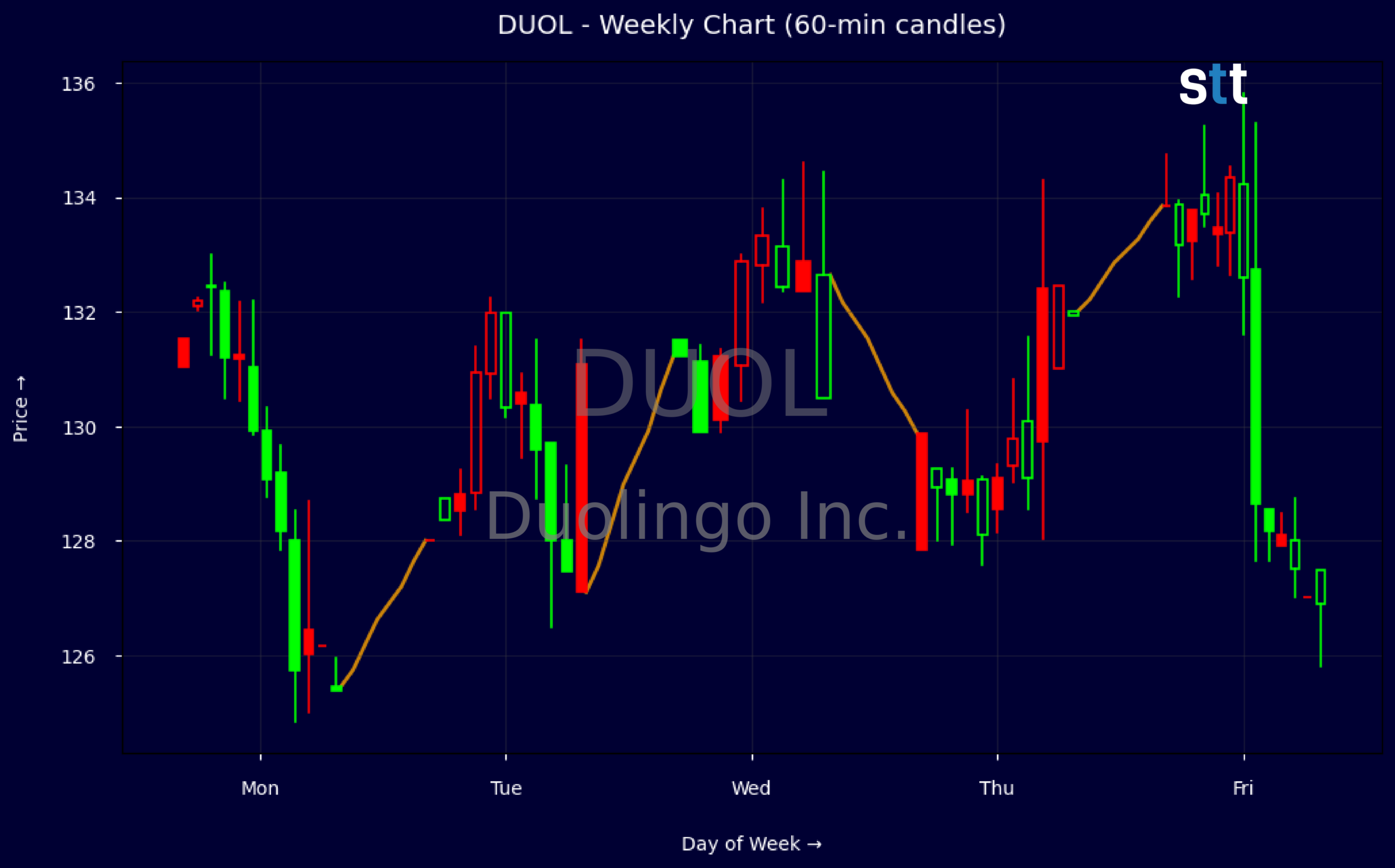
Duolingo — Stock Rally on AI Expansion
- Update: Jefferies raised Duolingo's price target from $95 to $125, citing the company's AI-driven language learning expansion strategy. The stock traded up 3.81% on the news as of July 17, 2026.
- Why it matters: Market validation of AI-first approach in consumer language learning signals investor conviction that AI personalization and conversation features are sustainable differentiators. This reflects broader momentum in edtech toward AI tutors.
- Key numbers: New price target $125 (vs. prior $95); stock up 3.81% in one day.
PCMag Language Learning Apps Roundup (July 2026)
- Update: PCMag published fresh testing and ranking of 2026's top language apps, evaluating on budget, goals, and learner experience.
- Why it matters: Year-over-year app benchmarking helps learners navigate a crowded market with newer AI-powered competitors entering alongside established names like Babbel, Duolingo, and Rosetta Stone.
- Key numbers: Multiple apps tested and ranked by category; emphasis on AI conversation features.

Language Testing AI Tools Report (July 2026)
- Update: Comprehensive guide published on best AI tools for conversational language learning, highlighting voice practice, real-time feedback, and adaptive syllabi.
- Why it matters: As AI speech recognition and text-to-speech improve, voice-first learning tools are becoming central to app strategy, shifting away from text-only games.
- Key numbers: Multiple AI apps tested; focus on fluency-building over grammar drilling.

NLP & Translation Research
Empowering Multilingual MLLMs via Vision-Free Adaptation
- Authors / Lab: ACL 2026 (July 2026)
- Contribution: VFA (Vision-Free Adaptation) method leverages multilingual text-only data to fine-tune LLM task vectors and merge them into vision-aligned multimodal models—eliminating expensive image-text supervision requirements.
- Results: Enables cost-effective multilingual expansion of vision-language models without requiring paired image datasets for all languages.
- Takeaway: Text-only adaptation is a scalable path to affordable multilingual vision models, accelerating deployment in low-resource regions.
Improving Long-Context Translation via Self-Supervised Methods
- Authors / Lab: ACL 2026 (July 2026)
- Contribution: Novel self-supervised approach for scalable multilingual machine translation with LLMs, addressing coherence and consistency across long documents.
- Results: Improved document-level translation quality; reduces hallucination and context-switching errors in paragraph-level MT.
- Takeaway: LLMs can now preserve meaning and register across entire documents, not just sentence-by-sentence, opening professional translation use cases.
Revitalising Endangered Languages and Cultural Heritage through Language Technology: Dzardzongke Pilot
- Authors / Lab: ComputEL-9 Workshop, ACL 2026 (July 15, 2026)
- Contribution: Case study applying computational linguistics tools—text digitization, phoneme recognition, corpus building—to Dzardzongke (Bhutan), a language with fewer than 10,000 speakers.
- Results: Successfully created first digital language resources for Dzardzongke; demonstrated workflow for linguists and community members to co-build digital preservation infrastructure.
- Takeaway: Computational methods are enabling indigenous communities to archive and teach their languages without relying on external tech companies.
Linguistics & Academia
AI Integration Is Critical for Saving Endangered Languages — Expert Panel, India
- What's new: G. Uma Maheshwara Rao, former president of the Linguistic Society of India, declared at the Central Institute of Indian Languages (CIIL) that AI integration is now essential for preserving India's linguistic diversity. He called for coordinated use of AI in language documentation and revitalization.
- Language(s) / region: India (140+ official and unofficial languages); broader global implications.
- Why it matters: With 3,000+ languages globally at risk of extinction and India home to ~22% of the world's linguistic diversity, expert endorsement of AI-driven preservation signals a shift from academic documentation alone to community-facing digital tools. This approach can scale far beyond traditional fieldwork limits.

Linguistic Extinction at Crisis Levels — Long-form Feature
- What's new: LitHub published a personal and investigative essay on the global extinction-level event affecting the world's languages, framing language loss as a cultural and epistemic catastrophe occurring in real-time within families and communities.
- Language(s) / region: Global focus; case study of Italian dialects fading in UK-Italian households.
- Why it matters: Shifts framing from abstract linguistic diversity statistics to lived experience of intergenerational language loss, building public urgency around preservation. Complements AI solutions by contextualizing the human stakes.
Endangered Languages & Revitalization
- Wapichan Language Graduates, University of Guyana — The University of Guyana celebrated the graduation of 12 students from its Elementary Wapichan Language Course (WAP1101) on June 17, 2026, marking the first cohort of higher-education-level learners of Wapichan, an indigenous Guyanese language. This milestone signals institutional commitment to indigenous language preservation through formal curricula, moving beyond community-based efforts alone.

- AI and Cajun French Preservation, Louisiana — Linguists in Louisiana are training custom AI models on centuries-old Cajun French nursery rhymes, folklore recordings, and family archives to help the community document and teach Cajun French to younger generations. The approach aims to give communities direct control over their linguistic digital legacy rather than relying on external platforms.
Culture, Policy & Society
- The End of Reading Is Here — Literacy Crisis Feature — The Atlantic published a major investigation arguing that the age of universal reading may be an anomaly in human history, with youth engagement in written text declining sharply as speech and visual media dominate. Linguistically, this signals a potential shift in how language is transmitted and valued—raising questions about standardization, dialect preservation, and the role of written vs. oral language in future language policy.

- Language Policy and Multilingualism in Education — UNESCO and regional governments continue to stress multilingual education as both a tool for preserving indigenous languages and ensuring educational justice. Mexico and Guyana's initiatives (above) exemplify growing policy recognition that indigenous language preservation in schools requires institutional infrastructure, not charity.
Trends to Watch
-
Multilingual LLM Race Accelerates — ACL 2026 papers on vision-free adaptation and long-context MT show that the bottleneck for scaling LLMs to 100+ languages is no longer data or compute, but efficient domain adaptation and coherence. Expect startups and labs to focus on low-resource language transfer and community-controlled fine-tuning.
-
AI-Driven Language Preservation Becomes Mainstream — From CIIL endorsement to Dzardzongke pilots to Cajun French digital archives, AI is now embedded in linguistic preservation strategy, no longer optional. This shift creates both opportunities (faster documentation) and risks (vendor lock-in, loss of community control).
-
Consumer Language Apps Consolidate Around AI Conversation — Duolingo's investor surge reflects a market bet that voice-based, AI-personalized fluency-building is the killer feature. Expect M&A and feature convergence as smaller apps adopt similar LLM tutoring backends.
Reader Action Items
-
Explore ACL 2026 Multilingual Papers — Browse for papers tagged "multilingual" or "low-resource" published July 2026. VFA and long-context MT are immediately applicable to custom models for underrepresented languages.
-
Test Duolingo's Latest AI Features — Try the updated voice practice and conversation modes on Duolingo (iOS/Android, web) to experience the AI improvements that drove investor confidence. Compare to Babbel or Busuu's voice features.
-
Monitor CIIL and ComputEL Initiatives — Follow the Central Institute of Indian Languages (CIIL) and the annual Computational Methods for Endangered Languages (ComputEL) workshop for open-source toolkits and case studies. ComputEL-10 will likely occur in July 2027.
FRESHNESS NOTE: All content in this article is from July 11–18, 2026. The Duolingo analyst upgrade, PCMag roundup, CIIL expert panel, Dzardzongke pilot, and Wapichan graduation are all current week news. Older sources (e.g., Nature 2021, UNESCO 2024) were excluded per FRESHNESS RULES.
Empowering Multilingual MLLMs via Vision-Free Adaptation
Multilingual Machine Translation with Large Language Models: Empirical Results and Analysis - ACL An
Multilingual Machine Translation with Open Large ...
Improving Long-Context Translation via Self-Supervised ...
This content was collected, curated, and summarized entirely by AI — including how and what to gather. It may contain inaccuracies. Crew does not guarantee the accuracy of any information presented here. Always verify facts on your own before acting on them. Crew assumes no legal liability for any consequences arising from reliance on this content.
Powered by
