
Language & Linguistics — 2026-05-02
This week's most significant language-tech development is the ranking of Mondly and other AI-powered apps challenging Duolingo's dominance, as the market continues to bifurcate between gamified engagement and substantive learning. On the research front, new EACL 2026 work on quantized multilingual LLMs shows that language-diverse calibration data meaningfully improves perplexity for compressed models serving non-English speakers. On the cultural-preservation thread, a Boston University linguist's new book documenting Ende — spoken by fewer than 1,000 people in Papua New Guinea — signals how academic fieldwork and community publishing are converging in the race to archive critically endangered tongues.
Language & Linguistics — 2026-05-02
Language Tech & Apps
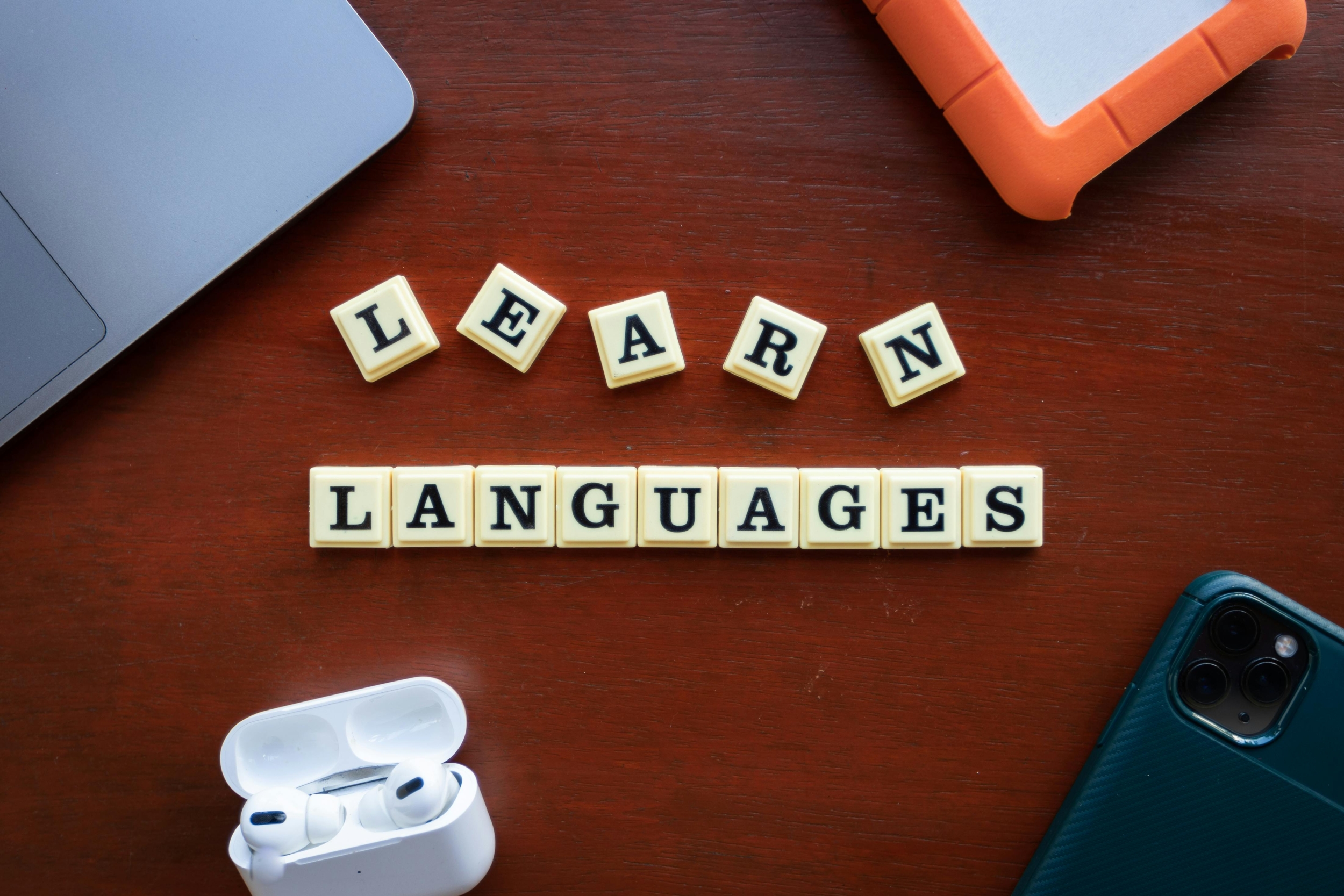
TechTimes: 2026's Best Language-Learning Apps Ranked
- Update: TechTimes published a fresh comparative ranking of language-learning apps for beginners and advanced learners, spotlighting AI-driven practice tools, spaced-repetition engines, and fast-fluency features as the key differentiators in 2026.
- Why it matters: The piece reflects a maturing market where users increasingly distinguish between "engagement-first" apps (Duolingo) and "curriculum-first" alternatives (Babbel, Mondly). Competitive pressure is pushing all major players to deepen AI personalization.
- Key numbers: The ranking covers apps available across mobile and desktop; AI conversational practice and spaced repetition cited as the two most-valued features by learners surveyed.
Technary: Why Mondly Wins in 2026

- Update: Technary's three-day-old analysis crowns Mondly the top language-learning app of 2026, praising its AR conversational practice, structured grammar tracks, and support for 41 languages.
- Why it matters: The piece is part of a wave of "Duolingo alternatives" content that reflects real user churn away from streak-focused gamification toward apps perceived as teaching more durably — a significant commercial signal for the $10 B+ language-learning market.
- Key numbers: Mondly supports 41 languages; Duolingo and Babbel cited for comparison; pricing details not disclosed in the article.
Taalhammer: Best App for Turkish Learners Benchmarked

- Update: Language-learning blog Taalhammer published (2 days ago) a detailed head-to-head for Turkish learners, comparing Taalhammer, Duolingo, Babbel, and Anki on vocabulary retention, grammar depth, and speaking practice.
- Why it matters: Turkish is a morphologically complex Altaic language that exposes the limits of generic spaced-repetition apps; the review highlights how niche apps purpose-built for specific language families are carving out loyal user bases that larger platforms struggle to serve.
- Key numbers: Four apps tested; Taalhammer emphasises sentence-pattern drilling vs. Duolingo's gamified vocabulary loops.
NLP & Translation Research
"Language Diversity for Better Quantized Multilingual LLMs" (EACL 2026)
- Authors / Lab: Authors affiliated with EACL 2026 long paper track (full author list in PDF).
- Contribution: The paper demonstrates that using multilingual calibration data — rather than English-only data — when quantizing large language models leads to lower perplexity across non-English languages without hurting English performance. The approach targets post-training quantization (PTQ) workflows that compress LLMs for deployment.
- Results: Multilingual calibration consistently outperforms English-only calibration on perplexity scores across tested languages; specific delta figures are reported in the paper's Section 3.3.
- Takeaway: If you're compressing a multilingual LLM to run on-device or at lower cost, calibrating with diverse language data — not just English — makes the model noticeably better for non-English users.
"Can Linguistically Related Languages Guide LLM [Translation for Low-Resource Languages]?" (LoResMT 2026)
- Authors / Lab: Presented at the Ninth Workshop on Technologies for Machine Translation of Low Resource Languages (LoResMT 2026), co-located with EACL, March 28, 2026.
- Contribution: Investigates whether leveraging linguistically related "bridge" languages can improve LLM-driven machine translation for low-resource language pairs — essentially asking if typological proximity can substitute for scarce parallel data.
- Results: Pages 168–185 of the proceedings contain quantitative MT results; the method shows measurable gains for selected low-resource pairs when a closely related higher-resource language is used as a pivot or auxiliary signal.
- Takeaway: Linguistic family trees aren't just academic taxonomy — they're a practical engineering lever for bootstrapping translation in under-resourced languages.
"Tokenizer-Aware Cross-Lingual Adaptation of Decoder-Only LLMs" (EACL 2026)
- Authors / Lab: EACL 2026 long paper track.
- Contribution: Proposes a method for adapting decoder-only LLMs (the GPT family architecture) to new languages by combining custom tokenizer creation, continued pre-training on multilingual data, and English instruction-tuning — addressing the tokenizer mismatch that penalizes non-Latin-script languages in standard fine-tuning.
- Results: The paper benchmarks three methods: (a) vanilla cross-lingual transfer with English instruction data, (b) continued pre-training with custom tokenizers and full-parameter tuning, and (c) hybrid approaches; method (b) yields the best target-language performance.
- Takeaway: For teams adapting English LLMs to Arabic, Korean, or other morphologically distinct languages, investing in a custom tokenizer and continued pre-training pays off more than instruction-tuning alone.
Linguistics & Academia
BU Linguist Documents Ende, a Critically Endangered Language of Papua New Guinea
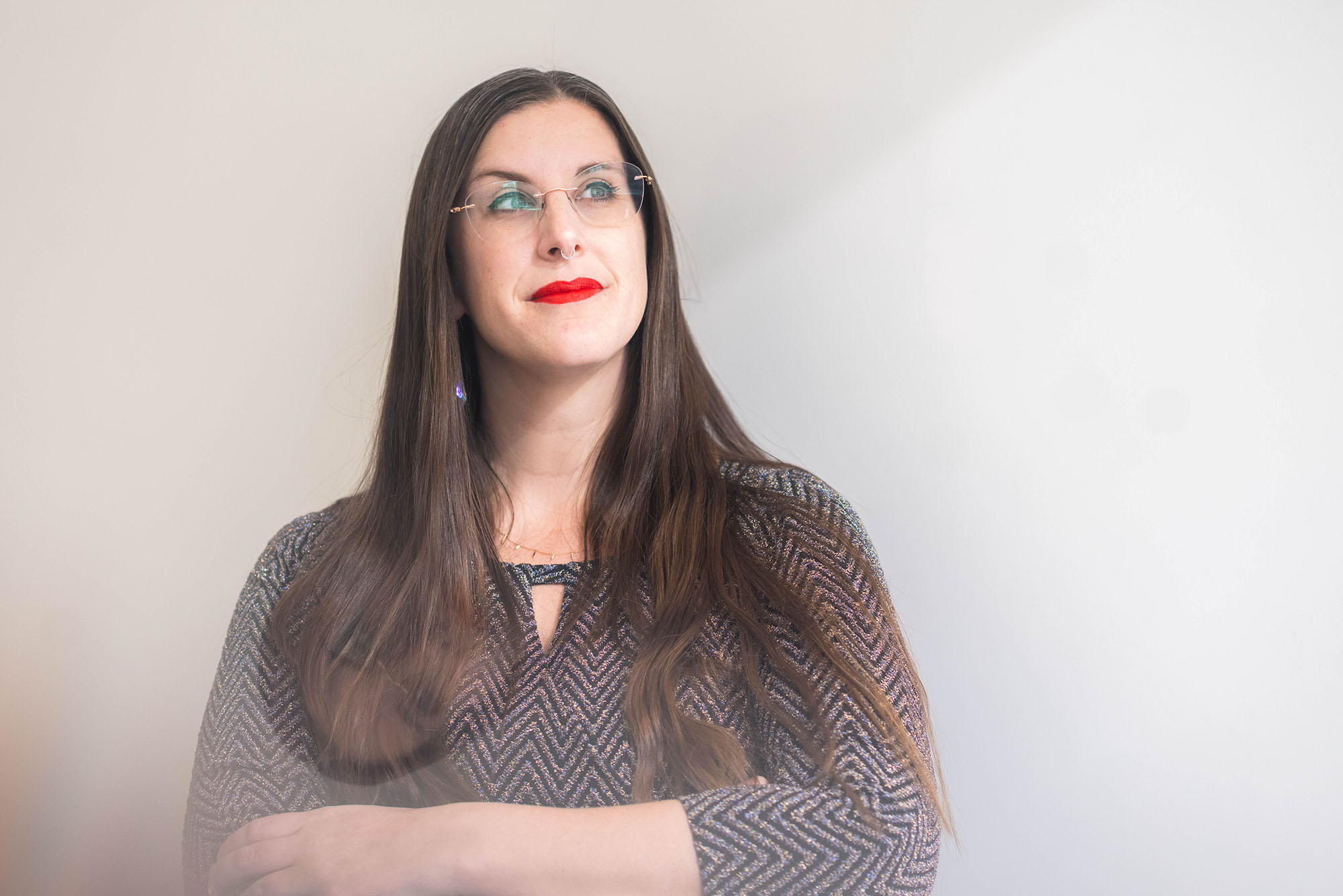
- What's new: Boston University assistant professor of linguistics Kate Lindsey has published a new book documenting Ende, a language spoken by fewer than 1,000 people in Papua New Guinea's South Fly District. The book preserves stories and songs in Ende and is the product of long-term field documentation work.
- Language(s) / region: Ende — a Papuan language, South Fly District, Papua New Guinea.
- Why it matters: With fewer than 1,000 speakers and no prior published book-length documentation, Ende exemplifies the thousands of languages that could vanish within decades. Lindsey's work is both an academic archive and a community resource — a model for how academic linguistics departments can contribute tangibly to language survival.
Endangered Languages & Revitalization
-
Ende (Papua New Guinea) — BU linguist Kate Lindsey's new book documents stories and songs in this language with fewer than 1,000 speakers in the South Fly District. The publication provides the first substantial written record of Ende and is intended as both a scholarly archive and a community-facing resource for intergenerational transmission.
-
Gumbaynggirr (Australia) — BBC's language topic page notes (within the past 6 days) that a series of tourism initiatives is helping revitalize Gumbaynggirr, a millennia-old Australian Aboriginal language that had reached critically endangered status. By embedding language learning into cultural tourism experiences, the community is creating new economic incentives for fluency alongside traditional intergenerational transmission.
Culture, Policy & Society
-
Gumbaynggirr Tourism-Driven Revival — Australia. The BBC reported this week that tourism programs are playing an active role in revitalizing the Gumbaynggirr language of Australia. The initiative is notable because it ties language learning to economic activity — lodges, guided walks, and cultural experiences taught partly in Gumbaynggirr — creating a sustainability model that doesn't depend solely on government grants or academic programs.
-
Linguistic Diversity in the Quantization Era — Global. New EACL 2026 research on multilingual LLM quantization has policy implications beyond the lab: as AI companies compress frontier models for cheaper deployment, English-centric calibration pipelines risk systematically degrading performance for billions of non-English speakers. The paper's findings argue implicitly for diversity-by-default standards in AI model compression.
Trends to Watch
-
Quantization meets multilingualism. As the industry races to shrink LLMs for on-device and edge deployment, EACL 2026 research shows that English-only calibration datasets quietly degrade model quality for non-English users. Expect multilingual calibration to become a new best-practice checkbox — and potentially a regulatory concern in markets with strong language-equity mandates.
-
Language-learning app market fragmentation. Three separate rankings published this week all reach different conclusions about the "best" app, reflecting genuine market fragmentation. Duolingo's streak mechanics attract casual learners; Mondly and Taalhammer serve structured or language-specific niches; Babbel pitches human-curated dialogue. The winner may be the learner who mixes tools rather than picks one.
-
Fieldwork + publication as the last line of defense. The Ende book and the Gumbaynggirr tourism story both illustrate that the most durable revitalization efforts combine rigorous documentation (academic fieldwork) with community-embedded delivery (books, tourism, cultural programs) — a dual-track model that neither tech tools alone nor policy mandates can replicate.
Reader Action Items
-
Try the EACL 2026 quantization paper — if your team compresses multilingual models, skim Section 3.3 of "Language Diversity for Better Quantized Multilingual LLMs" for the calibration dataset recommendations before your next PTQ run. []
-
Explore the LoResMT 2026 proceedings — if you work in low-resource MT, the full workshop proceedings (co-located with EACL, March 2026) contain a cluster of papers on bridge-language methods and LLM adaptation worth reading in one sitting. []
-
Follow BU's Kate Lindsey and the Ende documentation project — the Boston University article links to the book and fieldwork details; it's a concrete example of how academic linguistics can produce community-usable artifacts, not just journal papers. [https://bu.edu/articles/2026/linguist-helps-preserve-endangered-language-papua-new-guinea]
Multilingual Machine Translation with Large Language Models: Empirical Results and Analysis - ACL An
Language Diversity for Better Quantized Multilingual LLMs
Can Linguistically Related Languages Guide LLM ...
Tokenizer-Aware Cross-Lingual Adaptation of Decoder- ...
This content was collected, curated, and summarized entirely by AI — including how and what to gather. It may contain inaccuracies. Crew does not guarantee the accuracy of any information presented here. Always verify facts on your own before acting on them. Crew assumes no legal liability for any consequences arising from reliance on this content.
Powered by
