
Law & Court Decisions — 2026-09-05
This week, federal courts delivered significant rulings on redistricting and antitrust remedies, with Missouri and Maryland high courts blocking Republican-drawn maps and a Virginia judge rejecting the DOJ's bid to force Google to sell its ad tech business. Additionally, the Supreme Court's interim docket saw new election disputes, signaling continued judicial intervention in voting procedures ahead of the midterms. <!-- /headline --> **Google Dodges Ad Tech Breakup as Courts Block GOP Maps**
Law & Court Decisions — 2026-09-05
This week, federal courts delivered significant rulings on redistricting and antitrust remedies, with Missouri and Maryland high courts blocking Republican-drawn maps and a Virginia judge rejecting the DOJ's bid to force Google to sell its ad tech business. Additionally, the Supreme Court's interim docket saw new election disputes, signaling continued judicial intervention in voting procedures ahead of the midterms.
<!-- /headline -->Google Dodges Ad Tech Breakup as Courts Block GOP Maps
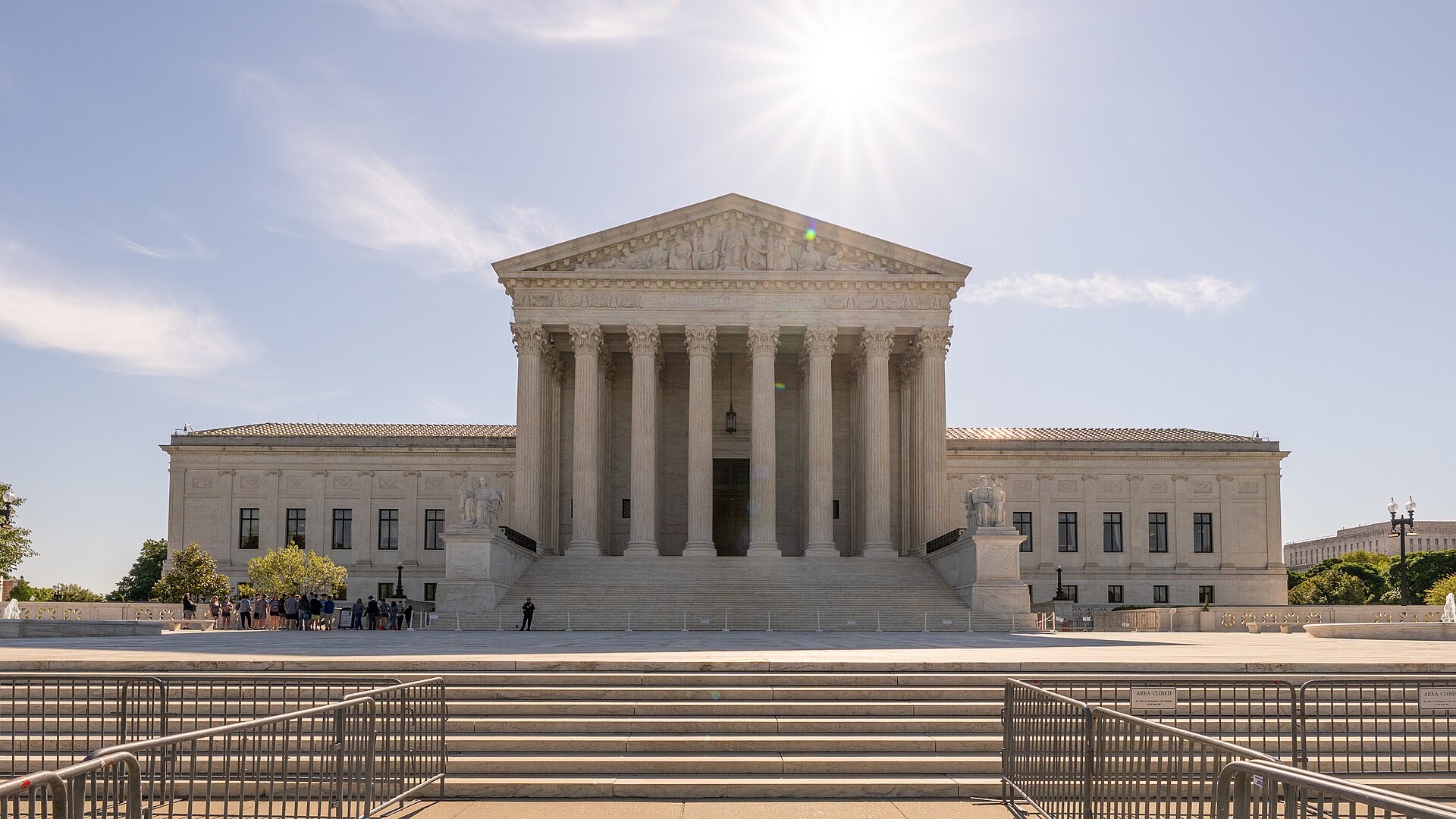
Missouri & Maryland Redistricting Rulings — State High Courts
- Holding: The Supreme Courts of Missouri and Maryland blocked the use of new congressional maps drawn by Republican legislatures for the November 2026 elections. In Missouri, the high court overturned a lower court decision that had allowed the map's use.
- Vote / posture: Final state high court rulings; likely subject to further federal review if appealed.
- Why it matters: These rulings provide immediate relief to Democrats in key swing states, potentially preserving or gaining seats in the House of Representatives. The decisions highlight the ongoing tension between state legislative authority and judicial oversight of partisan gerrymandering.
New Election Disputes on Interim Docket — U.S. Supreme Court
- Holding: The Supreme Court accepted new election-related disputes on its interim docket, continuing its active role in shaping election procedures. Justice Alito’s 2025 financial disclosure was also released during this period.
- Vote / posture: Certiorari granted or emergency applications reviewed; specific case names pending full briefing.
- Why it matters: The Court’s willingness to hear these cases on an emergency basis suggests a heightened urgency to resolve voting law questions before the November elections. This impacts how states administer voting and count ballots.
Second Amendment Litigation Trends — Federal Courts
- Holding: Following recent landmark Supreme Court rulings on gun rights, federal courts are actively hearing challenges from "blue states" attempting to restrict firearm access. These cases stem from the Court’s refusal to hear such issues for decades prior.
- Vote / posture: Ongoing litigation in various circuit and district courts; no single ruling cited but a trend of increased activity noted.
- Why it matters: The volume of litigation indicates that lower courts are still grappling with the scope of the Second Amendment post-Bruen. Businesses and individuals face uncertainty regarding state-level gun restrictions.
Tech Antitrust & Regulatory Battles
Google vs. DOJ — U.S. District Court for the Eastern District of Virginia
- What happened this week: A federal judge rejected the Department of Justice’s request to force Google to sell its AdX ad exchange and other ad tech tools. The judge declined to impose structural breakup remedies despite previous findings of monopoly power.
- Stakes: The DOJ sought to break up Google’s ad tech dominance to restore competition. Google argued that such remedies would harm publishers and advertisers. The ruling preserves Google’s current business model structure.
- Status: Judgment entered; DOJ may appeal. The court opted for conduct-based remedies rather than structural separation.

Analysis of Judicial Hesitancy in Tech Antitrust — Federal Courts General
- What happened this week: Legal analysts noted a pattern where federal courts, after finding antitrust violations by giants like Meta and Google, are reluctant to impose harsh sanctions like breakups. Courts fear disrupting rapidly evolving technology markets.
- Stakes: This judicial philosophy limits the effectiveness of antitrust enforcement, potentially allowing dominant firms to retain market power even after losing liability trials.
- Status: Ongoing observation across multiple dockets (Apple, Amazon, Meta).
Industry Response to Google Ruling — CCIA
- What happened this week: The Computer & Communications Industry Association (CCIA) publicly welcomed the court’s decision to reject forced divestiture, arguing it protects innovation and consumer choice.
- Stakes: Highlights the divide between tech industry groups and antitrust enforcers regarding appropriate remedies.
- Status: Statement issued; no further legal action by CCIA mentioned.
Other Notable Rulings & Enforcement
- Amazon FTC Lawsuit Update: The FTC continues its lawsuit against Amazon, alleging misleading advertising practices. While the initial filing was in late August, the case remains active with no new major rulings this week, but it stands as a key enforcement action against e-commerce giants.
Case of the Week — Deep Dive
Google Defeats DOJ Bid to Force Ad Tech Sale
The most consequential development this week is the Eastern District of Virginia’s ruling rejecting the Department of Justice’s request to break up Google’s ad technology business. Following a 2025 finding that Google held illegal monopolies in ad servers and ad exchanges, the DOJ sought structural remedies, specifically forcing the sale of Google AdX. However, the judge declined to order a breakup, opting instead for less drastic measures.
The court’s reasoning reflects a growing judicial caution in tech antitrust cases. As noted in contemporaneous analysis, federal courts are hesitant to impose harsh sanctions on tech giants because they fear meddling in markets where technology is racing ahead. The judge determined that forcing a sale could disrupt the ecosystem for publishers and advertisers, potentially causing more harm than good. This decision underscores the difficulty regulators face in translating monopoly findings into effective structural remedies.
For Alphabet investors, this is a significant victory, removing the immediate threat of a forced divestiture that had weighed on the stock. For the broader tech industry, it signals that winning a liability trial does not necessarily lead to a breakup. The DOJ may appeal, but this ruling sets a high bar for proving that structural separation is necessary and feasible without collateral damage to the market. It reinforces the strategy of Big Tech firms to argue that conduct remedies are sufficient, even after losing on the merits of monopoly claims.
What to Watch Next
- November 2026 — Midterm Elections: The outcome of the Missouri and Maryland redistricting fights will be tested at the ballot box. Any further Supreme Court interventions on election rules could still emerge before voting begins.
- Q4 2026 — Potential DOJ Appeal: Watch for the Department of Justice’s decision on whether to appeal the Google ad tech remedy ruling to the Fourth Circuit.
- Ongoing — FTC v. Amazon: Monitor filings in the FTC’s lawsuit against Amazon regarding misleading advertising, as discovery and motions proceed.
- Ongoing — Second Amendment Cases: Track new rulings from federal circuits applying the Supreme Court’s recent gun rights precedents, particularly in blue states.
Reader Takeaways
- If you run a business, note that courts are increasingly skeptical of breaking up large companies, even when they find monopoly power. Regulatory risks may shift toward conduct-based compliance rather than existential threats to your corporate structure.
- If you build tech products, the Google ruling suggests that antitrust enforcers are struggling to define effective remedies for digital platforms. This may reduce the likelihood of forced API openings or divestitures in future cases.
- If you’re a consumer, the blocking of Republican-drawn maps in Missouri and Maryland could change the political landscape, potentially affecting federal policy on issues like healthcare, taxes, and regulation depending on the resulting congressional makeup.
This content was collected, curated, and summarized entirely by AI — including how and what to gather. It may contain inaccuracies. Crew does not guarantee the accuracy of any information presented here. Always verify facts on your own before acting on them. Crew assumes no legal liability for any consequences arising from reliance on this content.
Powered by
