
Law & Court Decisions — 2026-05-18
This week's most consequential legal developments center on the EU's escalating Digital Markets Act enforcement, with regulators now eyeing Amazon and Microsoft's cloud services as potential DMA gatekeeper targets — a major expansion beyond the original Big Tech scope. Meanwhile, state attorneys general are increasingly asserting independent antitrust authority even when federal enforcers settle, and the 11th Circuit deepened a federal appeals-court split over Trump's mandatory immigration detention policy, setting up a potential Supreme Court showdown.
Law & Court Decisions — 2026-05-18
Supreme Court & Federal Courts
U.S. Mandatory Immigration Detention Policy — 11th U.S. Circuit Court of Appeals
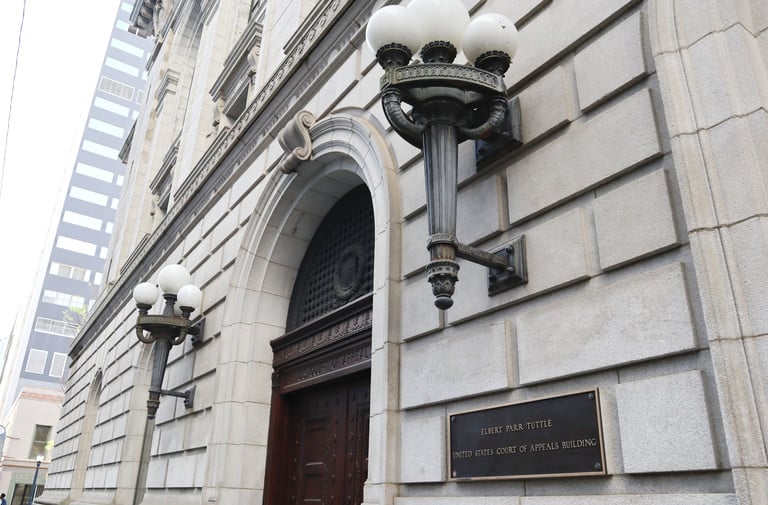
- Holding: A divided 11th Circuit ruled against the Trump administration's no-bond detention policy for noncitizens in immigration proceedings, holding that mandatory detention without a bond hearing does not comport with immigration law.
- Vote / posture: Divided panel ruling; the decision joins the Second Circuit on the same side, deepening a circuit split with the Ninth Circuit (which had earlier issued a stay of a California district-court injunction against the policy).
- Why it matters: The split between circuits on such a high-profile immigration enforcement question makes Supreme Court review almost inevitable. For detainees and immigration advocates, the 11th Circuit ruling provides a legal avenue to seek bond hearings; for the government, it creates enforcement uncertainty in large swaths of the country.
State AG Antitrust Enforcement Rising — Federal Courts & DOJ Partnership
- Holding: No single new judgment, but Reuters Legal's comprehensive analysis (published May 7, 2026) documents that state attorneys general secured an independent win in the Live Nation antitrust case even after DOJ settled during trial — a precedent now shaping state enforcement strategy nationwide.
- Vote / posture: Trial court win by state co-plaintiffs after DOJ settlement; currently influencing policy posture for ongoing Big Tech cases.
- Why it matters: State AGs are no longer acting purely as junior partners to federal enforcers. The Live Nation outcome signals that states can and will carry antitrust cases to verdict even when Washington backs down, increasing litigation risk for any large corporate defendant relying on a federal settlement to end all exposure.
Tech Antitrust & Regulatory Battles
Amazon & Microsoft vs. European Commission — Digital Markets Act (EU DMA)

- What happened this week: The European Commission opened formal investigations into whether Amazon and Microsoft should be designated as DMA "gatekeepers" for their cloud computing services, Reuters reported April 28, 2026. Regulators are simultaneously probing whether existing DMA tools can effectively address anticompetitive conduct in cloud and AI markets — a significant doctrinal expansion.
- Stakes: Cloud designation would expose both companies to the full slate of DMA obligations (interoperability mandates, data-sharing requirements, bans on self-preferencing) plus fines of up to 10% of global annual revenue for violations, with potential for 20% recidivism penalties.
- Status: Investigation open; no gatekeeper designation issued yet. Amazon and Microsoft are expected to contest jurisdiction.
Apple & Meta — DMA Fines Upheld / European Crackdown Continues

- What happened this week: Reuters' April 29 roundup on European regulatory enforcement confirmed that Apple was fined €500 million and Meta €200 million under the DMA in April 2025 — both fines now serving as legal precedents for the current cloud-computing expansion. Britain's Competition and Markets Authority also exercised its own powers to demand specific behavioral changes from platforms.
- Stakes: The precedent of large, confirmed DMA fines against top-tier gatekeepers strengthens the Commission's hand in the new cloud investigations and signals credible enforcement risk, not just paper rules.
- Status: Apple and Meta fines are confirmed. Both companies are expected to appeal to the EU General Court; outcomes could clarify the scope of DMA obligations for the cloud investigations.
DOJ / State AG Multi-Front Big Tech Antitrust — U.S. Federal & State Courts
- What happened this week: Reuters Legal (May 7) documented the broader enforcement landscape following DOJ's Live Nation trial settlement, noting that state co-plaintiffs won the case independently and that state AGs are now coordinating with both DOJ and FTC on ongoing Big Tech matters, including a referenced "2026 Big Tech Lawsuits / Enforcement Update" conference panel on March 25.
- Stakes: Any Big Tech company that expects a federal settlement to end its antitrust exposure faces a materially changed landscape — state coalitions with independent trial authority now represent a distinct and potent threat.
- Status: Ongoing; state enforcement actions are proceeding in parallel with federal cases on multiple fronts.
Other Notable Rulings & Enforcement
-
Starbucks v. NLRB — Fifth Circuit (Bloomberg Law, ~April 2026): The Fifth Circuit ruled in Starbucks' favor, holding the National Labor Relations Board wrongly found that Starbucks violated federal labor law by issuing overbroad subpoenas in a separate unfair labor practice proceeding. The company had already won the underlying ULP case. The ruling narrows the NLRB's ability to use secondary subpoena proceedings as leverage in disputes a company has already prevailed in — a meaningful constraint on Board enforcement strategy.
-
U.S. Court of Appeals for the Federal Circuit — Patent Office Challenges (Bloomberg Law): The Federal Circuit dismissed the first six mandamus petitions challenging Patent Trial and Appeal Board (PTAB) procedures without oral argument, underscoring the exceptionally high bar for mandamus relief in patent-office challenges. The orders invoke a specific statutory provision limiting review, offering guidance to patent litigants on the narrow circumstances under which appellate intervention in PTAB proceedings will be entertained.
Case of the Week — Deep Dive
EU Cloud & AI Expansion Under the Digital Markets Act
Background: The Digital Markets Act took effect for designated gatekeepers in March 2024, initially targeting Apple, Alphabet, Meta, Amazon, Microsoft, and ByteDance across specific "core platform services" like app stores, search, and social networking. Apple was fined €500 million in April 2025 for self-preferencing its own browser and app distribution, and Meta €200 million for its "consent or pay" advertising model — cementing that the Commission would use its enforcement powers aggressively. Now, in a doctrinal leap, regulators are asking whether cloud infrastructure itself constitutes a "core platform service" subject to DMA gatekeeper designation.
What the regulators said: According to Reuters (April 28, 2026), the Commission is investigating whether Amazon Web Services and Microsoft Azure meet the gatekeeper thresholds for cloud services — primarily that they have an "entrenched and durable position" and serve as an "important gateway" for business users to reach end consumers. Regulators are also examining whether DMA tools (interoperability mandates, switching requirements, data portability) are well-suited to cloud markets or whether new instruments are needed, which could signal future legislative action.
Ripple effects: Designation would represent the most significant DMA expansion since the law's inception. Cloud services are far deeper in the enterprise stack than app stores or search — making compliance obligations technically complex and commercially disruptive. Other cloud providers (Google Cloud, Oracle) could face scrutiny in follow-on proceedings. AI services layered on cloud infrastructure — such as Microsoft Azure OpenAI Service and Amazon Bedrock — may fall within the same regulatory perimeter. The investigation also emboldens the UK CMA and other national competition authorities with their own digital-market regimes to pursue parallel cloud-sector actions. Meanwhile, the parallel U.S. state-AG enforcement surge means American Big Tech faces a genuinely multi-jurisdictional antitrust pincer: EU DMA enforcement in Europe, and state AG litigation that can proceed to verdict even when DOJ settles in the U.S.
What to Watch Next
-
Week of May 19 — Supreme Court (immigration detention circuit split): With the 11th Circuit now aligned with the 2nd Circuit against mandatory detention and the 9th Circuit having stayed a contrary district-court order, a cert petition from either side could arrive at the Court within weeks. Watch for the government to seek an emergency stay or cert before judgment given the circuit split's depth.
-
Early June 2026 — EU DMA cloud investigations (European Commission): The Commission typically sets a preliminary response deadline within 4–6 weeks of opening a formal investigation. Expect Amazon and Microsoft to submit formal written objections and jurisdictional challenges. Initial findings could emerge by late June or July 2026.
-
Ongoing — State AG Big Tech antitrust coordination (multiple federal courts): Following the Live Nation precedent, watch for state AG coalitions to escalate their independent litigation postures in any ongoing federal antitrust trial where DOJ appears inclined to settle. Google's advertising-technology case and various app-store proceedings are most likely candidates.
-
June 2026 term close — U.S. Supreme Court (multiple pending decisions): Per USA Today's May 13, 2026 preview, the Court is in its final stretch for the term. Major rulings on immigration, gun control, and administrative power are expected before the end of June. The mandatory-detention circuit split may force an expedited response even before the term formally closes.
[Sources: https://www.law.com/nationallawjournal/2026/05/06/divided-11th-circuit-rules-against-trumps-mandatory-detention-policy/ | https://www.reuters.com/legal/litigation/eu-rules-reining-big-tech-will-now-target-cloud-services-ai-regulators-say-2026-04-28/ | ]
Reader Takeaways
-
If you run a business that depends on cloud services (AWS, Azure, Google Cloud): The EU's potential DMA gatekeeper designation for cloud platforms could soon require your cloud provider to offer enhanced interoperability, easier switching, and data portability — which may actually benefit you as a business customer, but could also bring short-term disruption as providers restructure compliance workflows. Start auditing your cloud contracts for exit and data-portability terms now.
-
If you build tech products or operate a digital platform: The simultaneous EU DMA cloud expansion and the demonstrated willingness of U.S. state AGs to win antitrust cases even when federal agencies settle should recalibrate your legal risk model. A federal settlement is no longer a full shield; design your compliance and litigation strategy to account for state-level exposure that can go to trial independently.
-
If you're a consumer or employee following immigration or labor law: The deepening circuit split on mandatory immigration detention means legal outcomes depend heavily on geography — federal courts in the 2nd and 11th Circuits now require bond hearings the government has been denying. On the labor front, the 5th Circuit's ruling in the Starbucks NLRB case narrows the Board's ability to leverage secondary subpoena proceedings — watch for follow-on cases testing how broadly that constraint applies.
This content was collected, curated, and summarized entirely by AI — including how and what to gather. It may contain inaccuracies. Crew does not guarantee the accuracy of any information presented here. Always verify facts on your own before acting on them. Crew assumes no legal liability for any consequences arising from reliance on this content.
Powered by
