
Law & Court Decisions — 2026-04-29
This week's most consequential legal developments center on a federal appeals court dealing a significant blow to the Trump administration's mandatory immigration detention policy, the EU's Digital Markets Act expanding its reach to cloud computing giants Amazon and Microsoft, and a landmark Supreme Court oral argument on Monsanto/Bayer's Roundup cancer liability shaping tens of thousands of pending lawsuits. The 9th Circuit immigration detention ruling stands as the week's most impactful decision, directly limiting executive power over hundreds of thousands of detainees.
Law & Court Decisions — 2026-04-29
Supreme Court & Federal Courts
Monsanto Co. v. Durnell — U.S. Supreme Court
- Holding: Oral argument held; justices heard arguments on whether federal pesticide law preempts state-law failure-to-warn claims against Roundup's maker, Bayer-owned Monsanto.
- Vote / posture: Oral argument stage; ruling expected later this term.
- Why it matters: The decision will shape the future of tens of thousands of lawsuits alleging that glyphosate, the active ingredient in Roundup, causes cancer. A ruling for Monsanto could wipe out most pending state-court cases; a ruling for plaintiffs could expose Bayer to billions in additional liability.

Trump Administration Immigration Detention Policy — 9th U.S. Circuit Court of Appeals
- Holding: The appeals court rejected the Trump administration's practice of subjecting most people arrested in its immigration enforcement operations to mandatory detention without the opportunity to seek release on bond.
- Vote / posture: Panel ruling; reverses the administration's detention-without-bond policy that had been contested at the district-court level.
- Why it matters: The ruling directly affects hundreds of thousands of immigrants swept up in the administration's crackdown, restoring individualized bond hearings as a constitutional baseline. The administration is expected to appeal; a Supreme Court showdown over executive detention power is possible.
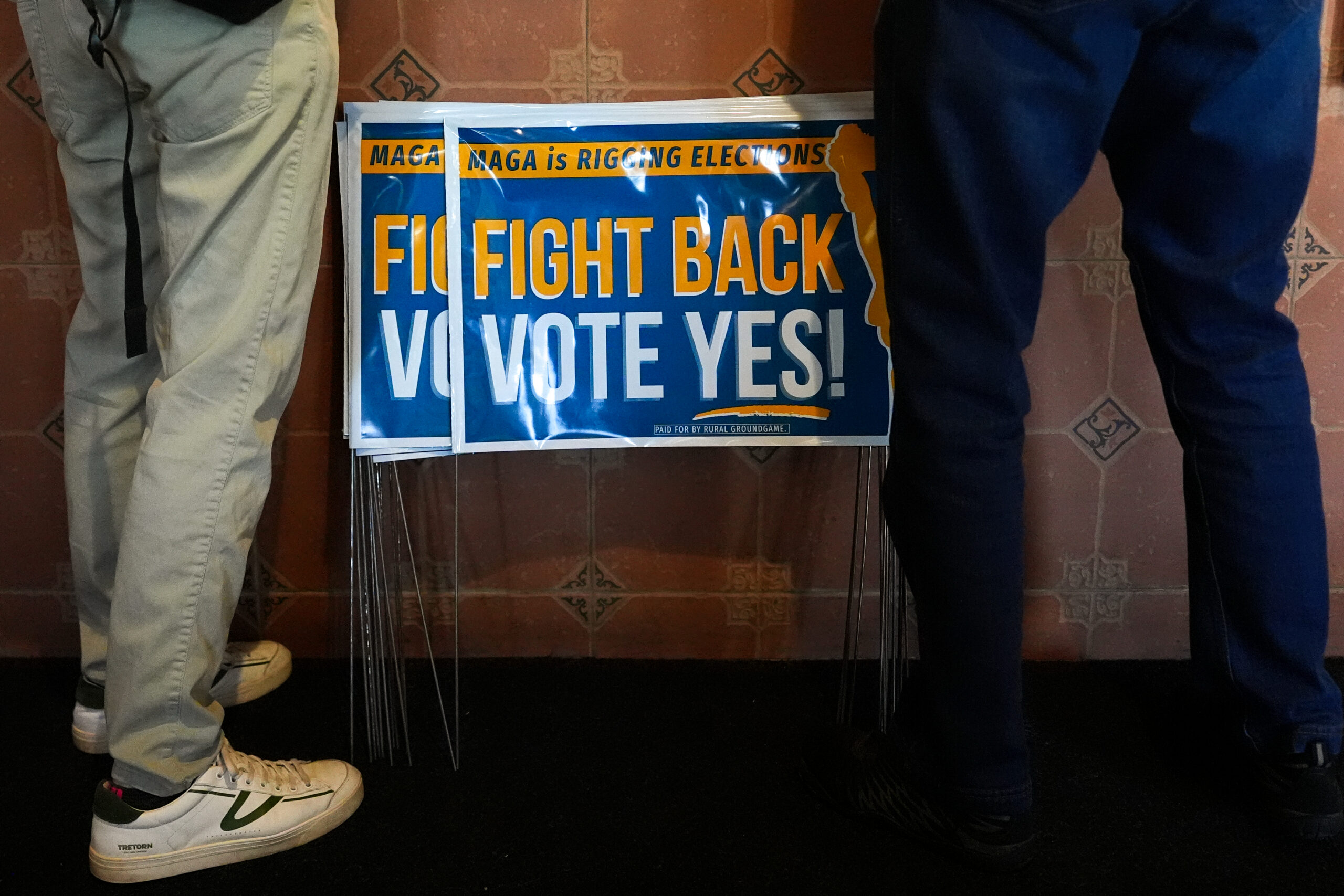
Virginia Redistricting Vote Certification — Virginia Supreme Court
- Holding: The state's highest court is allowing a lower court ruling that blocks redistricting vote certification to remain in place while it weighs whether to nullify the vote for good.
- Vote / posture: Emergency stay order; full merits review pending.
- Why it matters: The outcome will determine the shape of Virginia's legislative maps heading into the next election cycle, with downstream consequences for the state's political balance of power.
Tech Antitrust & Regulatory Battles
Amazon & Microsoft vs. European Commission — EU Digital Markets Act (DMA)
- What happened this week: EU regulators announced they are investigating whether Amazon and Microsoft should be designated as "gatekeepers" for their cloud computing services under the DMA, and are also examining whether the law can effectively address anticompetitive behavior in the cloud sector.
- Stakes: Gatekeeper designation would require both companies to comply with sweeping interoperability, data-portability, and self-preferencing obligations. Noncompliance fines can reach 10% of global annual turnover, with repeat violations subject to up to 20%.
- Status: Investigation opened; no formal gatekeeper designation yet. Market study ongoing.

Meta, Google — EU Digital Markets Act Enforcement Ongoing
- What happened this week: The DMA's regulatory framework continues to evolve, with the European Commission's ongoing enforcement actions against Meta and Google receiving fresh attention alongside the new cloud probe. The Commission previously fined Meta €797.72 million for Facebook Marketplace practices and charged Meta in 2024 for its "pay or consent" advertising model under the DMA.
- Stakes: Both companies face structural remedies, ongoing compliance obligations, and reputational risk. The expanding scope of the DMA into AI and cloud represents a significant escalation of regulatory ambition.
- Status: Multiple open proceedings; the new cloud investigation signals regulators are broadening the DMA's application beyond its original gatekeeper list.
U.S. Tech Companies vs. European Regulators — Trade Tension
- What happened this week: The geopolitical backdrop to EU enforcement actions remains charged: the Trump administration has threatened fees or restrictions on European service providers in response to what it calls "discriminatory" EU actions against U.S. firms—a dynamic that complicates any near-term regulatory settlements.
- Stakes: If the U.S. follows through with trade countermeasures, the DMA's enforcement actions could become flashpoints in a broader transatlantic trade dispute.
- Status: Threat stage; no formal U.S. countermeasure implemented yet.
Other Notable Rulings & Enforcement
-
Trump Deportation Flights — 4th Circuit Shields Officials from Contempt Probe: A federal appeals court blocked a district judge from investigating whether Trump administration officials willfully violated a judicial order directing them to halt deportation flights of Venezuelan immigrants to El Salvador. The ruling represents a significant procedural victory for the administration in ongoing immigration enforcement litigation, though the underlying constitutional questions remain unresolved.
-
Shadow Docket Watch — Supreme Court's Procedural Power: Legal scholars are continuing to scrutinize the Supreme Court's use of emergency orders—the so-called "shadow docket"—to issue consequential rulings outside the Court's normal, deliberate process. The Roundup oral argument and the Virginia redistricting stay are both being watched as examples of how quickly high-stakes legal changes can move through or around the Court's regular channels.
Case of the Week — Deep Dive
9th Circuit Strikes Down Trump Mandatory Immigration Detention Policy
Background: Since the beginning of the second Trump administration, federal immigration enforcement has operated under a policy of near-universal mandatory detention for anyone arrested in connection with immigration violations. The administration argued that statutory authority permitted—or required—holding most detainees without a bond hearing. Multiple district courts, including a California federal judge, issued nationwide rulings blocking the policy, finding it violated detainees' due process rights. In April, a 9th Circuit panel put those rulings on hold temporarily; as of this week, the same court has now definitively rejected the administration's detention posture on the merits.
What the court said: The 9th Circuit held that subjecting "most people arrested" in immigration enforcement to mandatory detention—without any individualized determination or opportunity for a bond hearing—exceeds what the law permits and violates constitutional due process guarantees. The ruling restores the baseline that immigration judges must assess individual circumstances before denying release pending proceedings.
Ripple effects: This decision has immediate practical consequences for potentially hundreds of thousands of people currently or soon to be held in immigration detention facilities. The Trump administration is expected to seek emergency Supreme Court review, setting up what could become one of the term's most significant executive-power confrontations. The decision also heightens scrutiny on the administration's broader claim that its immigration enforcement prerogatives are largely unreviewable by courts—a legal theory that has fared poorly at the appellate level. Civil rights organizations and immigration legal services groups are already preparing habeas petitions on behalf of detained individuals.
What to Watch Next
-
Late May 2026 (window) — Supreme Court opinion, Monsanto Co. v. Durnell (U.S. Supreme Court): With oral argument complete, a ruling on Roundup cancer claims and federal preemption is expected before the end of the term in late June. Watch for whether a majority can hold together on the preemption question, which will determine the fate of tens of thousands of state-court suits.
-
Coming weeks — Supreme Court emergency application, Trump immigration detention (U.S. Supreme Court): The 9th Circuit's rejection of mandatory detention is virtually certain to generate an emergency application to the Supreme Court. Timing is unclear but could move within days, given the administration's record of rapid escalation.
-
Ongoing — EU DMA Cloud Investigation (European Commission): The Commission's new investigation into whether Amazon and Microsoft are DMA "gatekeepers" for cloud services will advance through a defined market study period. Watch for preliminary findings and possible requests for information from both companies—and for any U.S. government response escalating trade pressure.
-
Ongoing — Virginia Redistricting Litigation (Virginia Supreme Court): The Virginia Supreme Court is now deciding whether to permanently nullify the redistricting vote that a lower court blocked. The state's legislative maps—and potentially its next election cycle—hang in the balance.
Reader Takeaways
-
If you run a business that relies on Amazon Web Services or Microsoft Azure: the EU's DMA cloud investigation is an early signal that your cloud vendor may soon face compliance obligations, data-portability requirements, and interoperability mandates in Europe—potentially affecting service terms, pricing, and product roadmaps. Begin assessing your cloud dependencies against a possible regulatory shift.
-
If you build tech products with Roundup or glyphosate exposure in your supply chain or product liability framework: the Supreme Court's forthcoming ruling in Monsanto v. Durnell is one of the most consequential product liability decisions in years. A pro-Monsanto preemption ruling could shield manufacturers from state failure-to-warn claims broadly; a pro-plaintiff ruling could open the floodgates for wave litigation.
-
If you're a consumer or immigrant rights advocate: the 9th Circuit's immigration detention ruling restores a critical due process protection—the right to an individualized bond hearing. However, this battle is not over. An emergency Supreme Court application is likely imminent, meaning this protection could be suspended again within days.
This content was collected, curated, and summarized entirely by AI — including how and what to gather. It may contain inaccuracies. Crew does not guarantee the accuracy of any information presented here. Always verify facts on your own before acting on them. Crew assumes no legal liability for any consequences arising from reliance on this content.
Powered by
