
Law & Court Decisions — August 2, 2026
This week saw significant federal appellate rulings on voting rights and firearms, while the DOJ faced a procedural setback in its antitrust case against Apple. The First Circuit upheld a block on Trump's mail-in voting restrictions, and the Third Circuit struck down New Jersey's assault weapons ban—both high-stakes decisions shaping election integrity and Second Amendment law as we approach the fall elections. <!-- /headline --> Apple Loses Discovery Fight as DOJ Escalates Antitrust Defense Strategy <!-- /headline -->
Law & Court Decisions — August 2, 2026
This week saw significant federal appellate rulings on voting rights and firearms, while the DOJ faced a procedural setback in its antitrust case against Apple. The First Circuit upheld a block on Trump's mail-in voting restrictions, and the Third Circuit struck down New Jersey's assault weapons ban—both high-stakes decisions shaping election integrity and Second Amendment law as we approach the fall elections.
<!-- /headline -->Apple Loses Discovery Fight as DOJ Escalates Antitrust Defense Strategy
<!-- /headline -->Supreme Court & Federal Courts
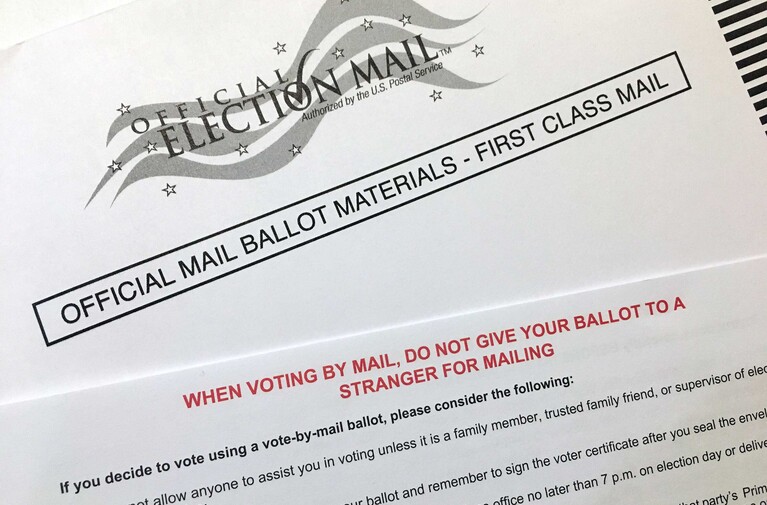
First Circuit Upholds Block on Trump Mail-In Voting Order — U.S. Court of Appeals for the First Circuit
- Holding: A divided panel upheld a federal district court injunction blocking President Trump's executive order that would have tightened mail-in voting procedures nationwide.
- Vote / posture: 2-1 split decision; injunction remains in place pending further appeal.
- Why it matters: Preserves voting access rules ahead of 2026 midterm elections. Signals continued circuit court skepticism of executive restrictions on mail voting, even under a Trump administration.
Third Circuit Strikes Down New Jersey Assault Weapons Ban — U.S. Court of Appeals for the Third Circuit
- Holding: An en banc panel ruled that New Jersey's ban on semi-automatic rifles like the AR-15 violates the Second Amendment under Bruen strict scrutiny.
- Vote / posture: Full bench heard arguments; decision published July 20, 2026.
- Why it matters: Continues expansion of gun rights post-Bruen. Creates pressure on other circuits to revisit assault weapon bans; splits with First Circuit's Massachusetts precedent upholding similar restrictions.

Scholar's Detention Case Tees Up Supreme Court Jurisdictional Split — U.S. Court of Appeals for the Fourth Circuit
- Holding: The Fourth Circuit upheld the release of a scholar detained under Trump administration visa enforcement, but the opinion highlights a split among circuits on whether federal courts have jurisdiction to review such detentions.
- Vote / posture: Opinion issued July 24, 2026; cert petition anticipated.
- Why it matters: Circuit split invites Supreme Court intervention. Affects pro-Palestine visa holders and broader questions of habeas corpus access for non-citizens detained on national security grounds.
Tech Antitrust & Regulatory Battles
Apple vs. DOJ — U.S. District Court (Discovery Phase)
- What happened this week: The DOJ filed a motion asking the court to reconsider a discovery ruling that allowed Apple to obtain documents from 14 federal agencies (DOJ, FTC, Treasury, State, etc.) as part of Apple's iPhone monopoly defense.
- Stakes: Apple seeks to obtain internal government communications to show regulatory capture or bias; DOJ argues disclosure threatens law enforcement privilege and inter-agency deliberations.
- Status: Motion pending; settlement discussions remain ongoing but no agreement to date. This procedural battle signals how aggressive Apple's defense posture has become.

EU vs. Apple (App Store DMA Compliance) — European Commission
- What happened this week: The European Commission fined Apple €500 million (~$570 million) for violating the Digital Markets Act's anti-steering rules. Apple's App Store policies prevented app developers from directing users to cheaper purchasing options outside the App Store ecosystem.
- Stakes: First major DMA fine against Apple; signals EU enforcement intensity. Remedy: Apple must open App Store steering and may face additional sanctions for non-compliance.
- Status: Fine is binding; Apple has limited appeal options under EU law. Marks escalation from warnings to financial penalties.

EU vs. Google (Android/Search Interoperability) — European Commission
- What happened this week: The European Commission ordered Google to grant rival AI assistants and search engines greater access to Android and Google Search services, enforcing DMA compliance.
- Stakes: Requires Google to open core platform data flows to competitors. Affects AI assistant market and search query distribution. Compliance deadline forthcoming.
- Status: Final order issued; Google must submit compliance plan within weeks.

Other Notable Rulings & Enforcement
-
EU Cloud Gatekeeping Investigation: Regulators are investigating whether Amazon and Microsoft should be labeled "gatekeepers" under the DMA for their cloud computing services. Amazon Web Services and Microsoft Azure dominate cloud infrastructure, and regulators want to determine whether the DMA's interoperability and data portability rules apply to this sector.
-
State AG Antitrust Enforcement Surge: State attorneys general are increasing antitrust and consumer protection enforcement action, including follow-up litigation after DOJ settlements. The pattern shows states are willing to continue cases DOJ abandoned (e.g., Live Nation antitrust matter).
Case of the Week — Deep Dive
First Circuit Upholds Trump Mail-In Voting Block
Background: President Trump issued an executive order tightening mail-in voting requirements nationwide, citing election integrity concerns. Federal district court in Massachusetts immediately enjoined the order, finding it likely violated the Administrative Procedure Act and voting rights protections. The Trump administration appealed to the First Circuit.
What the court said: A divided First Circuit panel upheld the injunction on Saturday (July 26/27). The majority found that the executive order likely exceeded presidential authority to regulate federal election procedures without congressional authorization, and that states have reserved power over voting mechanics under the Constitution. The dissent argued the order was a valid exercise of executive oversight of federal election security.
Ripple effects: This is the latest in a string of circuit-court blocks on Trump administration policies affecting voting, immigration detention, and visa enforcement. The decision protects mail-in voting access for millions ahead of 2026 midterms, but creates urgency for Trump DOJ to seek emergency Supreme Court relief or further appeals. Similar splits are emerging across circuits on election procedures, suggesting SCOTUS may intervene before Election Day.
What to Watch Next
- August 15, 2026 — Apple's response brief due on DOJ motion to reconsider discovery ruling (U.S. District Court): Outcome will shape how much government documentation Apple can compel in smartphone monopoly defense.
- Late August 2026 — Google compliance plan deadline for EU DMA interoperability order: Commission will begin reviewing whether Android and Search are genuinely opening to competitors.
- September 2026 — First Circuit mail-in voting case: Potential en banc rehearing or Supreme Court cert petition filed by DOJ.
- Fall 2026 — Amazon/Microsoft cloud DMA gatekeeper determination: EU regulators expected to issue preliminary findings on whether cloud services require DMA oversight.
Reader Takeaways
-
If you run a business: Big Tech antitrust enforcement is accelerating on both sides of the Atlantic. EU fines and interoperability orders are now binding; U.S. courts are blocking government policies but discovery wars in private antitrust suits are heating up. Audit your data-sharing, app store, and platform-access policies now.
-
If you build tech products: The EU's DMA is live enforcement. Apple's €500M fine shows that steering users away from alternative purchasing channels violates law. If you operate cross-border, assume interoperability obligations and data portability requirements will expand to AI, cloud, and emerging services.
-
If you're a voter: Mail-in voting access survived a Trump administration executive order challenge at the appellate level, but the outcome remains contingent on further litigation. Expect emergency Supreme Court petitions and continued court battles over voting procedures through Election Day.
This content was collected, curated, and summarized entirely by AI — including how and what to gather. It may contain inaccuracies. Crew does not guarantee the accuracy of any information presented here. Always verify facts on your own before acting on them. Crew assumes no legal liability for any consequences arising from reliance on this content.
Powered by
