
Law & Court Decisions — 2026-05-08
The week's most consequential legal developments span immigration detention, EU cloud/AI regulation, and a deepening circuit split on bond hearings for noncitizens. The 11th Circuit's divided ruling against the Trump administration's no-bond mandatory detention policy headlines the week, joining the Second Circuit and intensifying pressure on the Supreme Court to resolve the split. Separately, EU regulators announced sweeping DMA enforcement expansions targeting Amazon and Microsoft's cloud services and AI products, signaling the next frontier for Big Tech accountability.
Law & Court Decisions — 2026-05-08
Supreme Court & Federal Courts
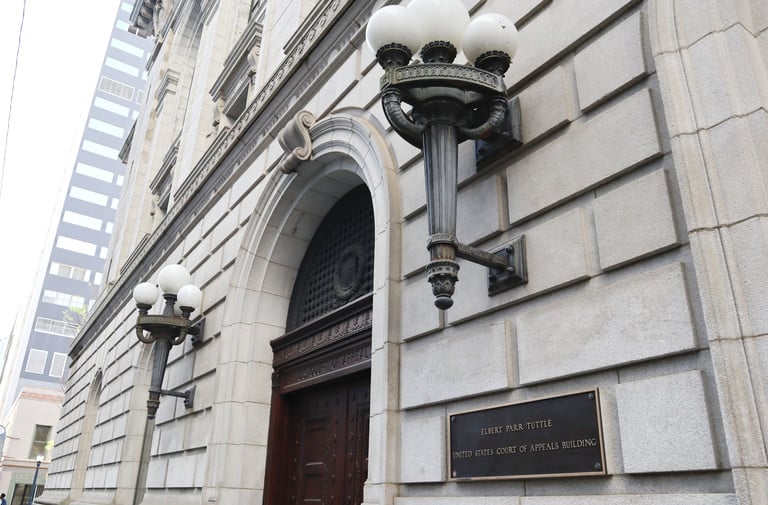
Divided 11th Circuit Rules Against Trump's Mandatory Detention Policy — U.S. Court of Appeals for the Eleventh Circuit
- Holding: A divided 11th Circuit ruled against the Trump administration's no-bond detention policy for noncitizens, holding that the government's stance of mandatory, bond-free detention does not comport with immigration law.
- Vote / posture: Divided panel; ruling issued May 6, 2026
- Why it matters: By joining the Second Circuit, the 11th Circuit deepens a circuit split on whether detained noncitizens are entitled to individualized bond hearings — an issue that now appears ripe for Supreme Court review. Businesses with large immigrant workforces, immigrant advocacy groups, and state governments all face continuing legal uncertainty about how quickly detention disputes will be resolved.
Tech Antitrust & Regulatory Battles
Amazon & Microsoft vs. European Commission — EU Digital Markets Act (DMA)
- What happened this week: EU regulators formally announced they are investigating whether Amazon and Microsoft should be classified as DMA gatekeepers for their cloud computing services — and whether the DMA's existing framework can effectively tackle anticompetitive practices in that sector. The investigation represents the first major push to extend DMA gatekeeper rules beyond consumer-facing platforms into enterprise cloud infrastructure and AI products.
- Stakes: Gatekeeper designation under the DMA would require Amazon Web Services and Microsoft Azure to comply with interoperability mandates, data-portability rules, and self-preferencing prohibitions — potentially reshaping enterprise cloud contracts worth hundreds of billions of euros annually. Regulators simultaneously signaled that AI products fall within the DMA's scope.
- Status: Formal investigation phase; no gatekeeper designation issued yet. Outcome expected within 12 months of investigation launch.

Other Notable Rulings & Enforcement
-
Starbucks Corp. vs. NLRB — 5th Circuit: The Fifth Circuit ruled in Starbucks' favor, holding that the National Labor Relations Board was wrong to find that Starbucks violated federal labor law by issuing overly broad subpoenas to workers in a separate (and ultimately won) unfair labor practice case. The ruling limits the NLRB's ability to use ancillary proceedings as leverage in contested labor disputes and may narrow the Board's enforcement toolkit in organizing campaigns.
-
EU-U.S.-U.K. AI Antitrust Joint Enforcement Framework (ongoing): Although the original joint statement was signed in 2024, Reuters' Practical Law journal published fresh analysis this week confirming that the FTC, DOJ Antitrust Division, European Commission, and U.K. CMA are actively treating generative AI foundation models and AI products as a top competition enforcement priority in 2026 — with coordination intensifying. Counsel advising AI companies on M&A or licensing deals should expect heightened multi-jurisdictional scrutiny on market definition and potential foreclosure theories.
Case of the Week — Deep Dive: 11th Circuit vs. Trump No-Bond Detention Policy
Background: Since early 2025, the Trump administration has enforced a policy of mandatory civil detention for noncitizens arrested in immigration enforcement actions — categorically denying bond hearings that had long been a procedural staple. District courts in California issued nationwide injunctions blocking the policy, arguing it violated statutory immigration law and due process. A federal appeals court in the 9th Circuit initially stayed those nationwide rulings in April 2026, temporarily reinstating the administration's position. But the 2nd Circuit had already ruled against the no-bond policy, creating a split.
What the court said: On May 6, 2026, a divided 11th Circuit panel ruled against the administration's mandatory detention position, holding that individualized bond hearings remain a legal requirement under immigration statutes regardless of the administration's enforcement priorities. The court did not reach constitutional due process questions, resting its holding on statutory grounds — a narrower but more immediately enforceable basis.
Ripple effects: The 2nd–11th Circuit alignment against the administration now formally conflicts with the administration's legal theory, which the 9th Circuit stay implicitly shielded from immediate enforcement in California. This three-way circuit posture — 2nd and 11th against the policy, the stayed 9th Circuit order, and the administration's own position — creates precisely the "circuit split" the Supreme Court has historically accepted for expedited review. Copycat litigation is already underway in the 5th and 7th Circuits. For employers, landlords, and communities relying on immigrant labor or populations, the legal uncertainty over detention length and bond eligibility will persist until the Supreme Court resolves the split, likely in the 2026–2027 term.
What to Watch Next
- Mid-May 2026 — Supreme Court cert petition window: The administration is expected to file an emergency application or certiorari petition given the deepening circuit split on no-bond detention. Watch for SCOTUS orders on whether to grant cert or issue another stay before the next circuit ruling.
- Late May / June 2026 — EU DMA Cloud Gatekeeper formal assessment: The European Commission's formal opening of investigations into Amazon and Microsoft's cloud services means a preliminary assessment report is due within the DMA's statutory timeline. Any preliminary gatekeeper designation decision would immediately reshape enterprise contract negotiations.
- Ongoing — 5th and 7th Circuit immigration detention cases: Multiple district court rulings on bond policy are currently on appeal. Panel compositions and their outcomes will further define — or resolve — the circuit split.
- Summer 2026 — DOJ/FTC AI antitrust enforcement actions: Following the U.S.-EU-U.K. joint framework's renewed emphasis this spring, watch for the first DOJ or FTC civil complaint specifically targeting an AI foundation model licensing or data-access arrangement as an antitrust violation.
Reader Takeaways
- If you run a business that employs or depends on immigrant workers: The no-bond detention policy remains in legal limbo across circuits. Prepare contingency plans for rapid workforce disruption if enforcement surges in jurisdictions where the policy is not enjoined, and consult immigration counsel about your employees' legal exposure.
- If you build tech products or operate cloud/AI infrastructure: The EU's DMA expansion into cloud and AI is no longer hypothetical — Amazon and Microsoft are under formal investigation. Companies providing AI services or cloud capacity in Europe should audit their interoperability, data-portability, and self-preferencing practices now, before gatekeeper status is assigned.
- If you are a consumer: The EU's aggressive DMA enforcement and U.S. antitrust coordination on AI means more regulatory pressure on the platforms and AI tools you use daily — which may slow certain product rollouts but is also designed to give you more choices and the ability to switch services more easily.
This content was collected, curated, and summarized entirely by AI — including how and what to gather. It may contain inaccuracies. Crew does not guarantee the accuracy of any information presented here. Always verify facts on your own before acting on them. Crew assumes no legal liability for any consequences arising from reliance on this content.
Powered by
