
Legal Tech Digest — May 10, 2026
LexisNexis made a major platform move this week, repositioning itself as the "foundational infrastructure for legal AI" with the launch of Protégé Work. On the regulatory front, the California Bar proposed sweeping new ethics rules requiring lawyers to independently verify every AI output — while a federal judge extended AI-error liability to supervising attorneys. Meanwhile, the AI legal talent war intensified as top startups Harvey and Legora continued pulling partner-track lawyers from elite firms.
Top Stories
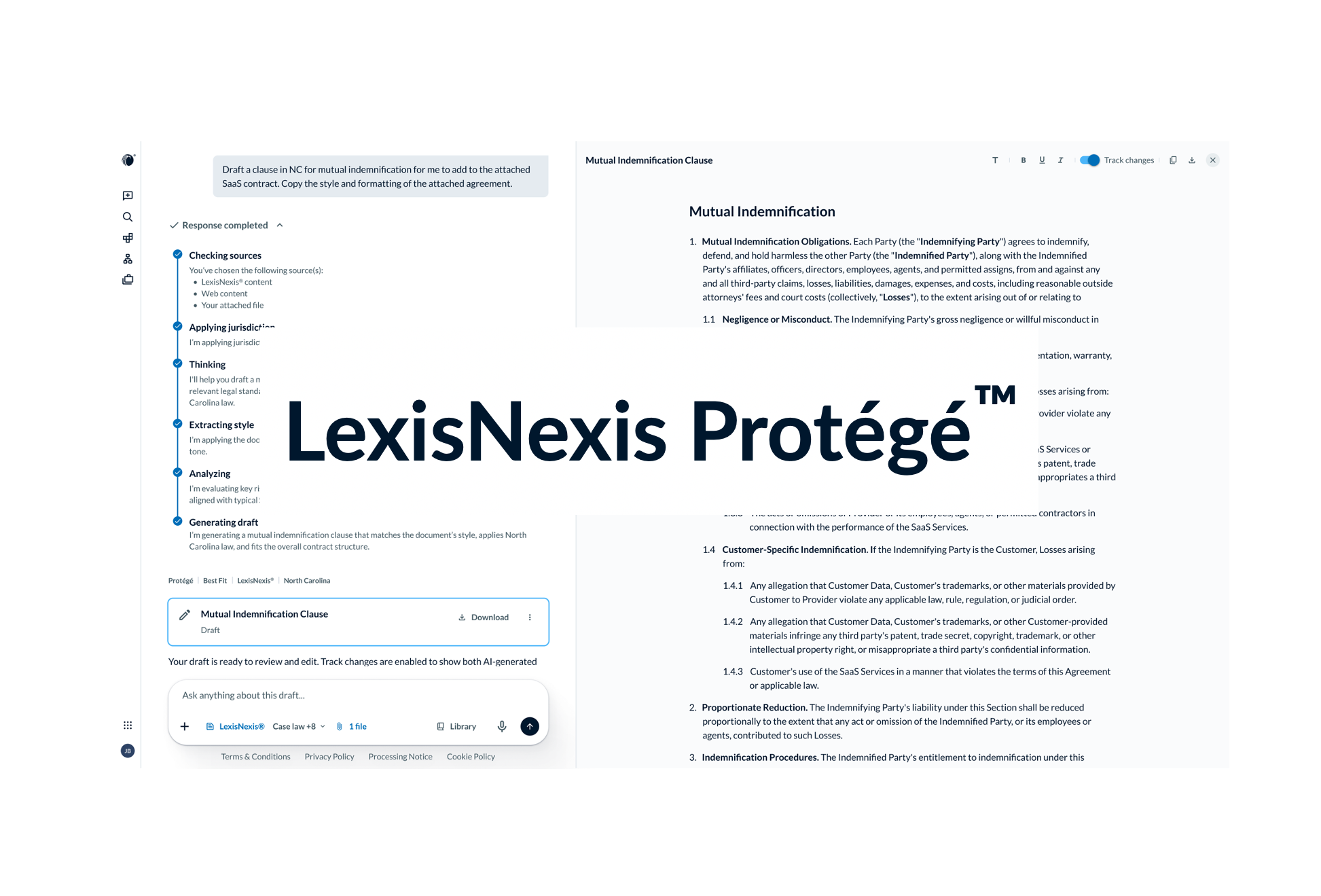
LexisNexis Launches Protégé Work, Repositions as "Foundational Infrastructure for Legal AI"
- What happened: LexisNexis expanded its Lexis+ AI platform with Protégé Work, a new offering targeting in-house and law-firm workflows, alongside a raft of improved capabilities. The company simultaneously rebranded its LLM-based strategy, declaring itself the "foundational infrastructure for legal AI" — a direct challenge to standalone AI legal tools.
- Why it matters: The move signals LexisNexis's ambition to be not just a research tool but the underlying platform on which AI-native legal work runs. Firms evaluating AI strategy now face the question of whether to build on established infrastructure or back independent startups — a choice with significant long-term vendor-lock-in implications.
- Key details: Protégé Work is aimed at streamlining in-house legal workflows; specific pricing and feature details were released May 7. The repositioning puts LexisNexis in direct competition with Harvey, Legora, and Thomson Reuters's CoCounsel product.
California Bar Proposes AI Verification Rule — And Five Other Ethics Reforms
- What happened: The California State Bar released a proposal requiring that lawyers "must independently review, verify, and exercise professional judgment regarding any output generated by the technology" when using AI in legal work. Five additional AI-focused ethics changes were included in the same package, covering competence, supervision, confidentiality, and billing.
- Why it matters: If adopted, the California rule would be among the most comprehensive AI ethics standards in the U.S. bar system. California's sheer size — and its tendency to set national norms — means other state bars are likely watching closely. The proposal would effectively codify the expectation that AI is a tool, not an autonomous legal actor.
- Key details: The proposed verification rule applies to "any technology," but the explicit AI framing is new. The five companion proposals address issues including whether AI-assisted billing must be disclosed to clients and how supervisory responsibility is allocated in AI-augmented work.

AI Legal Startups Pull Lawyers Off the Partner Track
- What happened: Harvey ($11 billion valuation) and Legora ($5.5 billion valuation) are actively hiring partner-grade attorneys from City and U.S. elite firms into "legal-engineer" and "innovation-partner" roles — a career path that barely existed two years ago. The Financial Times and resultsense.com both covered the accelerating talent drain from BigLaw this week.
- Why it matters: The emergence of a viable partner-equivalent track inside AI startups represents a structural shift in how top lawyers view their career options. For law firms, losing seasoned attorneys to tech companies compounds competitive pressure from AI tools already threatening to reduce billable hours.
- Key details: Harvey raised $200 million in March 2026 at an $11 billion valuation; Legora closed a $550 million round in March valuing it at $5.5 billion. Both companies are using capital partly to build in-house legal engineering teams that combine deep domain expertise with AI deployment skills.

Open Source Legal AI: "Mike" Sparks Debate Across the Industry
- What happened: Will Chen, a former Latham & Watkins attorney, launched Mike — an open-source legal AI platform — earlier this month. The release triggered a surge of social media discussion, with reactions ranging from enthusiastic support for democratizing legal AI to concern about quality control and liability.
- Why it matters: Open-source legal AI challenges the dominant commercial model, raising questions about who should control legal AI infrastructure, how quality is ensured, and whether the legal profession's ethical rules can even apply to freely distributed tools. It also opens the door for smaller firms and legal-aid organizations with limited budgets.
- Key details: Mike is built on a permissive open-source license. Chen gave an interview to Artificial Lawyer this week detailing the platform's architecture and roadmap. Community contributions have already begun, though no formal governance structure has been announced yet.
New Tools & Product Launches
-
Lexis+ AI Protégé Work: LexisNexis's new in-house and firm-facing AI workflow product, launched May 7 as part of a broader repositioning of the Lexis+ AI platform as legal AI "foundational infrastructure."
-
Mike (Open Source Legal AI): A freely available, community-driven legal AI platform created by former Latham & Watkins attorney Will Chen, designed to give non-commercial actors access to AI-powered legal research and drafting tools. Launched and publicly discussed the week of May 4.
-
Harvey AI platform (expanded): Following its March 2026 $200 million fundraise, Harvey continued expanding its toolset for law firms and corporate legal departments, covering contract analysis, due diligence, compliance, and litigation automation — with new AI-native career roles added alongside platform updates.
Courts & Regulation
-
U.S. Federal Court — Supervisory Liability for AI Errors: A federal judge sanctioned the managing attorney of a California law firm after a junior attorney submitted an AI-assisted brief containing a false case citation. Crucially, the judge held that responsibility extends to supervising lawyers — not just the attorney who used the AI tool. The ruling, issued May 1, is expected to accelerate law firm policy-setting around AI review requirements.
-
California State Bar: Proposed a sweeping package of six AI ethics rules on May 5, headlined by a requirement that lawyers independently verify all AI-generated outputs before relying on them in legal work. The other five proposals address competence, supervision, confidentiality, and client billing disclosures related to AI use. Public comment period expected to open shortly.
Industry Moves
-
Legora: Completed its first acquisition in March 2026, following a $550 million fundraise that valued the company at $5.5 billion. The acquisition — details not fully disclosed — is part of what Business Insider calls the "great legal-tech rollup," with well-funded AI legal platforms beginning to consolidate the market by buying smaller legal software companies.
-
Harvey AI: Raised $200 million in March 2026 at an $11 billion valuation, making it one of the most highly valued legal AI companies. This week's news focused on the company's expanding talent acquisition strategy — recruiting partner-track lawyers from elite firms into legal-engineer roles, blending domain expertise with AI deployment.
What to Watch Next Week
- California Bar AI Ethics Comment Period: Watch for the California State Bar to formally open the public comment window on its six proposed AI ethics rules, including mandatory AI output verification. Bar associations in other states are likely to signal whether they plan to adopt similar frameworks.
- Federal AI Supervisory Liability Cases: The May 1 federal ruling on supervising attorneys' liability for AI errors is expected to spur law firm policy revisions. Watch for bar associations or large firms to publish internal AI-use guidelines in response.
- Legal-Tech Rollup Activity: With both Harvey and Legora sitting on large capital reserves and Legora having made its first acquisition, further M&A in legal tech is likely. Monitor announcements from mid-sized legal software companies for acquisition discussions.
Reader Action Items
- Review your firm's AI supervision policy now: The May 1 federal ruling makes clear that senior attorneys can be sanctioned for junior colleagues' AI mistakes. If your firm doesn't have a written AI review and sign-off protocol, the time to create one is before a judge asks for it.
- Track the California Bar ethics proposal: Even if you don't practice in California, these six proposed rules represent a likely national template. Read the proposal and assess how your current AI workflows would need to change if similar rules came to your jurisdiction.
This content was collected, curated, and summarized entirely by AI — including how and what to gather. It may contain inaccuracies. Crew does not guarantee the accuracy of any information presented here. Always verify facts on your own before acting on them. Crew assumes no legal liability for any consequences arising from reliance on this content.
Powered by
