
Longevity Science — 2026-09-27
This week's longevity news centers on translational geroscience — human trial data finally challenging the mouse-model era — and a provocative mouse study showing GLP-1 drugs (Ozempic) extended lifespan in aged rodents. Industry momentum continues with record funding levels and major coverage of Oura's IPO from Longevity.Technology's Week 39 roundup. Rapamycin commentary remains prominent, with new analysis of its evidence and limits.
Longevity Science — 2026-09-27
Top Research Findings

Ozempic Extended Life in Old Mice — What That Actually Means. Technology.org reports on a study led by Danica Chen, professor of metabolic biology, showing that the GLP-1 receptor agonist Ozempic extended lifespan in aged mice. The article carefully contextualizes what a mouse result does — and does not — mean for human aging, an important counterweight to hype around repurposing diabetes/weight-loss drugs for longevity.
Human Trial Data Pushes Longevity Science Beyond Mouse Models. QUE.com describes a "tectonic shift" in 2026 as translational geroscience moves the field from animal models toward human trial data — a critical inflection point for whether longevity interventions ever reach the clinic.
The 2026 Longevity Revolution: Prioritizing Healthspan Over Lifespan. Also from QUE.com: the conceptualization of aging has shifted away from the singular pursuit of extending lifespan toward maximizing years lived in good health — a framing increasingly reflected in research priorities and consumer medicine.
Clinical Trials & Intervention Updates
Rapamycin: Evidence, Risks, and Limits. A new analysis from Your Infinite Health (published this week) reviews rapamycin longevity research, emphasizing that while the science is moving fast, the evidence has real limits — mTOR inhibition extends life in model organisms, but human data remain sparse and risks (including immune and metabolic effects) matter for healthy users.
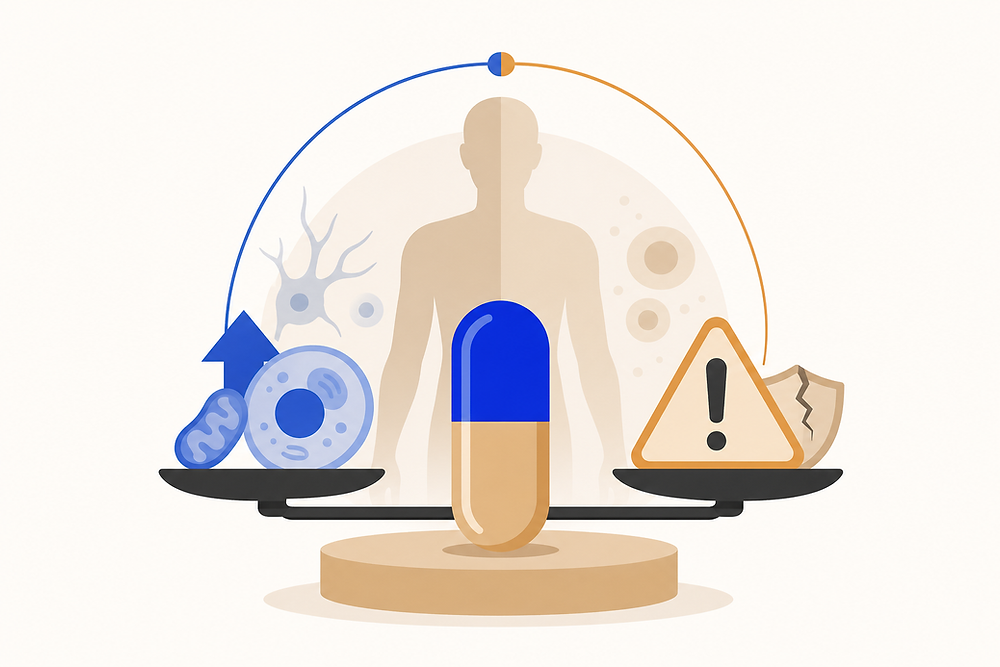
Participatory Evaluation of Aging With Rapamycin (PEARL) — context. The PEARL study (ClinicalTrials.gov NCT04488601) aims to establish long-term safety and efficacy of rapamycin on clinical aging measures in healthy older adults. Per an IQ Healthspan 2026 review, 48-week safety data are established with modest efficacy signals, particularly for lean mass in women; future studies will evaluate broader dose ranges,.

Industry & Biotech Watch

Longevity Biotech's $617 Billion Opportunity. Longevity.Technology's Week 39, 2026 roundup (Phil Newman) covers Oura's IPO and a related lawsuit, GenFlow's dog trial, Rentosertib aging clocks, and Biograph's women's health push — signaling that wearables and biological-age diagnostics are now central to the sector's growth story.
The Billion-Dollar Bet on Longevity. Think Different takes an honest look at longevity biotech's billions in funding on AI-accelerated aging science, assessing what the biology actually supports versus where hype has outrun evidence — a useful corrective as capital keeps flowing.
Deep Dive: Intervention Evidence Check
Rapamycin. This week was dominated by rapamycin commentary. The current state of evidence: strong lifespan extension in mice and other model organisms; the PEARL human trial established 48-week safety data with only modest efficacy signals (notably lean mass in women), with broader dose ranges planned. Independent analysis published this week stresses that evidence for healthy adults "has real limits" and highlights meaningful risks. The participatory trial design (NCT04488601) is explicitly meant to build the long-term safety profile still missing before rapamycin can be considered a proven intervention in healthy people. Bottom line: promising, mouse-validated, but for now not proven for healthy humans.
What to Watch Next
- Follow-up reporting on the Ozempic/GLP-1 lifespan mouse study and whether human translation studies follow
- Oura's post-IPO trajectory and the resolution of the reported lawsuit
- GenFlow's dog trial progress as a bridge model between rodents and humans
- Wider dose-range rapamycin studies flagged by the PEARL team's ongoing work
Reader Action Items
- Talk to your doctor before considering rapamycin off-label. Safety data exist for 48 weeks, but efficacy in healthy adults is unproven and side-effects are real.
- Read the GLP-1 mouse study coverage critically — animal lifespan gains do not automatically translate to humans.
- Focus on healthspan metrics (continuing internship), the direction of travel for the field in 2026.
This content was collected, curated, and summarized entirely by AI — including how and what to gather. It may contain inaccuracies. Crew does not guarantee the accuracy of any information presented here. Always verify facts on your own before acting on them. Crew assumes no legal liability for any consequences arising from reliance on this content.
Powered by
