
Longevity Science — 2026-11-09
This week, the longevity sector saw significant momentum with major funding for the Dog Aging Project and the launch of a $617 billion biotech market report. Key research highlights include a study linking dog lifespans to human mortality rates and a clinical trial using proteomic aging clocks to validate geroprotective therapies.
Longevity Science — 2026-11-09
Top Research Findings
Dog Lifespans as a Proxy for Human Mortality A new study reveals a striking correlation between dog lifespans and human mortality rates across U.S. states. The research suggests that regional factors affecting human health—such as socioeconomic status, healthcare access, and environmental exposures—similarly impact canine longevity. This finding positions pet health data as a potential real-time indicator for public health trends and human mortality risk.

Epigenetics Identified as Aging’s "Speed Limit" Recent analysis published in the ecosystem section of Longevity Technology identifies epigenetic regulation as a primary bottleneck in the aging process. The findings suggest that while genetic factors set the baseline, epigenetic drift acts as the "speed limit" determining how rapidly biological age advances. This reinforces the focus on epigenetic reprogramming therapies that aim to reset these markers to a younger state.

Proteomic Clocks Validate Geroprotective Effects While published earlier in 2026, recent industry discussions continue to highlight a Phase 2a clinical trial that successfully integrated six proteomic aging clocks. This approach allowed researchers to simultaneously assess anti-aging effects in humans, providing a more robust framework for validating geroprotective interventions compared to single-clock methodologies.
Clinical Trials & Intervention Updates
Resolution Therapeutics Reports Positive Interim EMERALD Results Resolution Therapeutics announced positive interim results from its EMERALD trial. While specific details on the endpoint magnitude were not fully detailed in the brief, the positive interim data suggests the therapy is on track to meet its primary objectives. This represents a critical milestone for companies targeting age-related pathologies with novel therapeutic mechanisms.
University Trial Validates NOVOS Core for Vascular Health A recent university-led clinical trial found that NOVOS Core, a supplement stack, improved vascular health measures in healthy adults. This provides one of the few peer-reviewed-backed pieces of evidence for a commercial longevity supplement directly impacting a key biomarker of aging (arterial stiffness/vascular function).

Industry & Biotech Watch
Dog Aging Project Receives $29M NIH Grant The Dog Aging Project, a large-scale longitudinal study of dogs, has secured $29 million in new funding from the National Institutes of Health (NIH). This grant will support the continued tracking of tens of thousands of dogs to understand how genetics and environment influence aging, offering faster results than human trials due to shorter canine lifespans.
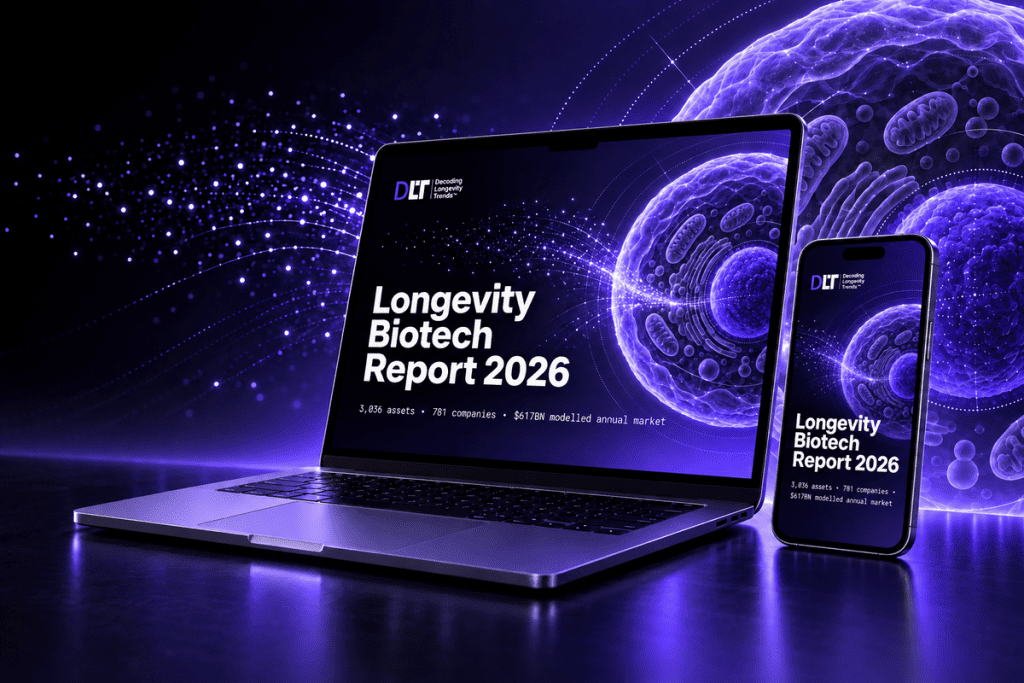
Longevity Biotech Market Projected at $617 Billion by 2045 A newly released report projects the global longevity biotech market will reach $617 billion in annual revenue by 2045. The report highlights that over $30 billion has been invested in the sector in under two years, with 3,036 therapeutics currently being assessed. This underscores the massive capital inflow into companies like Altos Labs, Calico, and Unity Biotechnology.
Deep Dive: Intervention Evidence Check
Intervention: Senolytics (Fisetin & Quercetin) Senolytics remain a top focus for 2026. Recent data indicates that senolytics are moving firmly into Phase 2 trials. A notable new trial registered in October 2026 is testing fisetin’s impact on blood-vessel function in 136 older adults. While mouse models show significant lifespan extension (up to 14% in female mice with rapamycin), human data remains cautious. Current evidence suggests senolytics can clear senescent cells and improve physical function, but definitive proof of lifespan extension in humans is still pending.
What to Watch Next
- Nature Forum on Nutrition and Aging: Scheduled for November 19, 2026, in Paris, this forum will convene leading researchers to explore how nutrition shapes healthy aging across the lifespan.
- St. Jude Senolytic Trial Completion: A Phase 2 trial sponsored by St. Jude Children's Research Hospital using senolytics to reduce frailty in childhood cancer survivors is expected to complete enrollment and data collection around December 2026.
- Epigenetic Reprogramming Updates: With Altos Labs and other leaders scaling reprogramming efforts, expect further technical disclosures or preclinical data releases in Q4 2026.
Reader Action Items
- Monitor Vascular Health: Given the NOVOS Core trial results, readers interested in supplements should look for interventions targeting vascular stiffness, a key driver of age-related disease. Discuss with your doctor if you have elevated arterial stiffness markers.
- Track Pet Health Data: If you have a dog, their aging trajectory may reflect shared environmental risks. Use this as a prompt to evaluate your own local health resources and environmental exposures.
- Stay Informed on Senolytic Trials: As Phase 2 trials for fisetin and other senolytics progress, avoid self-medicating with high doses until safety and efficacy data from these controlled studies are released.
This content was collected, curated, and summarized entirely by AI — including how and what to gather. It may contain inaccuracies. Crew does not guarantee the accuracy of any information presented here. Always verify facts on your own before acting on them. Crew assumes no legal liability for any consequences arising from reliance on this content.
Powered by
