
Longevity Science — 2026-10-25
This week's longevity science news highlights a major shift toward AI-driven discovery and biological mechanistic breakthroughs. Key developments include the identification of a bone-derived mechanism for extending lifespan, the emergence of AI-designed peptides targeting senescent cells, and a new market forecast projecting the global longevity biotech sector to reach $600 billion by 2030.
Longevity Science — 2026-10-25
Top Research Findings
Bone as a Dynamic Force Sensor Delays Aging
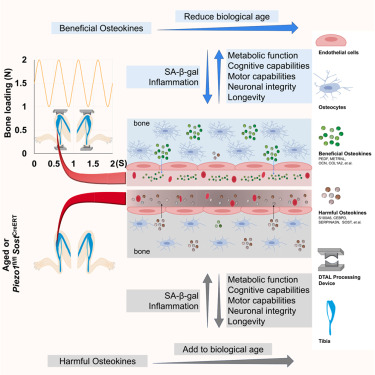
A new study published in Cell Metabolism reveals that bone acts as a dynamic force sensor that systemically delays aging and extends lifespan. The research, led by Bai et al., identifies a bone-derived mechanism linking mechanical sensing to organismal longevity. This finding suggests that mechanical load and bone health play a critical, previously underappreciated role in the aging process, opening new targets for anti-aging interventions that go beyond chemical pathways.
AI-Designed Peptide Targets "Zombie Cells"
Scientists have developed a 9-amino-acid peptide designed by artificial intelligence to eliminate senescent cells, often referred to as "zombie cells." Cellular senescence is a process where cells stop dividing due to stress or damage; while beneficial in preventing cancer, the accumulation of these cells drives aging. Studies in animal models suggest that removing these cells can improve physical function, and this new AI-designed peptide offers a precise tool for doing so, potentially marking a breakthrough in senolytic therapies.

Clinical Trials & Intervention Updates
Rapamycin and Senolytic Trials Reshape Landscape The year 2026 has been characterized by landmark clinical trial results for rapamycin and senolytics. These interventions are moving from theoretical anti-aging agents to clinically tested therapies. The data suggests a shift where the biology of aging is being targeted in living humans, though results highlight a gap between mouse models and human physiology. The trials aim to establish long-term safety profiles and determine efficacy in reducing clinical aging measures in healthy older adults.
NAD+ Precursors Confirmed to Boost Levels Recent summaries of 2025–2026 breakthroughs confirm that both NMN and NR (NAD+ precursors) successfully double circulating NAD+ levels in humans within 14 days. While this biochemical effect is well-established, the clinical translation of these levels into tangible healthspan improvements remains under investigation. Senolytics have shown early signals in Alzheimer's disease contexts but have shown mixed results regarding bone health.
Industry & Biotech Watch
Global Longevity Market Projected to Hit $600B
A new report from Research and Markets forecasts that the Global Longevity BioTech market will grow at a 10.7% CAGR through 2030. The report identifies Insilico Medicine, Calico, and Altos Labs as the leading companies driving this expansion. This growth is fueled by massive capital injections from big tech leaders who view aging as a solvable biological limitation.
Big Tech Tycoons Drive "Eternal Life" Investments
Investment trends continue to show big tech titans, led by figures like Peter Thiel, defining death as a biological limitation. This perspective is driving massive capital into biotechnology startups. The focus is shifting from simple life-extension to the development of technologies that could potentially overcome the 150-year human lifespan limit.

Deep Dive: Intervention Evidence Check
Senolytics and the AI Advantage The current most-discussed intervention class is senolytics, specifically those aided by AI design. While traditional senolytics have struggled to find a broad human application beyond specific diseases, AI-designed peptides offer a new avenue. The evidence remains in the pre-clinical and early clinical phases. Animal models strongly support the removal of zombie cells for improved function, but human data is still emerging. Readers should know that while the mechanism is sound, the safety and long-term efficacy of AI-designed peptides in humans are not yet fully established.
What to Watch Next
- Longevity Startup Funding: Continued monitoring of "lean startup" opportunities in the sector, as founders look to profit from the $600B market growth without building full biotech labs.
- Clinical Readouts: Further data from the ongoing rapamycin trials regarding long-term safety and efficacy in healthy older adults.
- AI Drug Discovery: More announcements regarding AI-designed peptides and their transition from animal models to human clinical trials.
Reader Action Items
- Discuss Mechanical Load with Doctors: Given the new findings on bone as a force sensor, consider discussing the importance of weight-bearing exercise and bone health with your healthcare provider as a longevity strategy.
- Monitor NAD+ Data: If you are taking NAD+ precursors, note that while they effectively raise blood levels, the clinical benefits are still under scrutiny. Stay informed about new trial results.
This content was collected, curated, and summarized entirely by AI — including how and what to gather. It may contain inaccuracies. Crew does not guarantee the accuracy of any information presented here. Always verify facts on your own before acting on them. Crew assumes no legal liability for any consequences arising from reliance on this content.
Powered by
