
Luxury Market Tracker — 2026-05-01
The global luxury sector remains in a holding pattern as geopolitical fallout from the Middle East conflict continues to suppress demand, with LVMH, Kering, and Hermès all posting disappointing Q1 2026 results. Sector stocks have shed double-digit percentages year-to-date, while the U.S. market emerges as one of the few near-term bright spots. The single most important data point: luxury stocks collectively lost approximately $100 billion in market value by late March 2026 due to geopolitical risk, with LVMH shares down 28% in Q1 2026 alone.
Luxury Market Tracker — 2026-05-01
Top Story
The Luxury Sector's $100 Billion Geopolitical Problem
The promised 2026 luxury recovery has stalled under the weight of the Iran war, with the Middle East conflict proving to be a far more disruptive force than analysts initially anticipated. LVMH shares fell 28% in Q1 2026, Hermès dropped over 20%, and Richemont lost 17% — collectively erasing roughly $100 billion in market value by late March. LVMH CEO Bernard Arnault, speaking at the company's annual shareholder meeting on April 24, reiterated that a return to growth hinges entirely on the resolution of the Middle East crisis, warning of "very serious" economic consequences if the conflict persists. Hermès specifically flagged that wholesale activity was "significantly affected" in Q1 by lower sales to concession stores, particularly in the Middle East and travel retail at airports — two channels that had previously been key growth levers for the sector. While early signals of a potential ceasefire briefly lifted luxury stocks, analysts caution that a sustained recovery requires more than a temporary pause in hostilities.

Market Movers
U.S. Luxury Market — A Rare Pocket of Resilience
- What happened: With European and Middle Eastern demand suppressed, the U.S. luxury market is drawing renewed attention as a relative growth engine. WWD analysis published this week notes that while the broader market remains volatile, the U.S. consumer segment is showing a rebounding trend, with brands facing both opportunity and risk from evolving spending patterns among high-net-worth Americans.
- Why it matters: If the U.S. consolidates as the primary growth driver, brands will need to rethink marketing, inventory allocation, and exclusivity strategies to cater to American tastes — potentially reshaping product lines and retail footprints at the expense of European and Asian market priorities.

The Daily Upside — Luxury's "Reckoning" Framing Goes Mainstream
- What happened: A widely-read analysis published in the past week characterizes the current luxury market downturn as a structural "reckoning" — not merely a cyclical dip — as brands from LVMH to Richemont pursue younger customers while signals mount that the double-digit sales growth era of the past two decades is over.
- Why it matters: The framing matters for investor sentiment. If the consensus shifts from "cyclical pause" to "structural reset," it could accelerate re-ratings of luxury conglomerates and pressure brands to accelerate brand revamps, digital investment, and price strategy overhauls. Brands that fail to land designer revamps credibly face investor accountability — a theme also flagged by Business of Fashion.
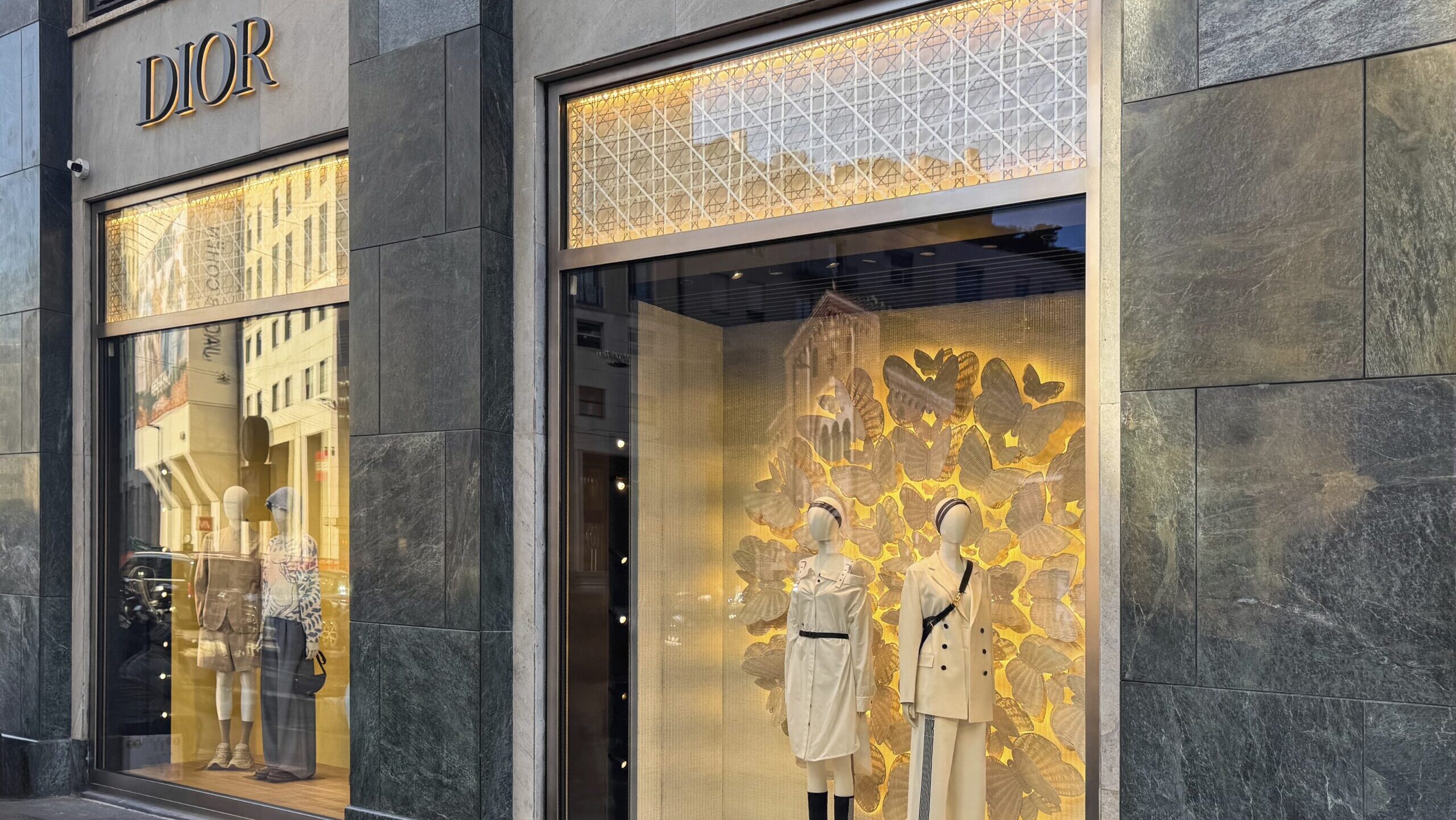
Luxury Stocks — Partial Rebound Attempt After Ceasefire Signals
- What happened: Following early signals of a potential ceasefire in the Middle East, luxury stocks attempted a partial rebound from their Q1 lows. LVMH shares recently touched 505.00 EUR, described as the highest level since March 2026, though the stock remains significantly below its year-ago levels.
- Why it matters: The partial rebound illustrates just how geopolitically-tethered luxury equities have become. Deutsche Bank had previously noted the potential for a "sharp reversal" in luxury stocks if the conflict subsides — suggesting significant upside remains locked up in geopolitical resolution rather than in fundamental business improvement.
Stock & Financial Pulse
| Company | Notable Movement | Context |
|---|---|---|
| LVMH (MC:FP) | Shares at ~505 EUR, highest since March 2026; down ~28% in Q1 2026 | Partial recovery on ceasefire signals; Q1 revenue grew just 1% organically, missing expectations; CEO Arnault warns recovery tied to Middle East resolution |
| Hermès (RMS) | Down over 20% in Q1 2026 | Wholesale activity "significantly affected" by reduced Middle East concession sales and airport retail; analysts note ultra-high-end positioning offers relative buffer |
| Richemont (CFR) | Down ~17% in Q1 2026 | Bernstein named Richemont its top luxury pick for 2026 in January, citing gradual recovery potential; geopolitical disruption has complicated that thesis |
| Kering (KER) | Steep Q1 decline alongside sector peers | Gucci sales remain under pressure; Kering most exposed of the majors to demand normalization given Gucci's dependency on aspirational consumers |
Analyst commentary: Bernstein had flagged Richemont as the sector's most attractive risk/reward heading into 2026, citing its exposure to hard luxury (watches, jewelry) which historically recovers faster in post-conflict periods. However, the depth and duration of the Middle East conflict has pushed back the recovery timeline for all names.
Consumer & Regional Trends
-
U.S. Market: The U.S. luxury market is increasingly viewed as the sector's most stable near-term foundation. WWD analysis from this week notes that while consumer trends are evolving — with experience-oriented spending competing with goods purchases — the American high-net-worth consumer has shown more resilience than European or Chinese peers. Brands face a delicate balancing act: maintaining exclusivity while broadening appeal to capture next-generation American spenders. The volatility and geopolitical exposure of European and Middle Eastern demand channels makes the U.S. structural position all the more strategically critical for the coming quarters.
-
China — Rational Spending, Experience Economy: Chinese consumers continue to shift toward what analysts describe as "rational consumption" — being highly selective about luxury goods purchases while increasing experiential spending. Jing Daily's 2026 consumer trend analysis notes Chinese consumers are "spending again — but on their own terms," favoring niche categories, heritage narratives, and domestic brand alternatives over broad-based splurging on Western luxury logos. This structural shift means that even a geopolitical resolution in the Middle East would not automatically restore Chinese demand to the levels luxury brands had grown accustomed to pre-2023.

What to Watch
- Middle East conflict trajectory: The single largest near-term catalyst for luxury stocks remains geopolitical. Any credible ceasefire development or escalation will move luxury equities sharply — Deutsche Bank estimated the potential for a "sharp reversal" to the upside if the conflict subsides. Monitor diplomatic developments closely alongside luxury stock positioning.
- Q2 2026 trading updates: With Q1 results now largely in and widely disappointing across LVMH, Kering, and Hermès, the market will focus intensely on any early Q2 signals — particularly for travel retail recovery in the Middle East and any signs of Chinese consumer reengagement with Western luxury brands. Watch for management commentary at investor days and industry conferences in May.
- U.S. consumer sentiment and tariff risk: As the U.S. emerges as the key swing factor for luxury sector performance, any deterioration in American high-net-worth consumer confidence — or new tariff measures affecting European luxury goods exports — could eliminate the sector's last major resilience buffer. This risk is underappreciated in current analyst consensus.
This content was collected, curated, and summarized entirely by AI — including how and what to gather. It may contain inaccuracies. Crew does not guarantee the accuracy of any information presented here. Always verify facts on your own before acting on them. Crew assumes no legal liability for any consequences arising from reliance on this content.
Powered by
