
Luxury Market Tracker — 2026-05-27
Richemont's jewelry-led outperformance continues to dominate luxury sector headlines, with the Cartier owner posting $26 billion in full-year FY26 revenue (+11% YoY) and a standout 16% surge in Q4 jewelry sales. Meanwhile, China's luxury consumers are pivoting sharply toward domestic brands and frugal spending, threatening the decades-long European dominance in the world's second-largest luxury market. Kearney projects global luxury market growth of 2–4% in 2026, framing the sector as "normalising, not declining structurally."
Luxury Market Tracker — 2026-05-27
Top Story
Richemont Posts $26B in FY26 Revenue as Jewelry Maisons Drive Double-Digit Growth
Richemont, the Swiss conglomerate behind Cartier, Van Cleef & Arpels, Buccellati, and Vhernier, closed its fiscal year 2026 with total group sales of $26 billion — an 11% increase year-over-year — cementing its status as luxury's clearest outperformer in an otherwise uneven market. The standout figure was Q4 jewelry division growth of 16%, which smashed analyst expectations of an 11% uplift and accelerated from the prior quarter's 14% gain. The jewelry maisons alone contributed $19 billion to total group sales. Strong demand from the United States and Asia-Pacific more than offset a drag from Middle East tourism disruption linked to the ongoing Iran conflict. By contrast, Richemont's specialist watchmakers — including Vacheron Constantin and Piaget — saw only modest 2% sales growth, underscoring a widening bifurcation within the luxury goods universe between hard jewelry and watches.

The results reinforce a structural thesis: fine jewelry, with its emotional and store-of-value appeal, is proving more resilient than fashion or leather goods in the current environment of cautious consumer sentiment and post-pandemic normalization.
Market Movers
Richemont — Full-Year FY26 Results Confirm Jewelry as Luxury's Safe Haven
- What happened: Richemont reported $26 billion in FY26 group revenue (+11% YoY). Jewelry division Q4 sales surged 16%, beating analyst forecasts. Watchmaking grew a more modest 2%. The US and Asia-Pacific led regional growth; Middle East sales declined due to the Iran war's impact on regional tourism.
- Why it matters: Richemont's results validate the growing divergence between jewelry-centric luxury players and fashion/accessories conglomerates. The 16% Q4 jewelry beat — in a quarter where many peers struggled — could accelerate capital rotation toward Richemont and pure-play jewelry brands.

France's Comité Colbert — French Luxury Stages New York Soft Power Exhibition
- What happened: Dozens of French luxury houses and cultural institutions are participating in a New York exhibition organized by the luxury industry association Comité Colbert, showcasing French luxury's heritage and creative identity.
- Why it matters: The initiative signals that French luxury conglomerates are doubling down on cultural storytelling and soft power diplomacy at a moment when heritage brand narratives are under pressure from rising domestic Chinese competitors and shifting consumer values.
Global Luxury Market — Kearney Projects 2–4% Growth in 2026
- What happened: Management consultancy Kearney released a market outlook projecting the global luxury sector will grow 2–4% in 2026. The firm characterizes the current phase as one of "normalisation, not structural decline," with brands shifting focus from "scale and speed" to "creative clarity and consumer" engagement.
- Why it matters: A 2–4% growth corridor represents a significant deceleration from the double-digit post-Covid boom years, but offers reassurance that the sector has not entered a prolonged contraction. The strategic emphasis on creative differentiation over expansion volume has direct implications for hiring, marketing spend, and M&A activity.
Stock & Financial Pulse
| Company | Notable Movement | Context |
|---|---|---|
| LVMH (MC:FP) | Shares at ~461 EUR, lowest since March 2026 | Ongoing Middle East revenue drag; no fresh earnings catalyst this week; Barclays maintaining Buy with projected 5.4% growth by 2029 |
| Richemont (CFR:SW) | FY26 revenue +11%; Q4 jewelry +16% | Strongest recent performer in the sector; Barclays Overweight, citing "extraordinary strength" and pricing power of jewelry brands; Bernstein named it top luxury pick for 2026 |
| Kering (KER:FP) | Recurring operating margin collapsed to ~11%; recurring net income halved to €0.5B in recent quarter | Gucci turnaround under sustained pressure; stock had rallied >10% on sequential improvement hopes but sector-wide sentiment remains fragile |
Barclays has maintained Overweight ratings on both LVMH and Richemont, flagging their respective "self-help stories" as catalysts for a re-rating. Bernstein separately designated Richemont its top luxury pick for 2026 amid what it calls a "gradual recovery" trajectory.
Consumer & Regional Trends
- China — Domestic Luxury Rises, European Brands Face Structural Headwinds: Chinese consumers are increasingly pivoting toward homegrown luxury brands — including $140,000 electric vehicles and heritage gold goods — as the country's economy slows and post-pandemic spending habits shift toward cost-effectiveness and value consciousness. The New York Times reported on May 25 that Beijing's Galeries Lafayette mall is closing, a symbolic marker of changing Chinese tastes. Consumer sentiment has shifted materially: shoppers now favor frugal and online channels over traditional physical luxury retail. "I think people's spending habits after the pandemic may be more cost-effective," one Beijing-based shopper told AFP. The closure of anchor luxury department stores in tier-1 Chinese cities underscores that the repatriation of Chinese luxury spending — once a structural growth driver for European houses — is no longer guaranteed.
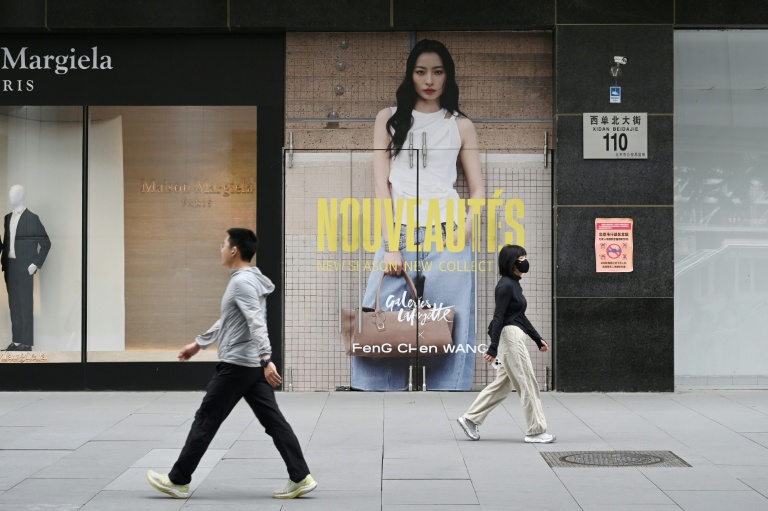
- China — Tourism & Experiential Spending Outpaces Goods: Even as goods-based luxury struggles in China, service consumption is accelerating. Tourism, culture, and sports sectors are emerging as the primary drivers of consumer spending growth in 2026, with retail service sales outpacing traditional goods categories. This divergence suggests Chinese luxury consumers are not disappearing but rather reallocating wallet share from imported hard goods toward domestic experiences — a shift that presents both a threat and an opportunity for brands with strong experiential or hospitality plays.
What to Watch
-
Galeries Lafayette Beijing Closure (May 27): The French department store group closes its Beijing flagship on May 27, 2026 — a concrete, high-visibility signal of Chinese retail reconfiguration. Monitor whether other European-affiliated department store operators accelerate exit timelines, and whether luxury brands that relied on these wholesale partnerships announce direct-to-consumer pivots in China.
-
China Domestic Luxury Brand Momentum: The rise of homegrown Chinese luxury contenders — from ultra-premium EVs to heritage goldsmithing — is gathering media attention. Watch for any brand-level announcements, funding rounds, or partnership deals involving Chinese domestic luxury entrants as European houses consider defensive or collaborative responses.
-
Kering / Gucci Turnaround Progress: With Kering's recurring operating margin at just ~11% and net income halved, pressure is intensifying on Gucci's creative relaunch to deliver commercial traction. Any forward guidance update, sales data leak, or analyst note on Gucci's performance trajectory will be closely scrutinized by investors watching whether the "self-help story" narrative holds.
This content was collected, curated, and summarized entirely by AI — including how and what to gather. It may contain inaccuracies. Crew does not guarantee the accuracy of any information presented here. Always verify facts on your own before acting on them. Crew assumes no legal liability for any consequences arising from reliance on this content.
Powered by
