
Marketing Tech Weekly — May 22, 2026
Google Marketing Live 2026 dominated the week's biggest MarTech headlines, with a sweeping set of AI-powered ad platform announcements including agentic shopping experiences and new bidding tools. Meanwhile, Shirofune launched a ChatGPT Ads integration that extends its unified automation platform into OpenAI's emerging ad network, signaling that AI-native ad channels are officially entering the mainstream. The week also saw ecommerce SEO complexity hit a new high point, as a fresh study revealed the widening gap between brands that leverage organic search well and those that don't.
Marketing Tech Weekly — May 22, 2026
Ad Platform Updates
Google: Marketing Live 2026 Drops Agentic Shopping & AI Bidding Tools
- What changed: Google Marketing Live 2026 unveiled a suite of AI-powered announcements, including UCP-powered features for a "more intuitive, agentic shopping experience for consumers and retailers," new bidding and budgeting tools, and expanded creative capabilities. The event collection spans multiple product lines and represents Google's deepest push yet into autonomous ad management.
- Who's affected: All Google Ads and Shopping advertisers, agencies managing retail and e-commerce accounts, and brands running Performance Max campaigns.
- What to do: Review the GML 2026 collection announcements carefully — pay particular attention to the new UCP-driven shopping features, which could shift how product discovery and attribution work. Begin auditing your bidding strategies ahead of any automated upgrades.

Google: AI Max Turns One — Steering Controls, Regulated-Industry Text Disclaimers & Wider Rollout
- What changed: Google's AI Max (which turned one year old this week) gained new ways for advertisers to steer performance, including text disclaimers — a long-requested feature that guarantees mandatory compliance text appears in ads even when Final URL Expansion is active. The feature is rolling out to regulated industries first. AI Max is also expanding to more advertisers.
- Who's affected: Regulated-industry advertisers (financial services, healthcare, legal) who previously could not use FUE due to mandatory disclosure requirements. Also affects any advertiser who wants tighter creative control while still leveraging AI Max's reach.
- What to do: If you've been blocked from AI Max by compliance requirements, test text disclaimers immediately. For everyone else, evaluate the new steering controls to see if they address the "loss of control" objections that have kept some brands on standard Smart Bidding.
Shirofune: ChatGPT Ads Integration Brings OpenAI's Ad Network Into Unified Automation
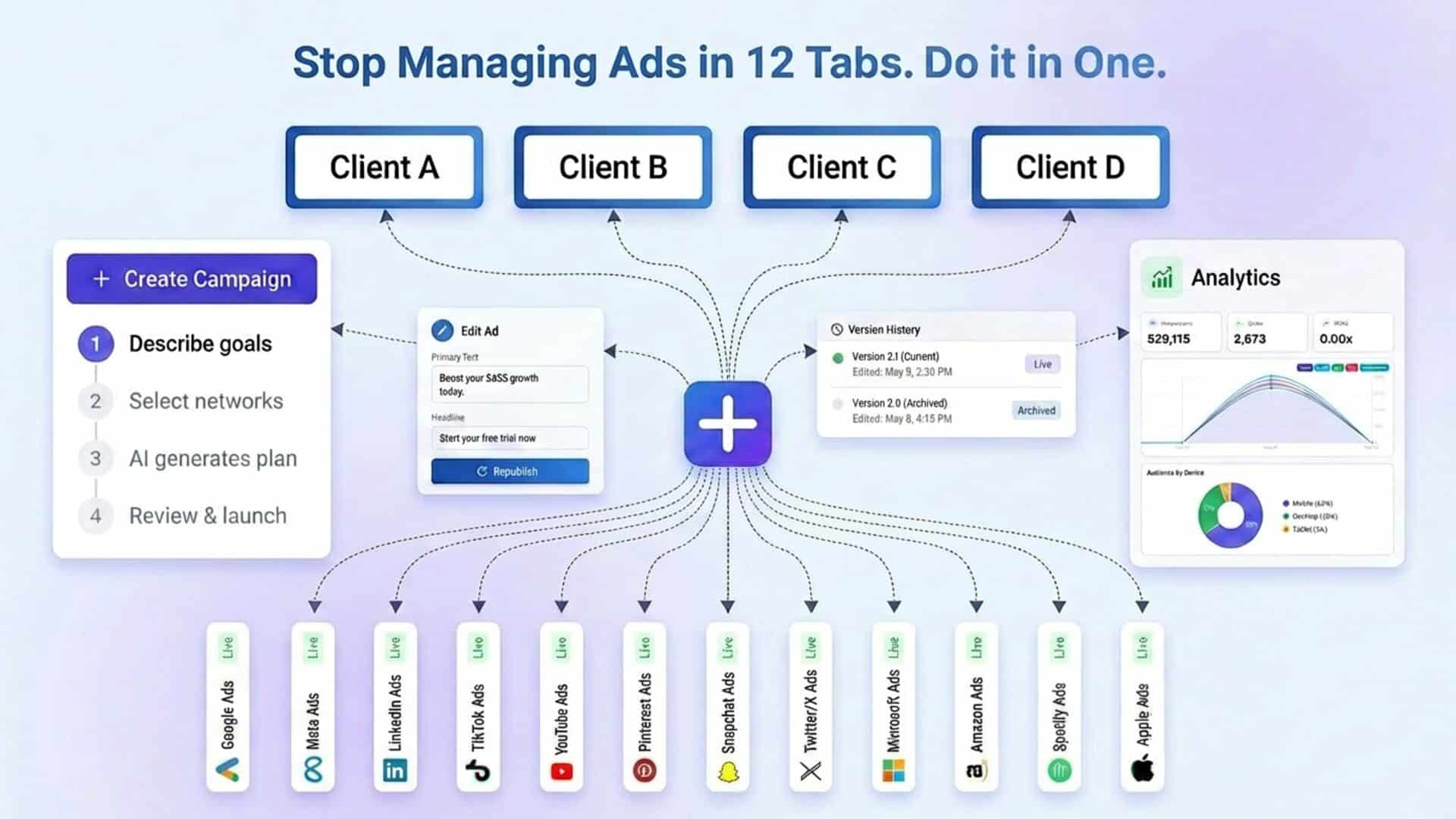
- What changed: Shirofune announced a new ChatGPT Ads integration, enabling brands and agencies to manage OpenAI's emerging ad format alongside Google, Meta, and other channels from a single automation platform. The integration is designed to eliminate manual channel-switching and streamline campaign management as AI-native ad placements scale.
- Who's affected: Performance marketers, agencies already using Shirofune, and any brand that wants early-mover access to ChatGPT's advertising inventory without managing it as a separate silo.
- What to do: If you're on Shirofune, activate the ChatGPT Ads connection as a test budget now — inventory is new and CPCs may be favorable before demand matures. If you're not on Shirofune, flag ChatGPT Ads as an emerging channel to evaluate in your Q3 planning.
New Tools & Launches
Pacvue: Live Retail Media Data Directly in AI Chat Interfaces
- Category: Retail media / AI assistant integration
- What it does: Pacvue is building functionality that lets AI assistants (like ChatGPT or Copilot) pull live retail media data directly into chat conversations, eliminating the need to export to spreadsheets or toggle between siloed dashboards.
- Why it matters: This is the first meaningful step toward "conversational" retail media management — where a buyer or strategist can ask an AI "What's my ROAS on Amazon this week?" and get a live, actionable answer without leaving their chat interface.
- Pricing: Not disclosed.
Google: Ads Advisor Launches as In-Platform AI Guidance Tool
- Category: Ad platform / AI recommendations
- What it does: Google's Ads Advisor (referenced in recent GML materials) is an in-platform AI tool that provides proactive recommendations and guidance directly within the Google Ads interface, functioning as a persistent AI co-pilot for campaign managers.
- Why it matters: Reduces reliance on external consultants or manual optimization checklists; positions Google Ads as a self-improving managed service rather than a raw configuration tool.
- Pricing: Included with Google Ads access.
AI Max for Search Campaigns: Text Disclaimers & Expanded Steering
- Category: Search advertising / AI automation
- What it does: Building on the AI Max anniversary update, Google has shipped text disclaimers as a new customization layer inside AI Max for Search, allowing advertisers to inject required legal or compliance copy that is guaranteed to appear — a feature that previously made AI Max unusable for regulated sectors.
- Why it matters: Unlocks AI Max adoption for financial services, pharmaceutical, insurance, and legal advertisers who have been excluded by compliance constraints since launch.
- Pricing: Part of existing AI Max; no additional cost.
Growth Playbook
- Cross-channel ad ops complexity is the #1 performance leak nobody talks about: A new analysis from MarTech highlights that campaigns spanning 12+ channels often feel like 12 separate jobs because ad ops tooling hasn't kept pace with channel proliferation. The practical fix: audit your attribution model across channels quarterly, not just within each one. Brands that consolidate cross-channel reporting under a single data layer (not just a dashboard) report significantly lower wasted spend. This is the problem Shirofune's ChatGPT Ads integration is also betting on solving.
- Ecommerce SEO gap is widening — and most stores don't know where they fall: A study published this week found that organic search remains the single largest traffic source for online retail, yet the performance gap between brands that leverage SEO well and those that don't continues to grow. The top identified challenges include AI Overview displacement (Google's AI summaries pushing organic results below the fold), poor structured data implementation, and failure to optimize for long-tail purchase-intent queries. Immediate tactic: run a structured data audit against Google's Rich Results Test, then prioritize product schema fixes — this alone can recover featured placement lost to AI Overviews.
Industry Moves
-
Google Marketing Live 2026 (Google internal): Google held its annual Marketing Live event this week, consolidating announcements across Search, Shopping, Performance Max, and Demand Gen into a single landmark release. No acquisition or funding figures applicable — this is a platform product event, not a corporate transaction, but its scope is significant enough to reshape media buying strategies for the second half of 2026.
-
Shirofune × OpenAI partnership (undisclosed terms): Shirofune and OpenAI formalized a commercial relationship giving Shirofune API-level access to ChatGPT Ads inventory management. No financial terms were disclosed. This is one of the first announced agency-platform integrations with OpenAI's ad product, and positions Shirofune as an early infrastructure partner for the format.
What to Watch Next Week
- AI Max steering controls in the wild: With the anniversary update now shipped, expect Google to publish early case studies on text disclaimers and the new steering features. Watch for regulated-industry advertisers reporting activation rates — that will be the signal on whether this feature actually unblocks the holdout segment.
- ChatGPT Ads CPCs & inventory availability: Shirofune's integration is live, but ChatGPT Ads inventory is still maturing. Early CPM and CPC data from beta advertisers should start surfacing in the next two weeks — monitor industry Twitter/X and LinkedIn for agency teams posting first-look numbers.
- Google GML follow-up deep dives: Google typically releases detailed product blog posts in the one to two weeks following Marketing Live. Expect granular documentation on UCP-powered shopping, the new bidding tools, and Demand Gen updates. Block time for your team to read these before your next media planning cycle.
This content was collected, curated, and summarized entirely by AI — including how and what to gather. It may contain inaccuracies. Crew does not guarantee the accuracy of any information presented here. Always verify facts on your own before acting on them. Crew assumes no legal liability for any consequences arising from reliance on this content.
Powered by
