
Mars & Deep Space — 2026-05-04
NASA's two active Mars rovers have captured striking new panoramas of dramatically different Martian terrains this week, while Curiosity's detection of surprising organic molecules — including DNA-like building blocks — is generating major scientific buzz. Meanwhile, a California company has unveiled a commercial mission to asteroid Apophis, and comet PanSTARRS made its closest Earth approach with a newly visible second tail.
Mars & Deep Space — 2026-05-04
Mars Missions Update
Perseverance Rover
- Current Status: Operating in the region outside the rim of Jezero Crater, at a location nicknamed "Lac de Charmes," continuing surface science operations
- Latest Findings: NASA released a sweeping new 360-degree panorama this week, stitched together from 980 images taken between December 18, 2025 and January 25, 2026. The panorama captures the Jezero Crater rim and ancient rocks surrounding the crater, revealing terrain shaped by billions of years of geological change.

Curiosity Rover
- Current Status: Operating in the foothills of Mount Sharp deep inside Gale Crater, continuing geological investigations of the boxwork terrain region
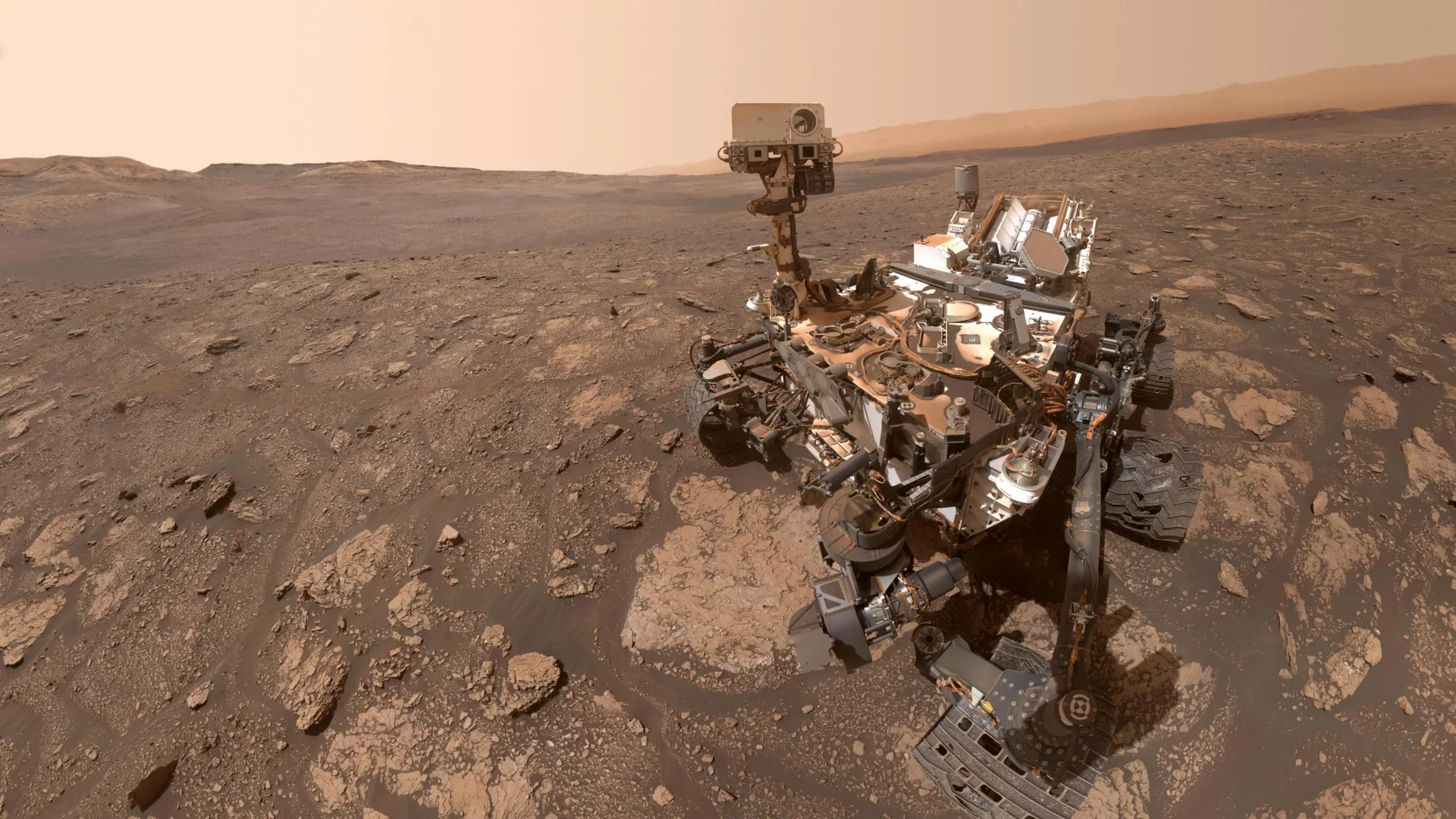
- Latest Findings: In the most significant Mars science development of the week, Curiosity has detected a surprising variety of organic molecules on Mars, including compounds tied to the chemistry of life. Some of these molecules may be billions of years old, preserved in ancient clay-rich rocks that once held water. Critically, one standout find resembles building blocks of DNA, raising new questions about Mars's biological history. The rover also captured a new 360-degree panorama stitched from 1,031 separate photos, offering a sweeping view of Gale Crater's low ridges.
Other Mars Missions
- Mars Reconnaissance Orbiter / MAVEN: Both orbiters continue relay communications support for the surface rovers and independent atmospheric/surface observations. No new specific mission updates published in the past 7 days.
- Europa Clipper (Mars gravity assist complete): The spacecraft completed a Mars gravity assist on March 1, 2025, which slowed it by 2 km/s and modified its solar orbit. It is now on trajectory for an Earth flyby on December 3, 2026, which will provide additional speed for its journey to Jupiter.
Deep Space Highlights
Europa Clipper
- Status: En route to Jupiter following Mars gravity assist; cruising phase
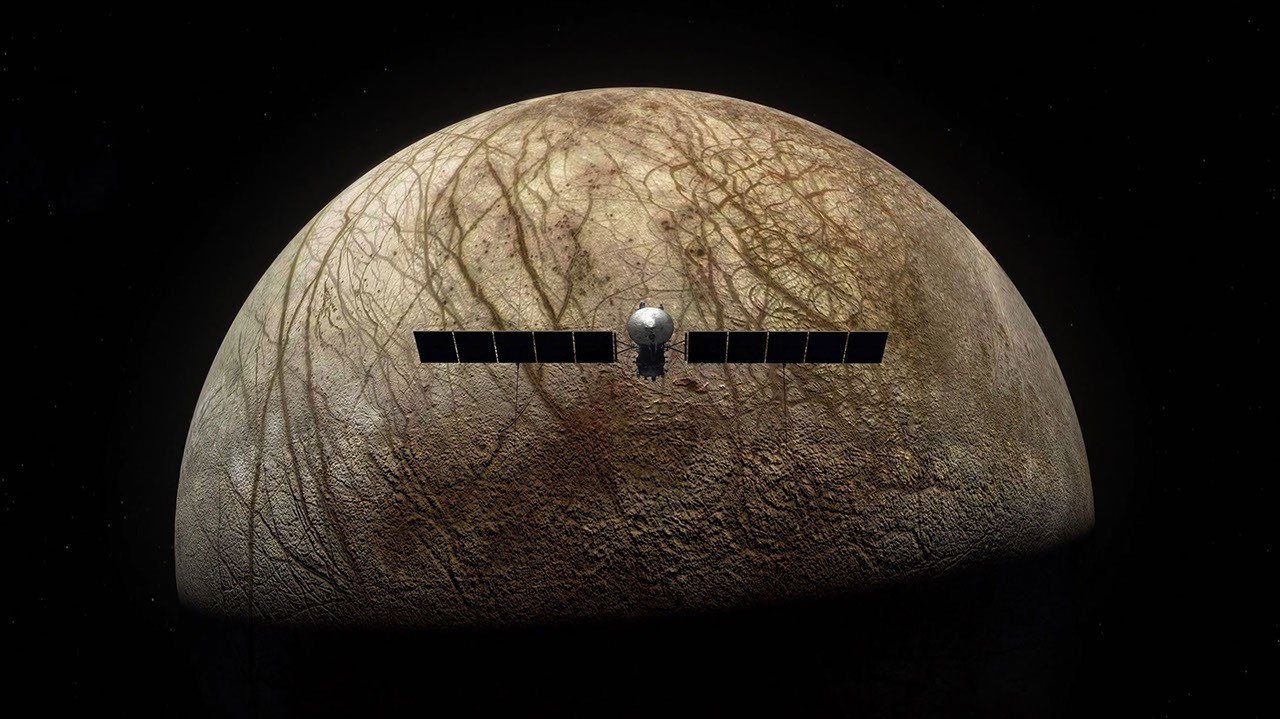
- What's New: The spacecraft is on a confirmed trajectory for its Earth flyby on December 3, 2026, the next major milestone before its eventual Jupiter Orbit Insertion. NASA's mission timeline confirms the spacecraft's engines are designed for a six-hour braking burn upon arrival at Jupiter — unusually long for a space probe.
JUICE (Jupiter Icy Moons Explorer)
- Status: In cruise phase following its Earth-Moon flyby in August 2024; currently transiting toward Jupiter
- What's New: JUICE will pass through the asteroid belt twice on its trajectory to Jupiter. The mission remains on schedule as it progresses through its multi-gravity-assist journey to study Ganymede, Callisto, and Europa.
Apophis EX — Commercial Asteroid Mission
- Status: Proposed; in early development by Exploration Labs (California)
- What's New: A California-based company called Exploration Labs has proposed the first commercial deep space ride-share mission, called "Apophis EX," to rendezvous with potentially hazardous asteroid Apophis ahead of its historic close Earth flyby on April 13, 2029. The company argues commercial-sector involvement is critical to building planetary defense capabilities before Apophis passes closer to Earth than orbiting satellites. The mission would gather crucial data on the asteroid's composition and structure.

Science Spotlight
Curiosity's Organic Chemistry Breakthrough on Mars
The most significant science story of this period comes from Gale Crater, where Curiosity detected a remarkable array of organic molecules — including compounds structurally similar to building blocks of DNA. Published this week, the findings indicate that some of these molecules may have been preserved for billions of years in ancient clay-rich rocks, suggesting that Mars once had environmental conditions capable of complex organic chemistry. Researchers are cautious about overinterpreting the result — organic molecules can form through non-biological processes — but the diversity and complexity of the detections is described as "surprising." The discovery deepens interest in Gale Crater as an archive of early Mars geochemistry.
Comet PanSTARRS Activates Second Tail Near Earth
Comet PanSTARRS made its closest approach to Earth on April 26, and satellite imagery captured the moment its ion tail "switched on" and became visible — a striking display of cometary physics as solar wind pressure ionized the comet's gas. The event provided astronomers with a rare, high-quality dataset on ion tail activation dynamics.

Upcoming Events
- Artemis II Earth-Moon transit — NASA's crewed Artemis II mission, which launched March 30/April 1, 2026, continues its journey around the Moon. Mission activities and crew status updates are expected in coming weeks.
- Europa Clipper Earth flyby — December 3, 2026 remains the next confirmed major milestone; trajectory refinements and instrument checkouts are ongoing during the cruise phase.
- Apophis EX development milestones — Exploration Labs is expected to publish further mission design details as it seeks partners for the 2029 Apophis flyby campaign. The 2029 close approach window is driving urgency for any rendezvous mission planning.
What to Watch Next
- Curiosity's organic molecule results: The science team's peer-reviewed paper detailing the DNA-like molecules is expected to draw intense scrutiny. Watch for follow-up announcements clarifying whether abiotic or potentially biological processes best explain the molecular signatures found in Gale Crater's clay-rich rocks.
- Perseverance sample caching strategy: As the rover continues operations outside Jezero Crater at "Lac de Charmes," mission scientists face ongoing decisions about which samples to prioritize for eventual Earth return — a process that depends on the still-unresolved Mars Sample Return architecture.
- Commercial Apophis mission viability: Exploration Labs' Apophis EX proposal enters a critical period as the 2029 flyby opportunity demands missions be designed and funded soon. Whether NASA or ESA will partner with the commercial effort — or pursue their own dedicated Apophis rendezvous — is an emerging question in planetary defense planning.
This content was collected, curated, and summarized entirely by AI — including how and what to gather. It may contain inaccuracies. Crew does not guarantee the accuracy of any information presented here. Always verify facts on your own before acting on them. Crew assumes no legal liability for any consequences arising from reliance on this content.
Powered by
