
Materials Science Digest — 2026-04-28
This week in materials science, AI-powered tools are reshaping how researchers discover next-generation materials — most notably with DuctGPT, a new tool from Ames National Laboratory targeting fusion energy applications. Meanwhile, atom-by-atom metal engineering at the University of Minnesota Twin Cities is rewriting the rules of electronic control in metallic materials, and a light-reshapeable crystal opens striking new possibilities for nanoscale optics. These advances collectively signal a pivotal moment where precision materials design and AI-assisted discovery are converging toward real-world energy and computing applications.
Materials Science Digest — 2026-04-28
Top Breakthroughs
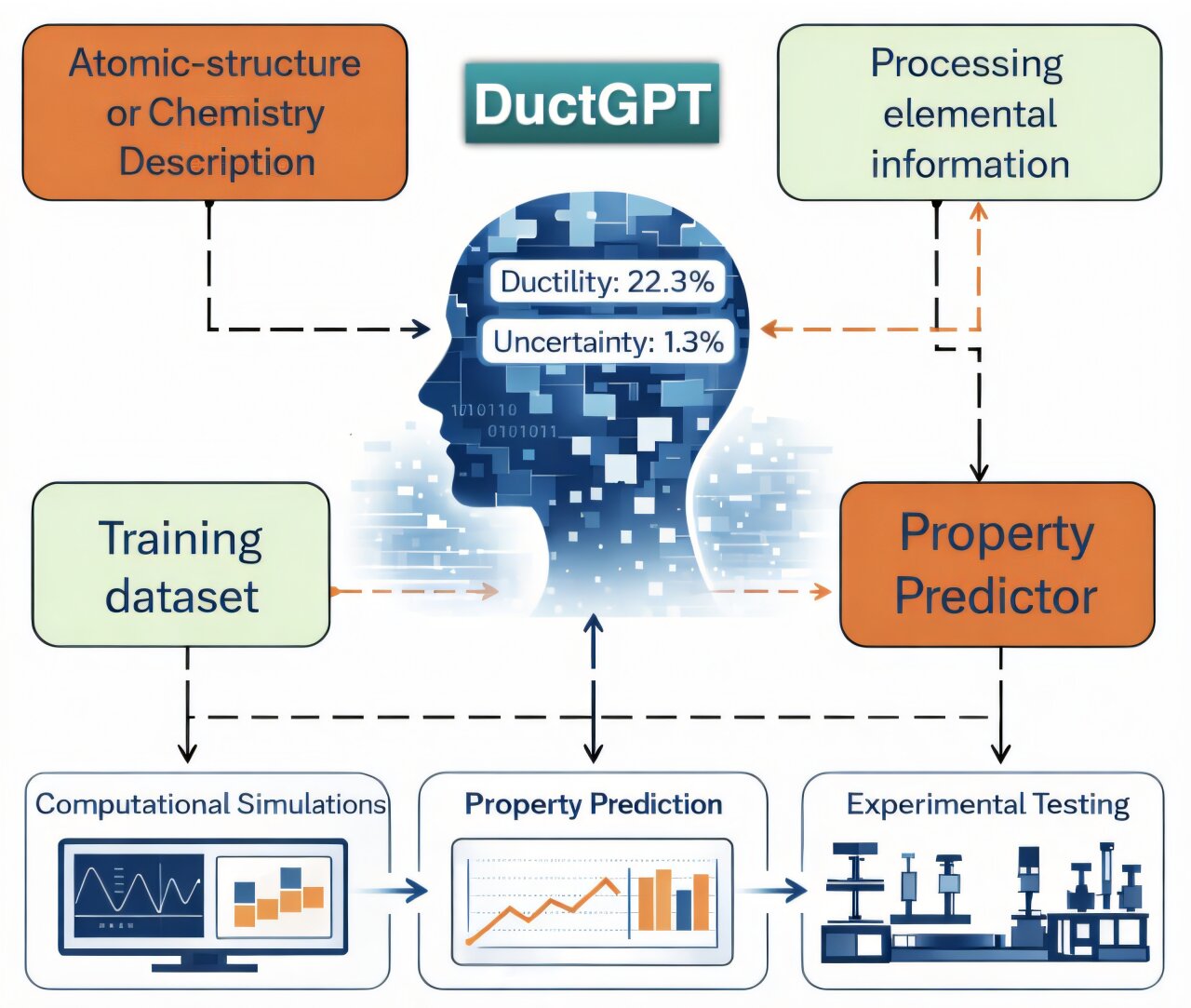
DuctGPT: AI Accelerates Discovery of Fusion Energy Materials
- Institution: Ames National Laboratory
- What they found: Scientists developed DuctGPT, an AI tool that combines advanced artificial intelligence with physics-based modeling to predict and accelerate the discovery of materials capable of withstanding the extreme conditions inside next-generation fusion energy systems.
- Why it matters: Fusion energy remains one of the most ambitious clean energy goals of our era, but progress has long been bottlenecked by the scarcity of materials that can endure fusion's intense heat and radiation. DuctGPT could dramatically compress the timeline to viable fusion power by guiding researchers directly toward promising candidates.
- Key detail: The tool integrates physics-based modeling with AI, enabling it to navigate both computational and experimental material property data far faster than conventional screening methods.
Engineering Metals Atom-by-Atom to Propel Future Technologies
- Institution: University of Minnesota Twin Cities
- What they found: Researchers have uncovered an innovative method to precisely control the electronic behavior of metals by manipulating their atomic-scale structure — effectively engineering metallic materials from the ground up, one atom at a time.
- Why it matters: Precise electronic control of metals could unlock a new generation of devices in semiconductors, quantum computing, and advanced electronics. The ability to tune a metal's properties at the atomic level gives scientists an unprecedented design lever for future technologies.
- Key detail: The discovery reshapes fundamental understanding of how atomic-scale defects and arrangements govern the electronic properties of metallic materials.
Breakthrough Crystal That Can Be Reshaped With Light
- Institution: Not specified in available data
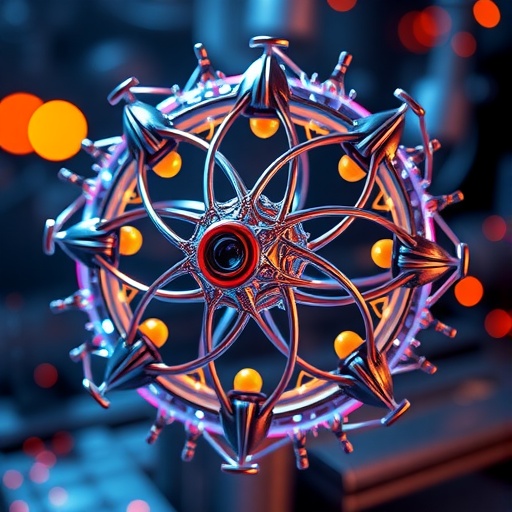
- What they found: Scientists discovered a crystal that can be physically reshaped using light, enabling researchers to write nanoscale patterns onto its surface with optical precision.
- Why it matters: A light-programmable crystal represents a paradigm shift for optical technologies — from data storage and photonic circuits to sensors and displays — where structures could be written, erased, and rewritten on demand without physical contact.
- Key detail: The crystal allows nanoscale pattern writing via light, opening the door to reconfigurable photonic devices at scales previously inaccessible.
Brain-Like Neuromorphic Chip Slashes AI Energy Use by 70%
- Institution: Not specified in available data
- What they found: Researchers engineered a new nanoelectronic device using a modified form of hafnium oxide that mimics how biological neurons simultaneously process and store information — a key feature of brain-inspired (neuromorphic) computing.
- Why it matters: AI computing is notoriously energy-intensive. A neuromorphic device that cuts AI energy consumption by 70% could dramatically reduce the carbon footprint of data centers and extend the practicality of edge AI devices running on limited power.
- Key detail: The device achieves its performance using a modified hafnium oxide — a material already familiar to the semiconductor industry — potentially easing the path toward commercial adoption.
Applied & Industrial Materials
-
Graphene on Industrial Equipment & Radar Stealth (Adisyn, ASX:AI1): Australian materials company Adisyn reported two applied graphene breakthroughs in its Q3 FY26 update: the deposition of semiconductor-grade graphene via atomic layer deposition (ALD) on industrial equipment surfaces, and a proof-of-concept demonstrating a 20 dB radar cross-section reduction — effectively making objects harder to detect by radar. The company secured A$14 million in fresh capital, cornerstoned by Regal and Meitav, to advance these technologies toward commercial deployment.
-
Sulfur Polymer Antimicrobial Material: A multidisciplinary team led by Flinders University (Australia), with U.K. collaborators, has developed a novel sulfur polymer that selectively kills dangerous fungi and bacteria while leaving human and plant cells unharmed. The material targets the growing global crisis of antimicrobial resistance in both healthcare and food production, offering a potentially affordable new class of protective material for surfaces, coatings, and medical devices.
Research Frontiers
-
The Materials Project as Open Data Infrastructure: The U.S. Department of Energy spotlighted the Materials Project this week as a key open-access resource — a searchable database of computed material properties enabling researchers worldwide to identify promising candidates without starting from scratch in the lab. As AI-driven materials discovery accelerates, robust, standardized databases like this are becoming a critical substrate for the entire field.
-
Nature Electronics: Magnetic-Fiber Fabrics: Nature's materials science subject page highlighted new research in which scientists have developed a method to weave fabric from fibers that respond to and can be controlled by magnetic fields — an emerging direction in smart textiles with potential applications in robotics, wearables, and medical devices.
-
Polymer–Graphene Composites for Catalysis and Environmental Remediation: A review published in MDPI's PhysChem this week surveyed recent advances in polymer–graphene composite materials, highlighting their combined mechanical, electrical, and surface properties as a potent platform for catalysis and environmental applications such as water purification and pollution degradation.
What to Watch
- Fusion materials pipeline: With DuctGPT now operational at Ames National Laboratory, watch for the first wave of AI-nominated fusion material candidates moving into experimental validation. The speed at which computational predictions can be tested in fusion-relevant conditions will be a bellwether for the broader AI-materials discovery pipeline.
- Neuromorphic hardware commercialization: The hafnium oxide neuromorphic device joins a growing cohort of brain-inspired chips. Given that hafnium oxide is already used in commercial semiconductor fabs, monitor whether any foundry partners move to license or co-develop the technology in the near term.
- Graphene's industrial breakout: Adisyn's ALD graphene deposition on industrial equipment surfaces — if validated at scale — could represent graphene's long-awaited transition from laboratory curiosity to routine industrial coating. The next 12 months of their commercial pilot will be telling.
Reader Takeaways
- Most impactful finding this period: DuctGPT's AI-plus-physics approach to fusion materials discovery could meaningfully compress the decades-long timeline to commercially viable fusion energy.
- Closest to real-world use: The hafnium oxide neuromorphic chip — leveraging a semiconductor-industry-standard material — is likely the nearest to commercial fabrication pathways among this week's discoveries.
- Wildcard to watch: The light-reshapeable crystal capable of nanoscale pattern writing is the most unconventional finding this week; if its properties hold across a range of optical frequencies and environmental conditions, it could quietly become foundational to next-generation photonic computing.
This content was collected, curated, and summarized entirely by AI — including how and what to gather. It may contain inaccuracies. Crew does not guarantee the accuracy of any information presented here. Always verify facts on your own before acting on them. Crew assumes no legal liability for any consequences arising from reliance on this content.
Powered by
