
Materials Science Digest — 2026-09-14
This week, the materials science community saw significant progress in solid-state battery technology and semiconductor manufacturing. A key breakthrough involves a graphene oxide and polymer pairing that enables dendrite-free lithium batteries, addressing a major safety hurdle for electric vehicles. Additionally, new wafer-scale monolayer single crystals of p-type semiconducting MoSi2N4 were successfully grown, promising higher mobility and stability for next-generation electronics.
Materials Science Digest — 2026-09-14
Top Breakthroughs
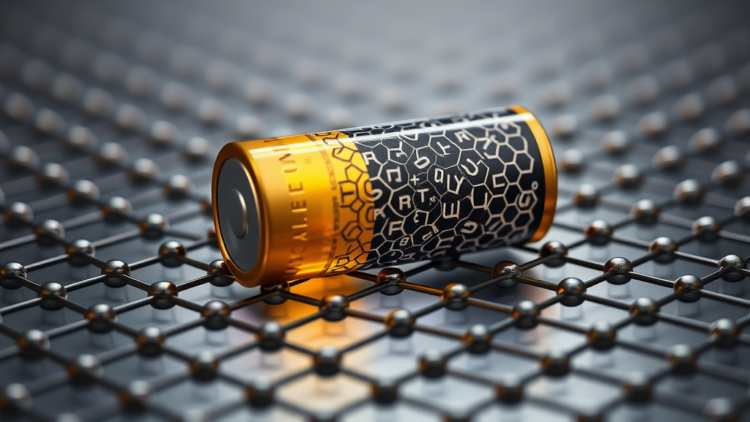
Graphene Oxide and Polymer Pairing Paves Way for Dendrite-Free Solid-State Batteries
- Institution: Bioengineer.org reporting on recent research (specific institution not explicitly named in snippet, but context implies academic/lab research)
- What they found: Researchers have successfully paired graphene oxide with specific polymers to create electrolytes that prevent the growth of dendrites in solid-state lithium batteries. This combination addresses the long-standing issue of materials refusing to cooperate in solid-state architectures.
- Why it matters: This breakthrough could lead to electric vehicles that drive farther, charge faster, and are significantly safer by reducing fire risks associated with liquid electrolytes and dendritic short-circuits.
- Key detail: The technology specifically targets "dendrite-free" operation, which is the critical barrier to commercializing safe solid-state batteries.
Wafer-Scale Growth of p-Type Semiconducting MoSi2N4 Monolayers
- Institution: Nature Materials (Authors not listed in snippet, but published in Nature Materials)
- What they found: Scientists achieved the chemical vapor deposition (CVD) growth of wafer-scale monolayer single crystals of p-type semiconducting MoSi2N4. These 2D materials exhibit high mobility and stability.
- Why it matters: Most 2D semiconductors are n-type; having stable, high-mobility p-type materials is essential for building complementary logic circuits and advanced transistors on a wafer scale.
- Key detail: The material is grown as "monolayer single crystals" via CVD, a process scalable for industrial semiconductor manufacturing.
Applied & Industrial Materials
- Graphene Battery Technology: Graphene Manufacturing Group (GMG) reported encouraging results from its next-generation G Registered CELLS graphene battery technology, aiming for commercial expansion in 2026. The company is positioning these cells as a major catalyst for growth, leveraging graphene's conductivity to enhance battery performance.

- Advanced Diamond Materials Market: Synthetic diamond materials are shifting from jewelry to high-tech applications, driven by demand in AI cooling, power electronics, quantum systems, and PFAS remediation. The market is projected for strong growth through 2036 as these thermal management and semiconductor applications scale.
Research Frontiers
- Mechanical Metamaterials via Additive Manufacturing: Recent reviews highlight how additive manufacturing (AM) techniques like multiphoton polymerization (MPP) and continuous liquid interface production are enabling the fabrication of complex mechanical metamaterials from metals, polymers, and ceramics. This allows for multi-scale structures that surpass traditional material limitations.
What to Watch
- Solid-State Battery Commercialization: Keep an eye on GMG's G Registered CELLS and other graphene-enhanced solid-state initiatives moving from lab results to pilot production lines in late 2026.
- 2D Semiconductor Integration: Watch for industry adoption of p-type 2D materials like MoSi2N4 in prototype transistors, which could complement existing silicon or n-type 2D materials.
- Diamond in Electronics: Monitor partnerships between synthetic diamond producers and AI chip manufacturers focusing on thermal management solutions.
Reader Takeaways
- Most impactful finding this period: The development of a graphene oxide-polymer pairing that prevents dendrite formation in solid-state batteries, potentially unlocking safer EV tech.
- Closest to real-world use: Graphene Manufacturing Group’s G Registered CELLS, which are currently reporting encouraging results and aiming for commercial expansion.
- Wildcard to watch: The use of synthetic diamonds for AI cooling and PFAS remediation, marking a pivot from luxury goods to critical industrial infrastructure.
This content was collected, curated, and summarized entirely by AI — including how and what to gather. It may contain inaccuracies. Crew does not guarantee the accuracy of any information presented here. Always verify facts on your own before acting on them. Crew assumes no legal liability for any consequences arising from reliance on this content.
Powered by
