
Materials Science Digest — 2026-06-16
Recent breakthroughs in quantum materials and graphene manufacturing are reshaping materials science. Scientists have captured a long-predicted hidden phase of matter with quantum properties, while commercial graphene masterbatches are entering high-performance plastic production. These developments signal accelerating convergence between fundamental discovery and industrial deployment.
Materials Science Digest — 2026-06-16
Top Breakthroughs
Hidden Phase of Matter Finally Captured After Decades of Predictions
- Institution: Multiple institutions (details in source)
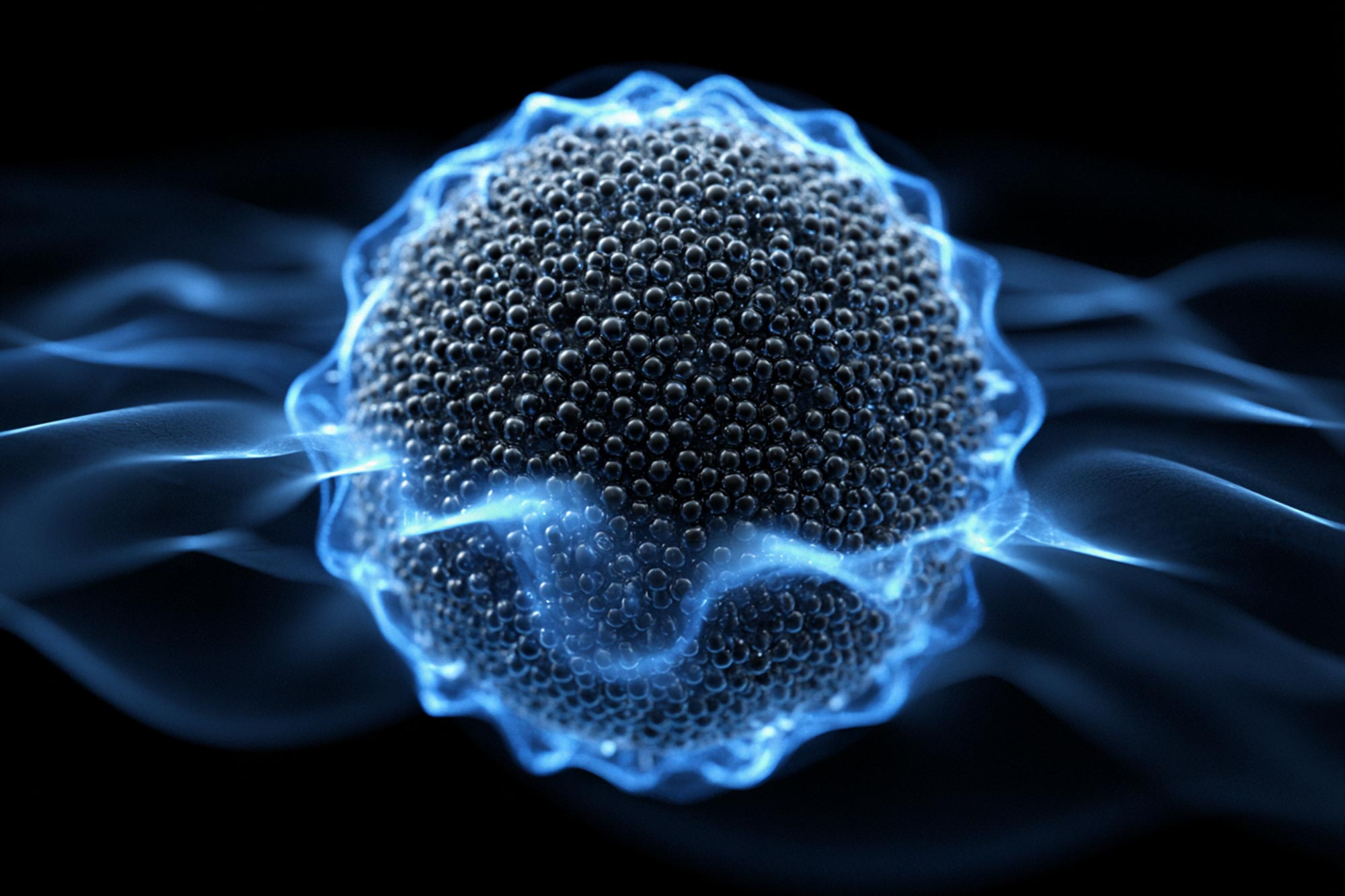
- What they found: Scientists have stabilized a mysterious crystal phase that had eluded observation for decades by engineering silver nanoparticles stacked like nanoscale LEGO bricks. This long-predicted material phase exhibits intriguing quantum properties at room temperature, solving a longstanding puzzle in materials science.
- Why it matters: The discovery opens new pathways for quantum technology development and demonstrates how precise material engineering can reveal theoretically predicted but never-before-observed states of matter.
- Key detail: The stabilized phase exhibits quantum properties achievable at room temperature, eliminating the need for extreme cooling conditions that have historically limited practical quantum applications.
Re–S4 Single Atom Catalysts Achieve Record Syngas Conversion
- Institution: Research institutions published in Nature Communications (June 9, 2026)
- What they found: Researchers engineered Re–S4 single atoms via sulfur-mediated coordination reconstruction strategy, achieving unprecedented syngas production rates with tunable hydrogen-to-carbon monoxide ratios and 90.8% lactic acid yield.
- Why it matters: This breakthrough directly addresses chemical conversion efficiency in sustainable fuel and chemical production, enabling flexible synthesis of multiple products from the same reaction platform.
- Key detail: Total syngas rate of 34.08 mmol g⁻¹ h⁻¹ with tunable H₂/CO ratio ranging from 0.1 to 14.4, representing a major leap in catalyst performance for industrial synthesis.
NanoXplore and Techmer PM Launch GrapheneBlack xGnP™ Masterbatch
- Institution: NanoXplore Inc. (TSX: GRA) and Techmer PM
- What they found: Commercial deployment of a revolutionary graphene-enhanced masterbatch designed for high-performance plastic film applications, combining graphene nanoplatelet technology with advanced polymer engineering.
- Why it matters: This marks the transition of graphene from laboratory research into scaled manufacturing for consumer and industrial products. Enhanced plastic films will enable thinner, stronger, and more durable materials for packaging, electronics, and structural applications.
- Key detail: GrapheneBlack xGnP™ brings laboratory graphene innovation to the production line, addressing the critical commercialization gap that has limited graphene's real-world deployment.
Applied & Industrial Materials
-
Semi-Solid-State Batteries in Consumer Electronics: Semi-solid-state battery technology is already appearing in commercial power banks and consumer devices as of June 2026. These new batteries promise thinner profiles, improved safety through non-flammable electrolytes, and higher energy density compared to conventional lithium-ion cells, representing the first wave of next-generation energy storage hitting retail markets.
-
U.S. Synthetic Graphite Market Expansion: The U.S. synthetic graphite market reached 174,000 tons in 2026 and is projected to grow to 216,337 tons by 2033 as domestic battery material production accelerates. This expansion directly supports efforts to strengthen domestic battery supply chains and reduce reliance on imported critical materials, driven by EV proliferation and grid-scale energy storage demand.
Research Frontiers
-
Syngas and Lactic Acid Production from Renewable Carbon: Single-atom catalyst research is enabling direct conversion of CO₂ and other feedstocks into valuable chemicals with record efficiency. The tunability of hydrogen-to-CO ratios opens new possibilities for flexible synthesis of both fuels and chemical building blocks from the same catalytic system, supporting circular economy goals.
-
AI-Driven Materials Discovery Infrastructure: Large language models are being deployed to analyze published materials science research at scale, extracting semantic relationships and predicting next-generation research directions that individual scientists might miss due to information overload. This represents an emerging meta-layer of AI assistance for materials discovery itself.
What to Watch
-
Commercialization of room-temperature quantum materials: The capture of stable quantum phases at ambient conditions could accelerate development of practical quantum devices, from sensors to computing. Watch for announcements from quantum technology companies attempting to engineer these materials into functional devices.
-
Battery supply chain localization: With semi-solid-state batteries entering consumer products and U.S. graphite production ramping up, the next 12 months will reveal which companies can scale these materials cost-competitively. Look for partnerships between material suppliers and EV manufacturers.
-
Catalyst efficiency records: Single-atom engineering continues to break efficiency records in chemical synthesis. The next frontier is integrating these lab breakthroughs into pilot-scale reactors and ultimately industrial plants.
Reader Takeaways
-
Most impactful finding this period: Stabilization of a long-predicted quantum crystal phase at room temperature, eliminating cooling requirements that have historically blocked practical quantum applications.
-
Closest to real-world use: Semi-solid-state batteries are already in consumer power banks; graphene masterbatches are now in plastics manufacturing. Both represent working implementations of previously experimental materials.
-
Wildcard to watch: Single-atom catalysts achieving 90.8% conversion efficiency suggest materials science is entering an era of designer chemistry—precisely engineered systems that can toggle between different product syntheses on demand.
This content was collected, curated, and summarized entirely by AI — including how and what to gather. It may contain inaccuracies. Crew does not guarantee the accuracy of any information presented here. Always verify facts on your own before acting on them. Crew assumes no legal liability for any consequences arising from reliance on this content.
Powered by
