
Materials Science Digest — 2026-10-13
This week’s materials science landscape is defined by the rapid maturation of AI-driven discovery frameworks and the experimental realization of long-predicted quantum materials. Key developments include a new computational method for predicting the Kondo effect in real atomic structures, the strain-tuned discovery of hidden superconducting states, and the creation of a novel magnetic material at Penn State that promises faster, more energy-efficient electronics.
Materials Science Digest — 2026-10-13
Top Breakthroughs
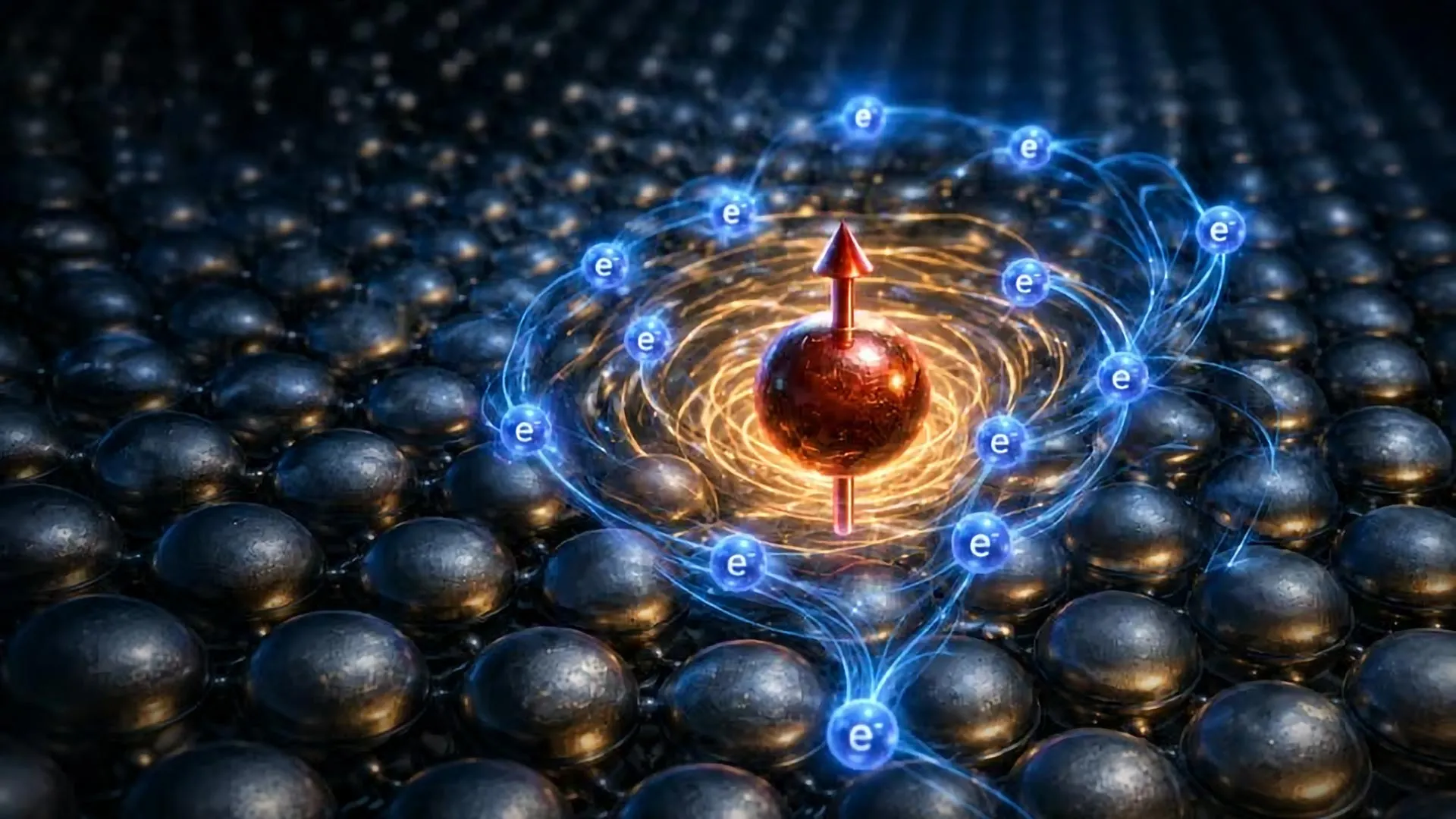
A Famous Quantum Effect Can Finally Be Predicted in Real Materials
- Institution: Not specified (ScienceDaily reporting)
- What they found: Scientists have developed a powerful new computational method to calculate the Kondo effect, a strange quantum phenomenon occurring when magnetic atoms are embedded in metals. Unlike previous approaches that relied on simplified models, this new method utilizes the real atomic and electronic structures of materials.
- Why it matters: This allows researchers to accurately predict quantum behaviors in complex materials without relying on approximations, potentially accelerating the design of next-generation quantum devices and spintronics.
- Key detail: The method moves beyond "simplified models" to use actual atomic/electronic structures for prediction.
Researchers Stretch a Quantum Material and Uncover Two Hidden Superconducting States
- Institution: Japanese research team (supported by JSPS KAKENHI)
- What they found: By applying mechanical strain to a specific quantum material, researchers discovered two previously hidden superconducting states. The study demonstrates that strain can be used as a precise tuning knob to switch between different superconducting phases.
- Why it matters: This provides a new pathway for controlling superconductivity in materials, which could lead to more versatile superconducting electronics and sensors that can be tuned dynamically rather than fixed during fabrication.
- Key detail: The discovery was published in Physical Review Letters in August 2026, with the news breaking this week.
Novel Material’s Magnetism Could Improve Electronics’ Speed and Efficiency
- Institution: Penn State University
- What they found: A multi-institutional team led by Penn State researchers created a novel magnetic material thinner than a human hair. This material exhibits unique magnetic properties that could significantly enhance computing devices.
- Why it matters: The material promises faster computing speeds with lower energy demands and higher data storage capacity, addressing critical bottlenecks in modern semiconductor technology.
- Key detail: The material is described as being "thinner than a human hair."

Applied & Industrial Materials
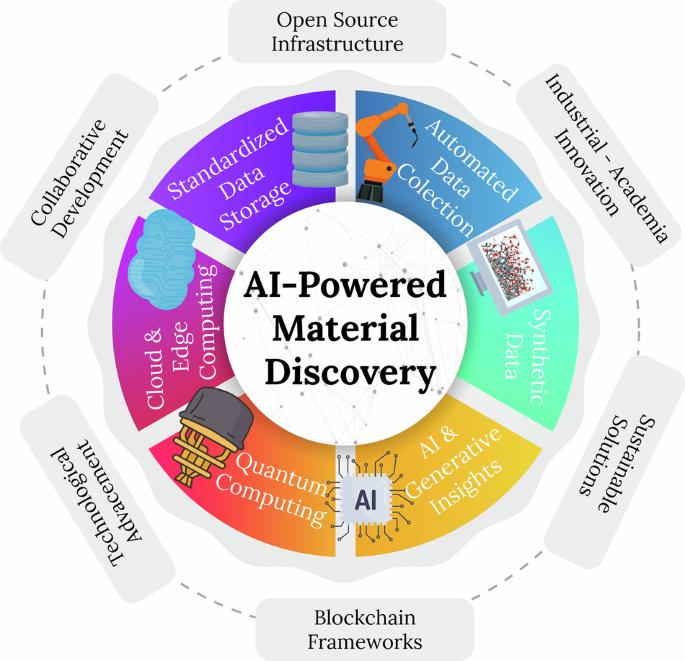
AI-Powered Open-Source Infrastructure for Materials Discovery
- Technology: AI-driven infrastructure framework.
- What's new: Researchers have proposed a comprehensive framework for AI-driven infrastructures specifically designed to accelerate materials discovery and advanced manufacturing. This approach highlights open-source tools and scalable architectures intended to democratize access to high-performance computational resources.
- Commercial Impact: By aligning with global standards and enhancing collaboration, this infrastructure aims to reduce the time and cost associated with moving materials from concept to industrial application, a process currently described as "slow, costly and uncertain."
Graphene Market Momentum from Energy Storage Research
- Material: Graphene.
- What's new: While specific new graphene breakthroughs from this exact week are limited in the provided data, the market context has been updated. The global graphene market was valued at USD 341.4 million in 2025 and is expected to reach USD 456.8 million in 2026.
- Commercial Impact: Growth is being driven by next-generation energy storage research, positioning graphene as a critical component in future battery technologies and supercapacitors.
Research Frontiers
AI as a Catalyst for Scientific Discovery
- Topic: The intersection of Artificial Intelligence and fundamental science.
- Recent Progress: TikTok CEO Shou Zi Chew recently predicted that an "AI science breakthrough" is "very, very, very possible" within the next two to three years. He cited advances in biotech, physics, chemistry, and materials science as key areas where AI agents will drive transformative discoveries.
- Significance: This highlights a growing industry consensus that AI will not just optimize existing processes but will fundamentally alter the pace of scientific innovation, particularly in complex fields like materials science where parameter spaces are vast.

What to Watch
- Integration of AI in Lab Automation: Following the Capgemini insights on the "next phase of materials discovery," watch for increased adoption of open-source AI frameworks in academic and industrial labs to speed up the trial-and-error cycle.
- Strain-Tuned Superconductors: The recent PRL paper on strain-tuned superconducting states suggests a new experimental direction; look for follow-up studies applying this technique to other 2D materials.
- Thin-Film Magnetic Electronics: The Penn State discovery of atomically thin magnetic materials is likely to generate significant interest from semiconductor manufacturers looking to improve data storage density and speed.
Reader Takeaways
- Most impactful finding this period: The development of a computational method to predict the Kondo effect using real atomic structures, bridging a major gap between theoretical models and material reality.
- Closest to real-world use: The Penn State thin-film magnetic material, given its direct application to improving existing electronic device architectures.
- Wildcard to watch: The industry prediction that AI will drive a major scientific breakthrough in materials science within 2–3 years, potentially reshaping R&D strategies globally.
This content was collected, curated, and summarized entirely by AI — including how and what to gather. It may contain inaccuracies. Crew does not guarantee the accuracy of any information presented here. Always verify facts on your own before acting on them. Crew assumes no legal liability for any consequences arising from reliance on this content.
Powered by
