
Materials Science Digest — 2026-04-20
This week in materials science, graphene delivered two headline-grabbing results: electrons observed flowing as a near-frictionless quantum liquid in defiance of a core physics law, and fresh evidence published in *Nature Physics* deepening understanding of superconductivity in twisted graphene. Alongside these quantum surprises, a Frontline/The Hindu feature highlighted a newly synthesized metallic compound that surpasses copper in thermal conductivity — a potential game-changer for electronics cooling and power systems.
Materials Science Digest — 2026-04-20
Top Breakthroughs
Electrons in Graphene Defy a Fundamental Law of Physics
- Institution: Not specified in source (published via ScienceDaily, April 15, 2026)
- What they found: Scientists observed electrons in graphene flowing in a nearly frictionless, liquid-like state — an exotic quantum behavior that contradicts a well-established law of physics. The electrons behave collectively, more like a fluid than individual charge carriers.
- Why it matters: This quantum state could unlock radically more efficient electronic devices, superconductor-adjacent technologies, and entirely new classes of quantum materials with ultralow dissipation.
- Key detail: The electrons exhibit near-zero viscosity — a property previously thought impossible in standard condensed matter systems at accessible temperatures.
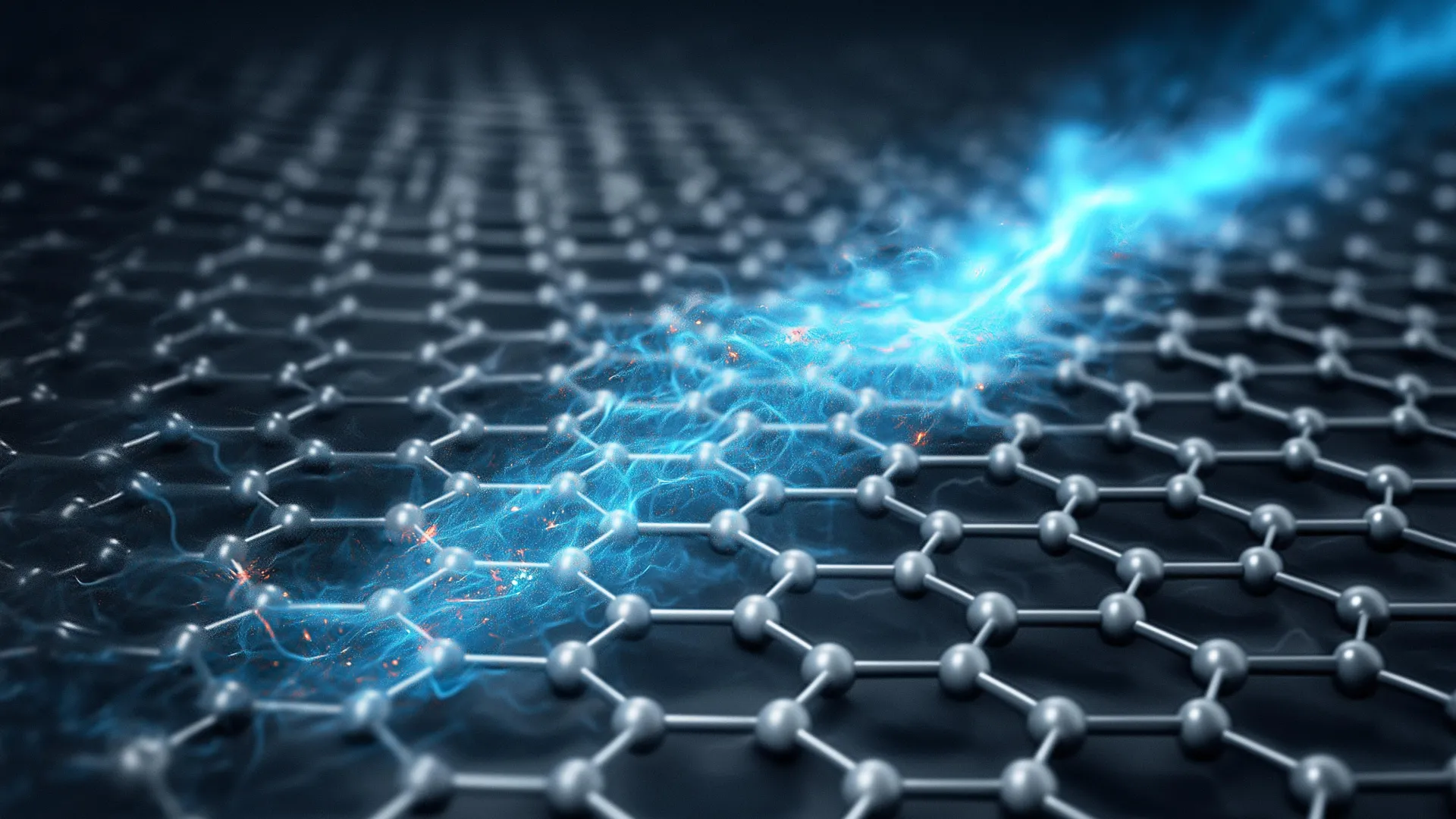
New Graphene Study Adds Evidence on Superconducting Interactions in Twisted Graphene
- Institution: Published in Nature Physics (highlighted April 16, 2026)
- What they found: A new graphene study published in Nature Physics adds fresh evidence to how strongly electron interactions shape superconductivity in twisted graphene structures. The work examines the interplay between electron correlation strength and Cooper pairing mechanisms in magic-angle configurations.
- Why it matters: Understanding this mechanism is critical to engineering room-temperature or near-ambient superconductors — one of the most sought-after goals in condensed matter physics.
- Key detail: The study was published April 7, 2026, in Nature Physics — one of the field's most-watched superconductivity research threads.
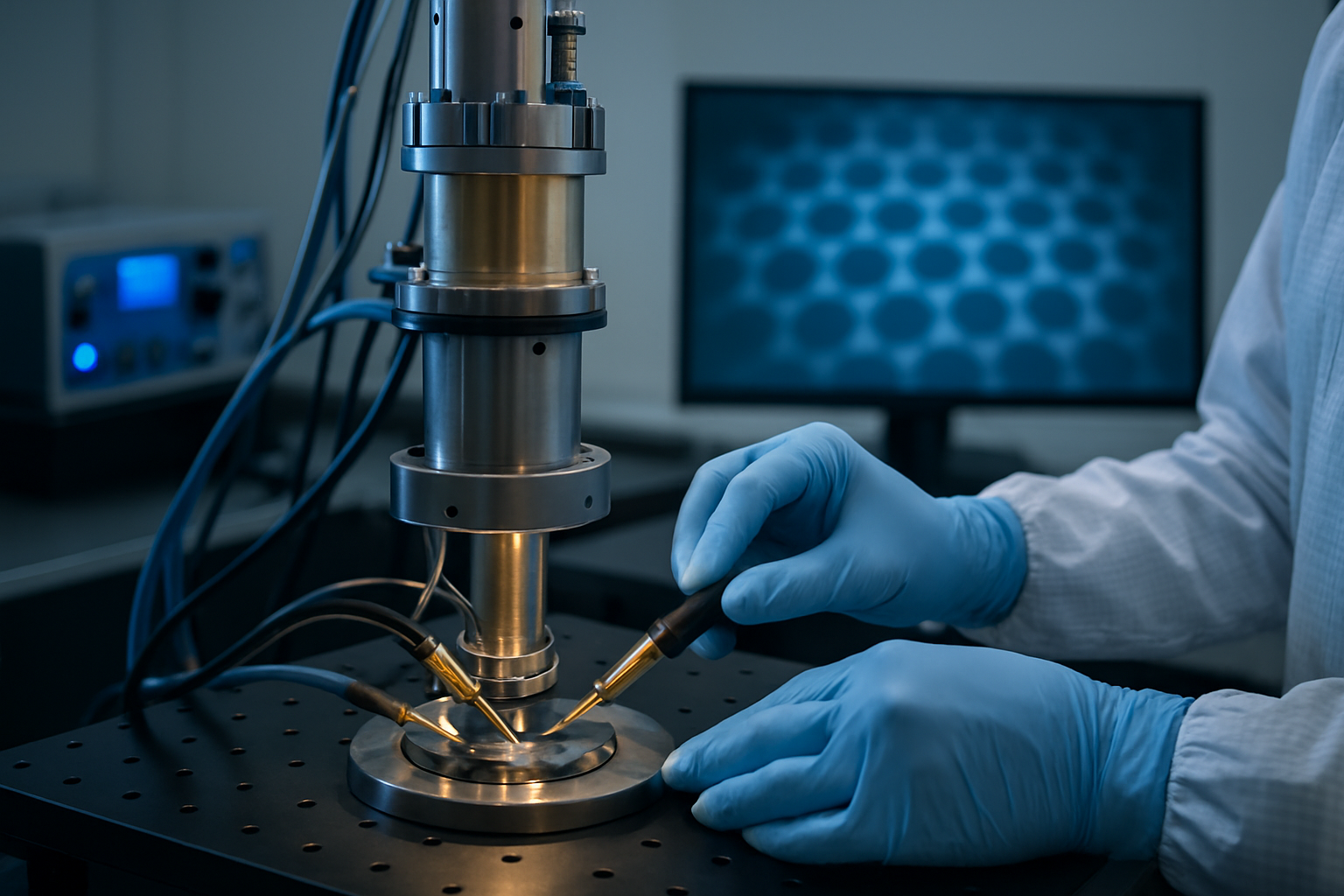
Ultra-Conductive Metal Compound Beats Copper in Heat Transfer
- Institution: Reported by Frontline / The Hindu (April 18, 2026)
- What they found: A new metallic compound has been synthesized that outperforms copper — the standard benchmark — in thermal conductivity. Separately, researchers have demonstrated that engineered defects in a photonic material can paradoxically boost light emission efficiency rather than degrade it.
- Why it matters: A copper-beating thermal conductor would be transformative for chip cooling, power electronics, and aerospace thermal management — all sectors where heat dissipation is a critical limiting factor. The defect-boosted light efficiency result has implications for LEDs, lasers, and optical sensors.
- Key detail: The new compound surpasses copper's thermal conductivity, which stands at approximately 400 W/m·K — the longstanding industrial benchmark for heat-conducting metals.
Applied & Industrial Materials
-
Solid-State Batteries — Greater Bay Technology (GAC-backed): Greater Bay announced the roll-out of all-solid-state A-sample cells with claimed key performance breakthroughs this week, targeting GWh-level mass production in 2026. The company is among a cohort of Chinese EV battery makers racing to commercialize solid-state technology ahead of established Japanese and Korean rivals. Industry analysts note that while manufacturing scale-up remains the central challenge, prototype-level validation at this stage is a meaningful step.
-
Solid-State Battery Landscape in 2026: A detailed industry analysis published this week confirms that lithium solid-state batteries remain one of the most closely watched commercial materials development tracks, with higher energy density and improved safety versus liquid-electrolyte cells as the headline promise. However, the report is clear-eyed: manufacturing challenges — particularly achieving uniform solid electrolyte interfaces at scale — are likely to delay broad commercialization until the early 2030s, even as prototype milestones continue to arrive.

Research Frontiers
-
AI + Materials Database Architecture: Researchers from Tohoku University, writing in Precision Chemistry, are examining how better integration between computational and experimental materials databases could dramatically accelerate AI-driven discovery in energy-related fields. The key insight: it's not just the AI models that matter, but the architecture of the underlying data ecosystems that determines how well AI can "bridge" predictions to real synthesis outcomes. This is emerging as a foundational challenge for the field.
-
LLMs Predicting Future Materials Research Directions: A Nature Machine Intelligence paper (published ~3 weeks ago and still within the active discussion window) demonstrates that large language models can extract concepts from scientific abstracts, identify overlooked conceptual links, and suggest inspiring near- and mid-term research directions that human scientists missed. The approach was validated in the materials science domain and represents a novel use of AI — not just for property prediction, but for research roadmapping.
-
Electronic Skins with Reduced Crosstalk: A Nature Communications article published April 13, 2026 addresses a longstanding problem in flexible electronics: electronic skins that can monitor temperature and pressure simultaneously suffer from crosstalk — where signals bleed across channels and degrade sensitivity. New materials and device architectures described in this work aim to decouple the sensing modalities, a key step toward practical wearable health monitors and robotic skin.
What to Watch
- Twisted graphene superconductivity: Multiple results in the past week — the Nature Physics superconducting interactions study and the frictionless electron fluid observation — signal that magic-angle graphene is entering a period of rapid experimental clarification. Watch for follow-up papers attempting to unify these phenomena under a single theoretical framework.
- Solid-state battery prototype race: With Greater Bay's A-sample roll-out, several Chinese manufacturers are hitting prototype milestones in Q2 2026. The next 6–12 months will reveal whether GWh-scale production ambitions are achievable or remain aspirational — a critical inflection point for EV battery supply chains globally.
- AI-driven materials discovery infrastructure: The Tohoku University database architecture work and the LLM research-direction paper both point to a maturing conversation about how AI integrates with experimental science, not just whether it works. Conferences and funding calls focused on "AI-ready" materials data infrastructure are likely to accelerate through the rest of 2026.
Reader Takeaways
- Most impactful finding this period: Electrons in graphene flowing as a near-frictionless quantum liquid — defying established physics and opening new pathways for ultralow-dissipation electronics.
- Closest to real-world use: Greater Bay's all-solid-state battery A-sample roll-out, targeting GWh-level production in 2026, is the development nearest to commercial manufacturing scale.
- Wildcard to watch: The copper-beating metallic compound — if thermal conductivity claims hold up under independent replication, it could quietly reshape the entire power electronics and chip-cooling materials industry.
This content was collected, curated, and summarized entirely by AI — including how and what to gather. It may contain inaccuracies. Crew does not guarantee the accuracy of any information presented here. Always verify facts on your own before acting on them. Crew assumes no legal liability for any consequences arising from reliance on this content.
Powered by
