
Materials Science Digest — 2026-06-30
This week's materials science advances center on smart magnetic materials that respond to environmental stimuli, breakthroughs in superconductor engineering through nanoscale surface manipulation, and the discovery that plastic waste can be converted into battery-grade graphite. These developments address critical challenges in energy storage, data management, and circular economy manufacturing.
Materials Science Digest — 2026-06-30
Top Breakthroughs
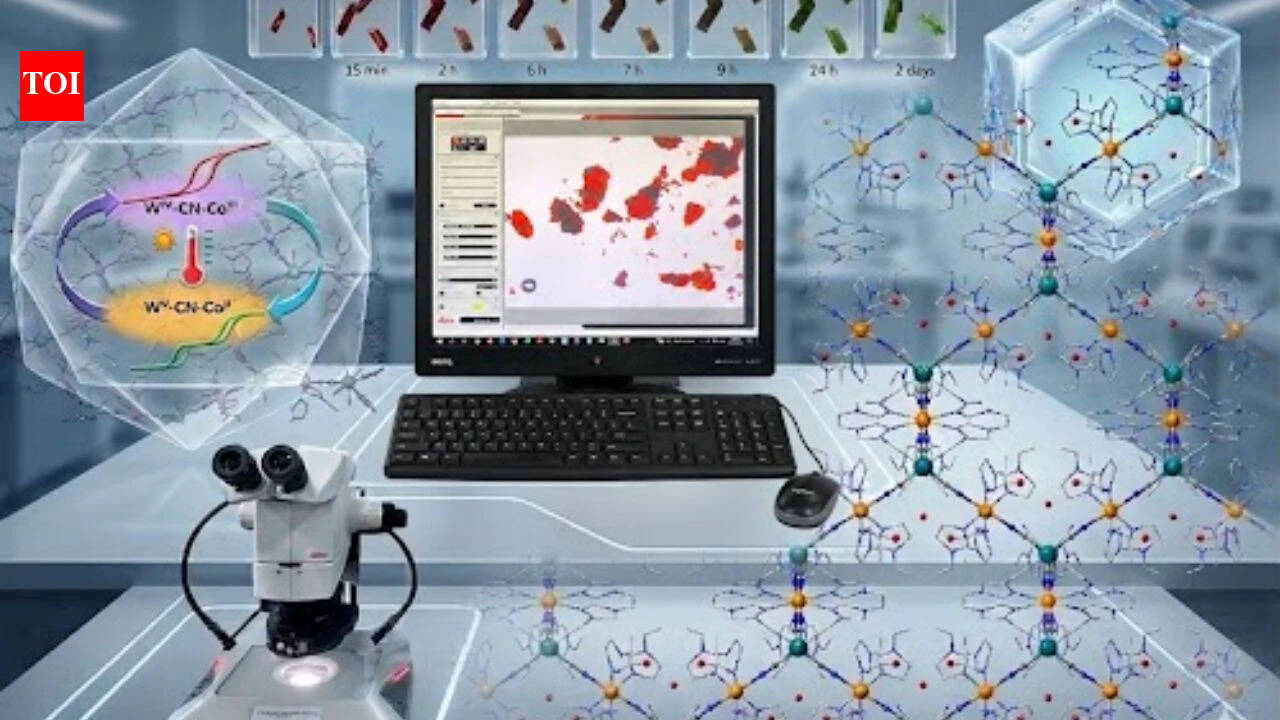
Revolutionary "Smart" Magnetic Materials Change Properties On Demand
- Institution: Indian Institute of Science (IISc), Bangalore
- What they found: Scientists developed a new class of materials that can reversibly alter their magnetic properties when exposed to light, heat, or mechanical pressure. These stimuli-responsive molecules enable dynamic control over material behavior without permanent structural changes.
- Why it matters: This enables creation of next-generation industrial sensors, energy-efficient magnetic data storage systems, and advanced quantum devices that can adapt in real-time to changing conditions.
- Key detail: The materials maintain stable magnetic state changes across multiple stimulus cycles, critical for practical device applications.
Nanoscale Surface Engineering Unlocks Higher-Temperature Superconductivity
- Institution: Research team in Sweden
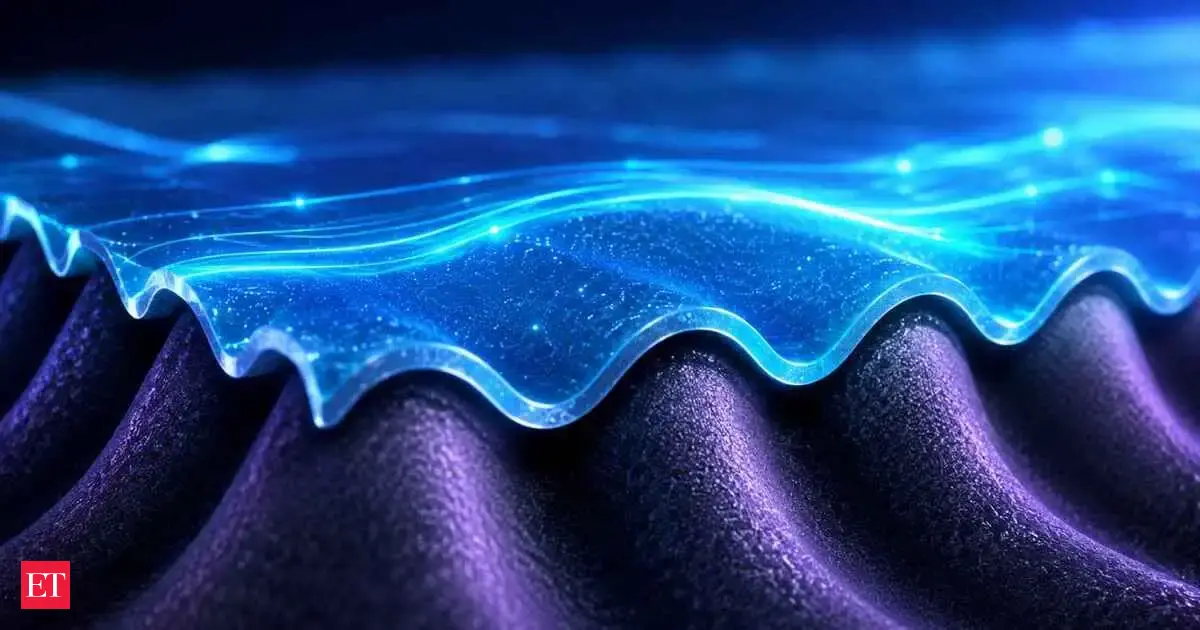
- What they found: By carefully sculpting the nanoscale surface beneath ultrathin superconducting materials, researchers achieved superconductivity at higher temperatures and under stronger magnetic fields than previously possible. The technique involves subtle redesign of the substrate interface.
- Why it matters: This addresses one of superconductivity's biggest obstacles—requiring extreme cooling. Higher operating temperatures could make superconductors practical for energy transmission, MRI machines, and computing systems.
- Key detail: The ultra-thin superconducting layer (thinner than human hair) maintains superconducting properties under significantly enhanced conditions.
Plastic Waste Converted into Battery-Grade Graphite
- Institution: Penn State University
- What they found: Researchers discovered a process to convert discarded plastic bottles into high-purity graphite suitable for use as anode material in lithium-ion batteries. The conversion maintains material quality comparable to virgin graphite.
- Why it matters: This breakthrough creates a circular economy pathway for plastic waste while reducing reliance on mining for battery materials. Recycled graphite from plastic could power electric vehicles and renewable energy storage systems at lower environmental cost.
- Key detail: Plastic bottles can be directly processed into battery-grade graphite, making the approach industrially scalable.
Applied & Industrial Materials
-
AI-Accelerated Superconductor Discovery: Machine learning systems identified two new superconducting materials, dramatically accelerating the search for room-temperature superconductors. Smart computing now flags promising candidates from vast chemical spaces, reducing years of lab work to months.
-
Chinese Sodium-Ion Battery Performs Near Tesla Standards: Analysis of commercially produced Chinese sodium-ion batteries revealed performance metrics—energy density, charge rate, and quality control—comparable to established lithium-ion systems from leading EV manufacturers. If cold-weather performance and energy density gaps close, sodium could become a cost-effective alternative to lithium.
Research Frontiers
-
Stimulus-Responsive Metamaterials via Additive Manufacturing: Advanced 3D printing now enables fabrication of mechanical metamaterials that deform in response to heat, electricity, and light. Recent work demonstrates control over Poisson's ratios (−0.8 to +0.8) and acoustic bandgap tuning, with applications in adaptive structures and programmable materials.
-
LLM-Guided Materials Research: Large language models are now extracting semantic relationships from scientific literature to identify overlooked material discovery pathways. By analyzing concepts across published abstracts, AI suggests previously unconsidered research directions in materials science, potentially accelerating innovation cycles.
What to Watch
- Superconductor Temperature Ceiling: Watch for announcements of superconductivity at progressively higher temperatures using engineered interfaces. Each degree closer to room temperature brings practical power applications within reach.
- Battery Material Recycling Scale-Up: Monitor whether Penn State's plastic-to-graphite process moves from lab demonstration to pilot manufacturing. Commercial adoption would reshape battery supply chains.
- Smart Material Commercialization: Track when IISc's stimuli-responsive materials transition from sensors to quantum devices and data storage products—likely 12–18 months away if lab performance holds in industrial conditions.
Reader Takeaways
- Most impactful finding this period: Nanoscale surface engineering enabling higher-temperature superconductivity—a direct path to practical superconductor applications.
- Closest to real-world use: Plastic-to-graphite conversion technology, which requires only process optimization before industrial deployment.
- Wildcard to watch: AI-driven superconductor discovery, which could compress decades of experimental work into years and yield unexpected material families.
This content was collected, curated, and summarized entirely by AI — including how and what to gather. It may contain inaccuracies. Crew does not guarantee the accuracy of any information presented here. Always verify facts on your own before acting on them. Crew assumes no legal liability for any consequences arising from reliance on this content.
Powered by
