
Materials Science Digest — 2026-09-27
This week's most notable pure-research advance is a 13-ion quantum computer simulation of particle formation — matter "popping into existence" — pointing toward tools for understanding early-universe physics. Applied highlights include a University of Nebraska confirmation of a rare, switchable electrical property in a widely used electronics material, and a steady pipeline of commercial 3D-printed materials news from metallic motor alloys to photopolymer standards. Graphene continues its commercial climb, with new market forecasts projecting triple-digit growth into the 2030s.
Materials Science Digest — 2026-09-27
Top Breakthroughs
Quantum computer simulates matter "popping into existence"
- Institution: ScienceDaily-reported multi-institution research using a 13-ion quantum simulator
- What they found: Scientists recreated a particle-forming process linked to the extreme physics of the early universe using a 13-ion quantum simulator, capturing so-called "string breaking" dynamics.
- Why it matters: The result suggests quantum computers could eventually let researchers investigate how matter formed and evolved after the Big Bang — regimes unreachable by classical simulation.
- Key detail: The simulation used just 13 trapped ions to model the particle-formation process.

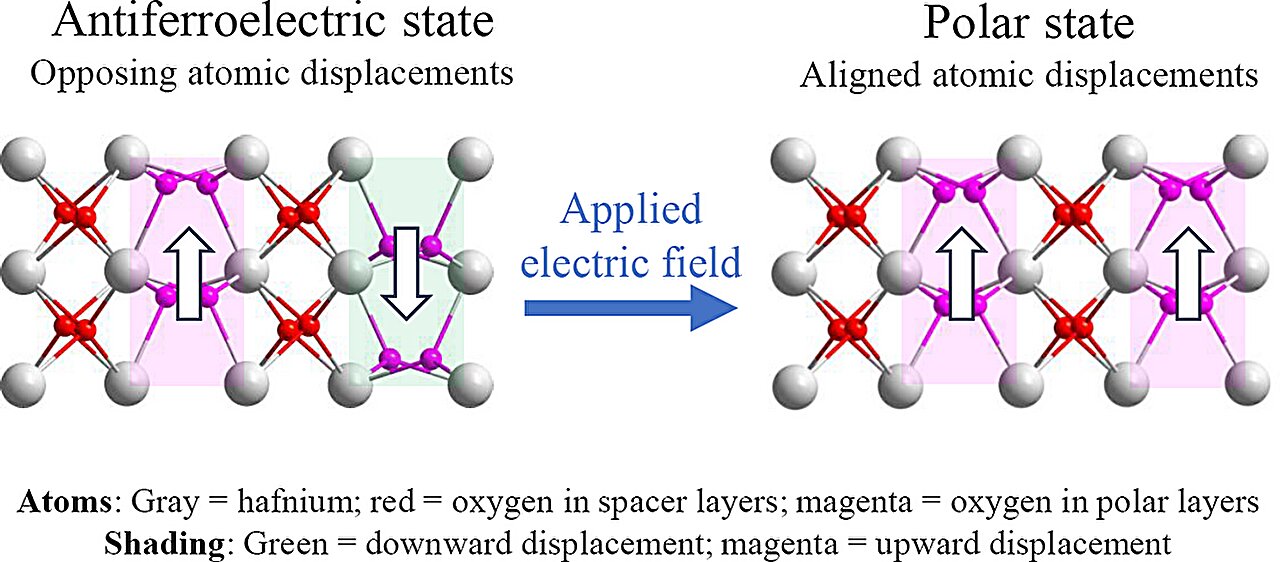
Discovery confirms rare, switchable electrical property in widely used electronics material
- Institution: University of Nebraska–Lincoln ("Husker" research team)
- What they found: Nebraska researchers confirmed a rare, switchable electrical property in a class of materials already widely used in electronics.
- Why it matters: The finding could broaden use of these materials for next-generation electronics, high-density energy storage, improved computer memory, and new strategies for cooling.
- Key detail: The property is switchable — meaning it can be toggled on and off, a prerequisite for memory and storage applications.
Applied & Industrial Materials
- 3D-printed materials roundup (Sept 24, 2026): This week's 3D Printing News Briefs covered a reference material for standardizing photopolymer manufacturing, metallic alloys that help reduce energy loss in electric motors, a "nanobone" material, and alternative-meat applications — showing additive manufacturing materials moving across motorsport, medical, and food sectors.

- Graphene commercialization milestones: New market analyses released September 23–24, 2026 project the global graphene market growing from USD $792.92 million in 2026 to $2.41 billion by 2032, spanning batteries, EVs, electronics, coatings, composites, sensors, water-treatment membranes, and thermal management. A separate report projects the graphene battery anodes market expanding from USD $430 million (2026) to $7,447 million by 2036, with the UK leading growth at a 38.5% CAGR.
Research Frontiers
- Acoustic manipulation of matter: Work in Science Advances on topological acoustic tweezers describes them as poised to "move beyond proof-of-concept demonstrations and evolve into a versatile platform for controlling matter across scales," with potential applications in biomedicine and materials assembly. (Publication date could not be confirmed as within the past week — treating as an ongoing frontier rather than a dated breakthrough.)

What to Watch
- Quantum simulation of matter creation: If 13-ion simulators can now model particle formation, expect a wave of follow-up studies probing early-universe physics and exotic particle dynamics.
- Solid-state lithium batteries: Graphene-oxide/polymer pairings aimed at dendrite-free solid-state batteries are approaching commercial relevance for EVs — watch for scale-up announcements.
- Graphene supply-chain scaling: With market forecasts pointing to ~$2.4B by 2032, expect manufacturers like NanoXplore, Thomas Swan, Directa Plus, and Haydale to announce capacity expansions.
Reader Takeaways
- Most impactful finding this period: A 13-ion quantum computer successfully simulated matter "popping into existence," opening a computational window onto early-universe physics.
- Closest to real-world use: The Nebraska team's switchable electrical property in a widely used electronics material, and standardized 3D-printed photopolymer reference materials, are nearest to commercial application.
- Wildcard to watch: Topological acoustic tweezers — controlling matter with sound across scales — could upend how we assemble and manipulate materials.
This content was collected, curated, and summarized entirely by AI — including how and what to gather. It may contain inaccuracies. Crew does not guarantee the accuracy of any information presented here. Always verify facts on your own before acting on them. Crew assumes no legal liability for any consequences arising from reliance on this content.
Powered by
