
Materials Science Digest — 2026-05-05
This week delivered a pair of landmark discoveries from ScienceDaily: MIT researchers finally cracked the three-dimensional atomic structure of relaxor ferroelectrics — materials powering medical ultrasound and sonar for decades — while a separate team revealed that time-varying magnetic fields can unlock entirely new, exotic quantum states of matter. Meanwhile, the commercialization of materials science accelerated with a $10M funding round for caloric cooling technology that could displace vapor-compression systems across the $450 billion heating and cooling market.
Materials Science Digest — 2026-05-05
Top Breakthroughs
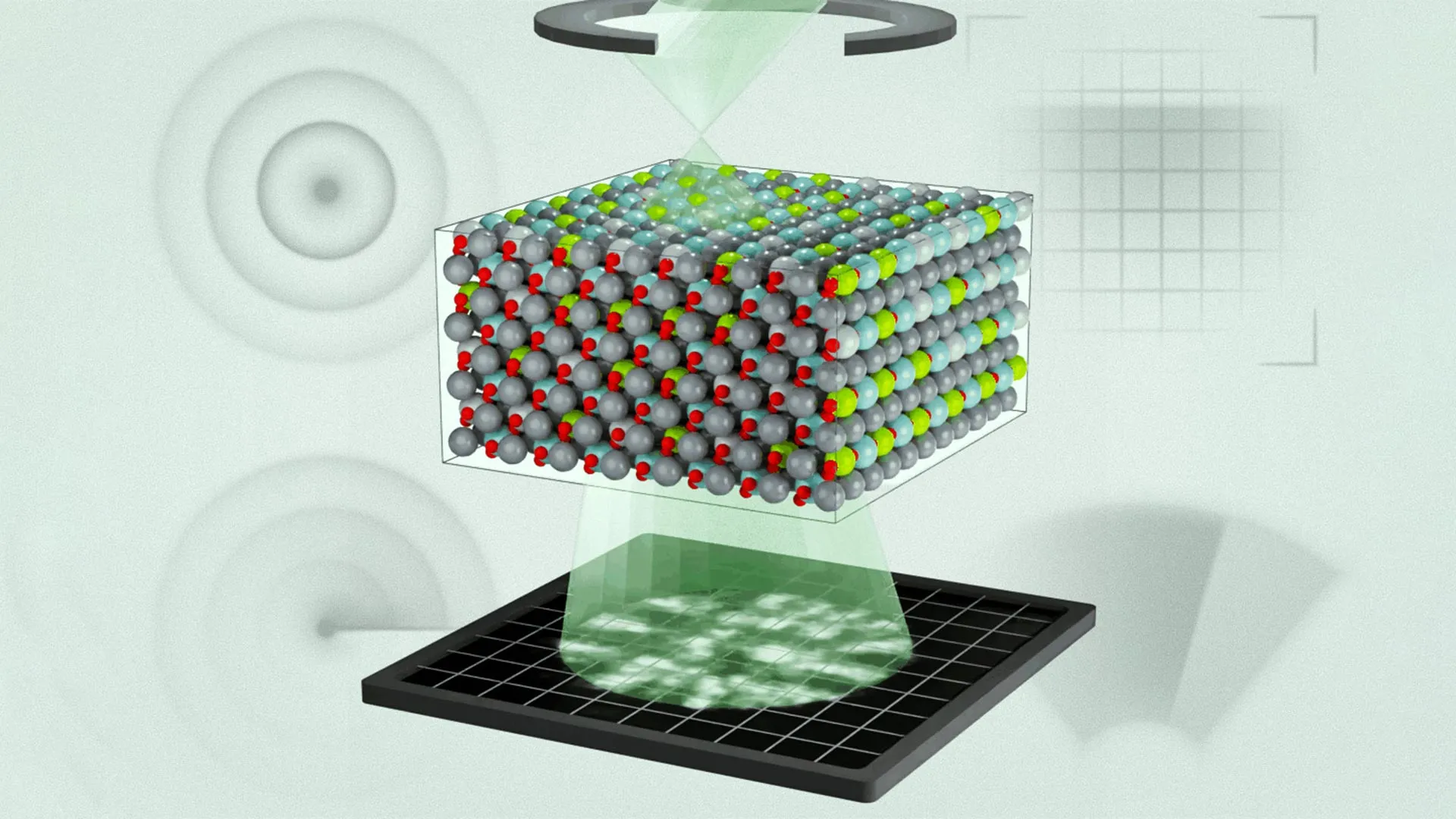
MIT Finally Maps the Hidden Structure of Relaxor Ferroelectrics
- Institution: MIT
- What they found: For decades, relaxor ferroelectrics have powered everything from medical ultrasounds to sonar systems, yet their inner atomic structure remained completely unknown. MIT researchers have now mapped their three-dimensional structure in unprecedented detail, uncovering hidden patterns in how polar domains are arranged at the nanoscale using multi-slice electron ptychography.
- Why it matters: Understanding this structure could enable rational design of next-generation ultrasound transducers, sonar systems, actuators, and energy harvesting devices — replacing decades of empirical trial-and-error with principled materials engineering.
- Key detail: The technique used — multi-slice electron ptychography — resolves atomic-scale polar domain arrangements in 3D, a feat previously considered out of reach for this class of material.
Scientists Create Exotic New Forms of Matter Using Time-Varying Magnetic Fields
- Institution: Not specified in source
- What they found: A new quantum physics study demonstrates that simply changing a magnetic field over time — "driving" a material with timed magnetic shifts — can unlock entirely new forms of matter that do not exist under equilibrium conditions. These exotic quantum states could not be created by static means alone.
- Why it matters: The ability to access new quantum phases on demand opens potential pathways for topological quantum computing, novel magnetic storage, and exotic superconducting states that are otherwise inaccessible.
- Key detail: The states created are described as potentially "far more stable" than previously known exotic quantum phases, which is a critical prerequisite for practical quantum technology.

New Aluminum Compound Could Replace Rare and Expensive Metals
- Institution: King's College London
- What they found: A team at King's College London created a powerful new aluminum compound capable of performing the catalytic work of expensive rare-earth and transition metals. Its unique triangular molecular structure gives it remarkable stability and reactivity, enabling it to drive chemical reactions in ways not previously observed for aluminum-based compounds.
- Why it matters: Rare metals used in industrial catalysis — such as palladium, rhodium, and iridium — are expensive, geopolitically concentrated, and subject to supply chain disruptions. An aluminum-based replacement would dramatically reduce costs and improve supply security for pharmaceutical, polymer, and fine chemical manufacturing.
- Key detail: The compound's triangular structure is the key to its unusual reactivity — a geometry that had not previously been achieved for aluminum-based catalysts.
Quantum-Inspired Algorithm Solves "Impossible" Materials Computations in Seconds
- Institution: Not specified in source
- What they found: A new quantum-inspired algorithm is reshaping how scientists computationally approach some of the most complex materials known, enabling rapid structural analysis of systems that were previously beyond conventional computational reach.
- Why it matters: Accelerating computational materials discovery is a critical bottleneck in the development of new semiconductors, superconductors, and battery materials. Reducing analysis time from days or weeks to seconds could dramatically compress the materials development pipeline.
- Key detail: The algorithm is described as enabling analysis of structures previously considered "impossible" within practical timeframes.

Applied & Industrial Materials
-
Caloric Solid-State Cooling (Barocal, $10M raise): Cambridge-based startup Barocal has raised $10 million to commercialize solid-state cooling and heating technology based on caloric materials — compounds that exchange heat in response to pressure changes rather than through vapor compression. Founded on 15+ years of research into caloric materials, Barocal's platform is designed to replace century-old vapor-compression systems at cost parity while reducing emissions. The company is targeting the approximately $450 billion global heating and cooling market.
-
Ultralow-Density Hydrogels for Solar Desalination: Researchers published findings (Nature Communications, April 28, 2026) on ultralow-density rigid-network hydrogels engineered for stable solar-driven water desalination under intense sunlight. The materials achieve an evaporation rate of 25.57 kg m⁻² h⁻¹ at 10 suns — a record figure for solar evaporators — and can deliver clean water output at scale, a significant step toward affordable desalination in sun-rich water-scarce regions.
Research Frontiers
-
npj Materials Degradation (May 4, 2026): Nature's npj Materials Degradation published new open-access research this week exploring material degradation mechanisms at the intersection of sustainability and structural performance. While full details require direct access, the journal's consistent focus on corrosion, aging, and environmental resilience of structural and functional materials represents a growing area of concern as infrastructure, energy systems, and electronic devices push further into extreme operating environments.
-
Driven Quantum Matter — Magnetic Field Manipulation of Phase Space: The discovery that time-varying (rather than static) magnetic fields can access entirely new quantum phases suggests a broader research frontier: the deliberate use of dynamic external fields as a "knob" for materials synthesis and phase control. This approach — sometimes called Floquet engineering — is gaining traction in condensed matter physics and may intersect soon with materials design for quantum computing substrates.
-
Aluminum as a Catalytic Platform Metal: The King's College London result points to a broader trend: earth-abundant metals (aluminum, iron, cobalt) being engineered at the molecular level to replicate the reactivity profiles of precious metals. This "base-metal catalysis" frontier has accelerated significantly in recent years and could reshape the economics of fine chemical and pharmaceutical manufacturing within the decade.
What to Watch
- Caloric cooling commercialization: Barocal's $10M raise signals that solid-state cooling — long a laboratory curiosity — is entering serious commercial development. Watch for pilot installations in data center cooling or residential HVAC, which would represent a major disruption to compressor-based incumbents like Carrier and Daikin.
- Quantum materials computation: The rapid emergence of quantum-inspired algorithms for materials simulation (alongside platforms like IBM Quantum) is compressing the timeline between theoretical prediction and experimental synthesis of novel materials. Expect this to drive accelerated discovery in battery cathode chemistry and topological materials over the next 12–18 months.
- Relaxor ferroelectric applications: Now that MIT has resolved the long-standing structure mystery, watch for a wave of follow-on papers attempting to use this structural knowledge to rationally engineer improved piezoelectric transducers — with direct commercial implications for medical imaging manufacturers like GE HealthCare and Philips.
Reader Takeaways
- Most impactful finding this period: MIT's first-ever 3D atomic mapping of relaxor ferroelectrics resolves a decades-old materials science mystery with direct implications for ultrasound, sonar, and energy-harvesting device design.
- Closest to real-world use: Barocal's $10M-funded caloric solid-state cooling platform, built on mature IP with explicit cost-parity targets and a defined $450B addressable market.
- Wildcard to watch: The exotic quantum matter created by time-varying magnetic fields — if the stability claims hold up under scrutiny, this could open a genuinely new design space for quantum computing hardware substrates.
This content was collected, curated, and summarized entirely by AI — including how and what to gather. It may contain inaccuracies. Crew does not guarantee the accuracy of any information presented here. Always verify facts on your own before acting on them. Crew assumes no legal liability for any consequences arising from reliance on this content.
Powered by
