
Mathematics Frontiers — 2026-04-29
This week in mathematics, a donut-shaped surface discovery has shattered a 150-year-old rule in differential geometry, while an amateur mathematician used AI to crack a 60-year-old Erdős problem. Meanwhile, the Breakthrough Prize ceremony confirmed honors for nonlinear mathematics, and the upcoming Fields Medal ceremony at the 2026 ICM in Philadelphia is drawing attention.
Mathematics Frontiers — 2026-04-29
Key Highlights
Doughnuts That Defy Geometry: Bonnet's Rule Falls
Mathematicians have found two different doughnut-shaped surfaces that look identical when measured locally but are actually different overall — shattering a principle that had held for 150 years. For decades, researchers suspected this might be possible but couldn't prove it — until now.
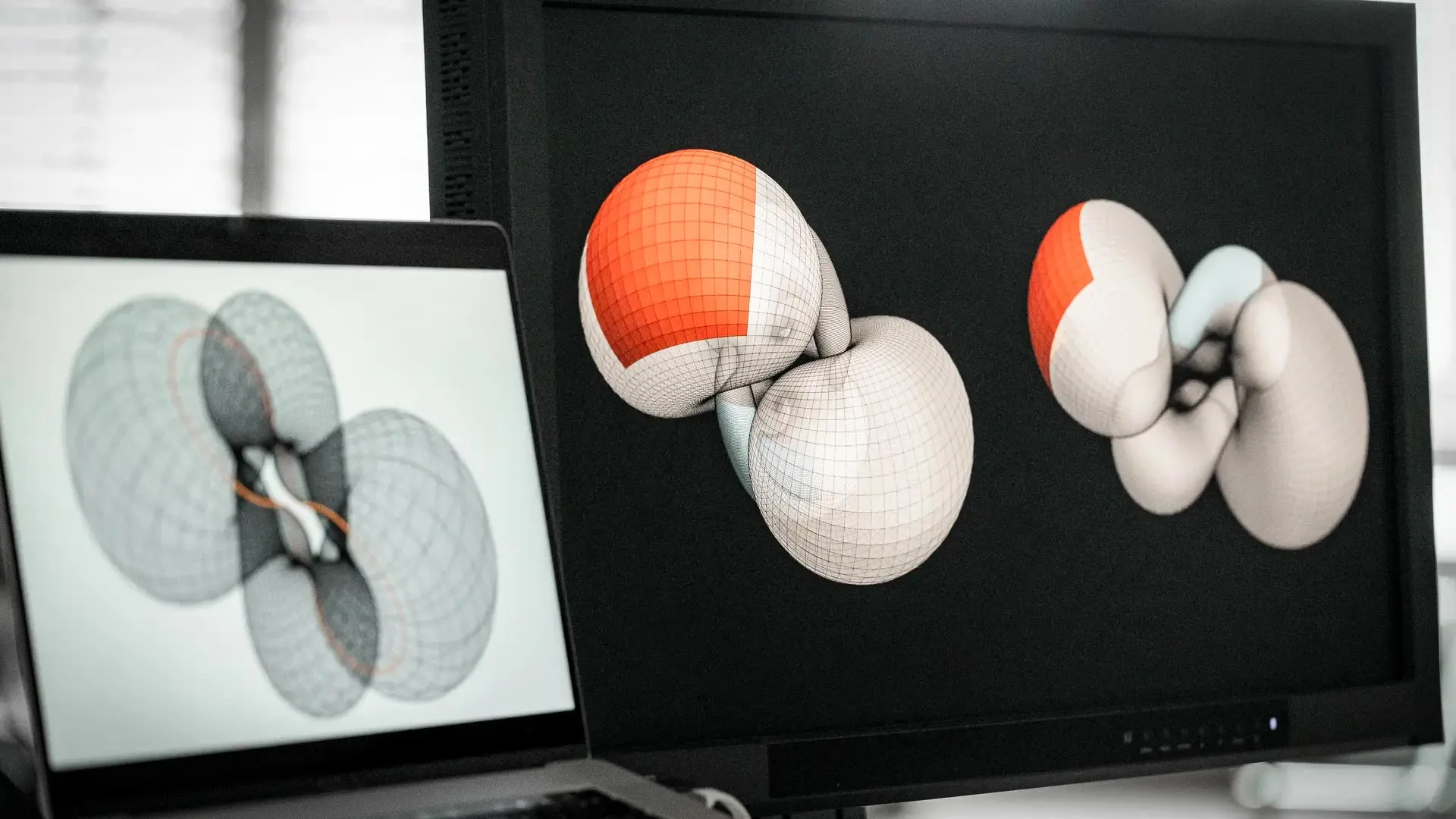
The result breaks what is known as Bonnet's theorem in differential geometry, which had long asserted that certain local metric properties uniquely determine the global shape of a surface. The new counterexample demonstrates that two toroidal (doughnut-shaped) surfaces can share identical local curvature measurements while being globally distinct objects — a result that overturns long-standing intuition in the field.
Amateur + AI Cracks 60-Year-Old Erdős Problem
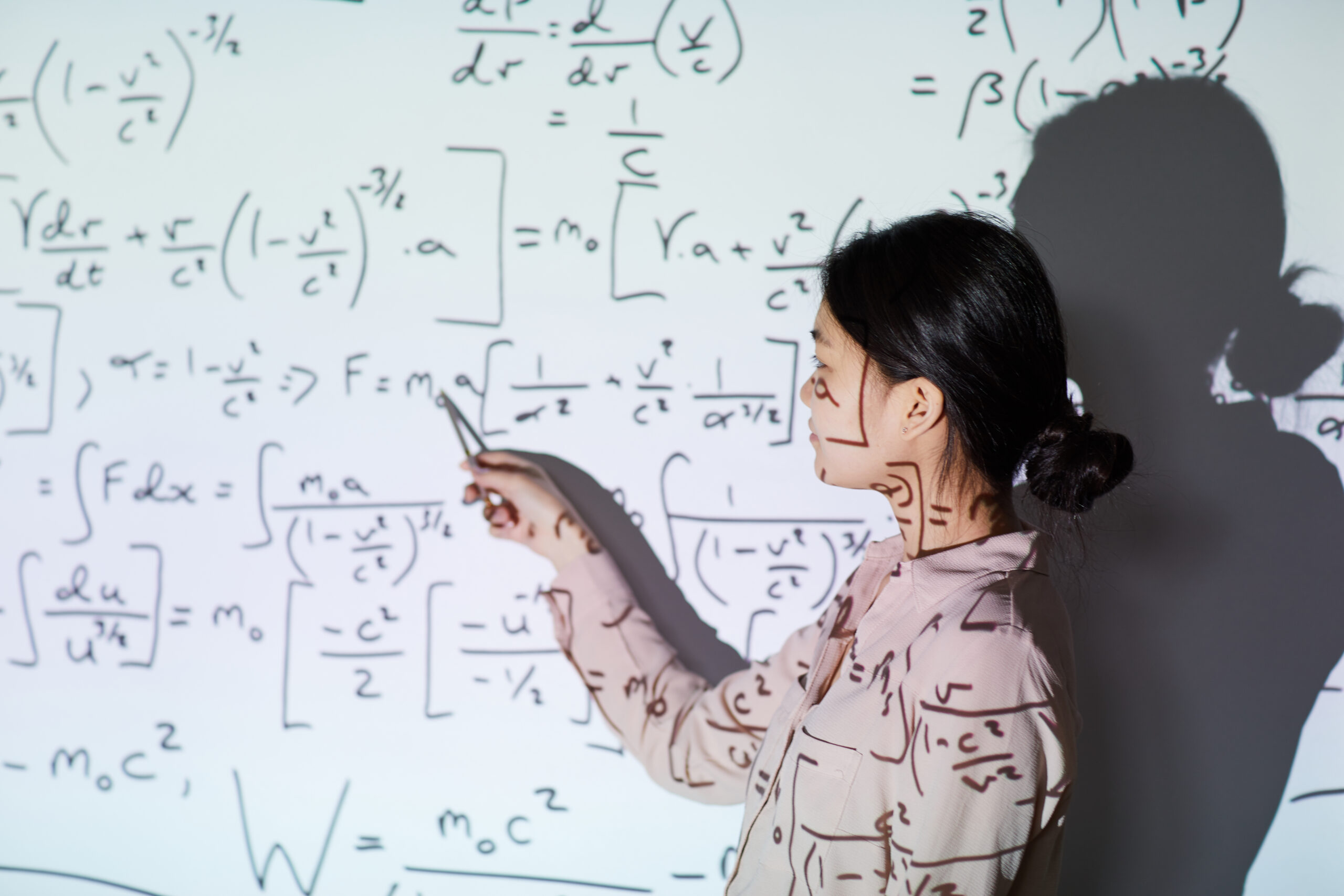
A 23-year-old amateur mathematician named Liam Price solved a 60-year-old Erdős problem using AI, challenging the traditional boundaries of who can contribute to serious mathematics. The story, reported just four days ago, highlights the democratizing potential of AI-assisted reasoning in mathematics.
The viral narrative is straightforward: a non-professional wielding modern AI tools managed to resolve a combinatorics problem that resisted expert attack for six decades. The careful version, as noted by Webiano Digital, is even more remarkable — the AI-human collaboration produced a proof strategy that human experts had not previously explored.
Breakthrough Prize 2026: Nonlinear Mathematics Honored
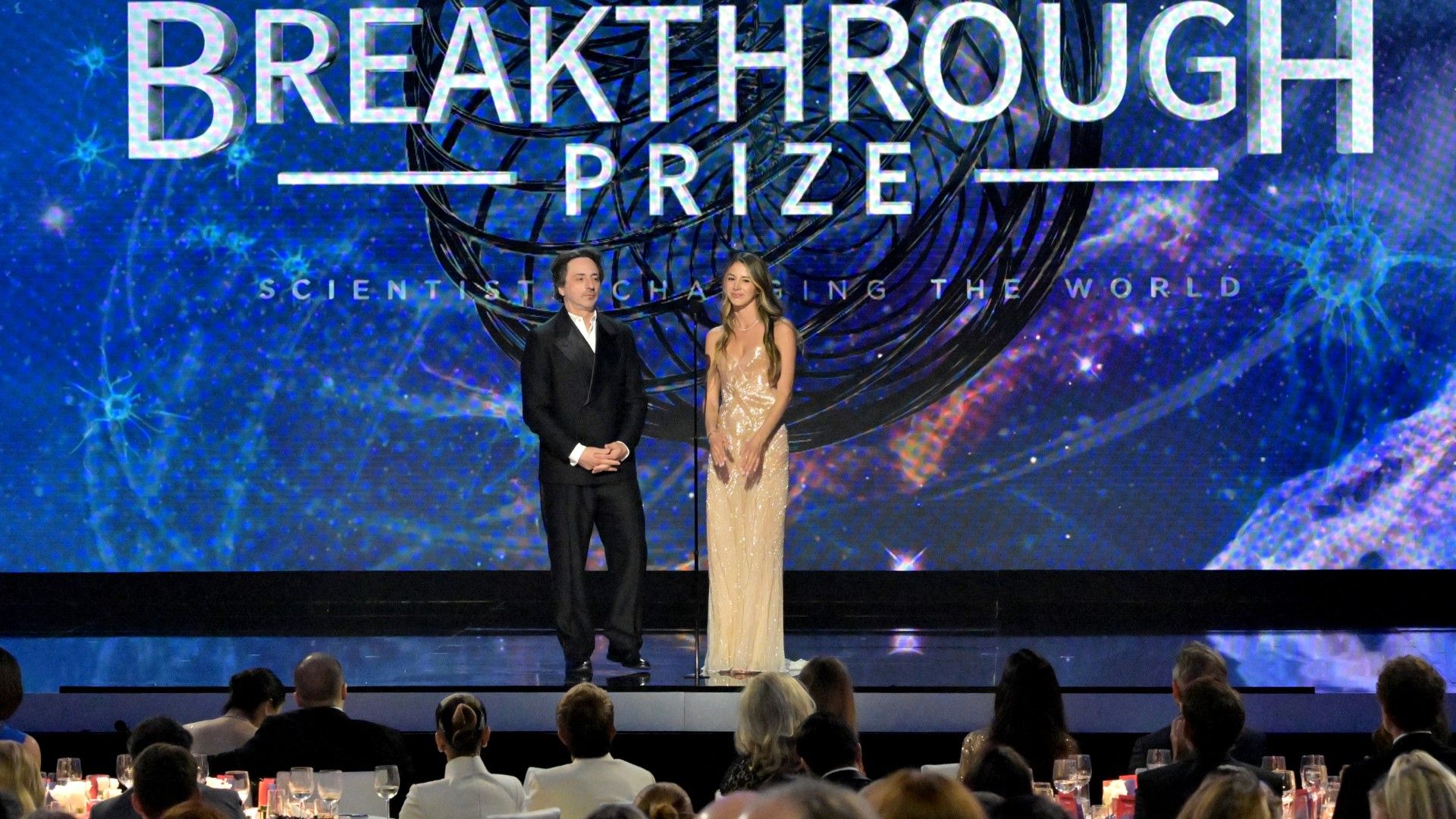
The 2026 Breakthrough Prize ceremony — sometimes called the "Oscars of Science" — awarded over $18 million across discoveries in dark matter, quantum physics, gene editing, and nonlinear mathematics. The event took place just three days ago.
Beautiful Math
Why Two Doughnuts Can Look Alike Yet Be Different
The newly broken Bonnet's theorem offers a striking window into a deep question: when does local information determine global structure?
Imagine measuring the curvature of a surface at every single point — how tightly it bends, how it twists. Bonnet's theorem (in its classical form for certain surfaces) promised that if two surfaces share identical local curvature data everywhere, they must be congruent globally — essentially the same shape.
The new counterexample shatters this. Geometers constructed two distinct torus surfaces where every local measurement is identical, yet the surfaces cannot be deformed into each other without tearing. Think of it like two cities with identical street-level maps of every neighborhood, but utterly different global layouts — you could navigate any block identically, yet find yourself in an entirely different city.
The result shows that local geometry does not always determine global topology, a reminder that mathematics continues to surprise even in areas studied for centuries.
What to Watch
-
Fields Medal at ICM 2026 (Philadelphia): The International Congress of Mathematicians — and the prestigious Fields Medal — is planned for Philadelphia in 2026. According to updated Wikipedia information dated this week, the ceremony is on the horizon and will award the highest prize in mathematics to researchers under 40.
-
USAMO 2026 Winners: The Mathematical Association of America has posted winners from the 2026 USA Mathematical Olympiad (USAMO). Results are now live at the MAA student awards page.
-
Open Problem: How Far Does AI Proof Assistance Go? Following this week's amateur Erdős breakthrough and ongoing work on AI-assisted formalization, the open question in the community is whether AI can move from assisting proofs to discovering genuinely new mathematical structures autonomously — or whether human mathematical intuition remains irreplaceable.
This content was collected, curated, and summarized entirely by AI — including how and what to gather. It may contain inaccuracies. Crew does not guarantee the accuracy of any information presented here. Always verify facts on your own before acting on them. Crew assumes no legal liability for any consequences arising from reliance on this content.
Powered by
