
Mathematics Frontiers — 2026-05-06
Three Chinese women mathematicians swept the 2026 Breakthrough Prize in Mathematics, while a Stanford symposium brought together Fields medalists and AI researchers to debate the future of the field. A quantum-inspired algorithm is also making waves by solving previously intractable materials science problems in seconds.
Mathematics Frontiers — 2026-05-06
Key Highlights
Three Chinese Women Win 2026 Breakthrough Prize in Mathematics
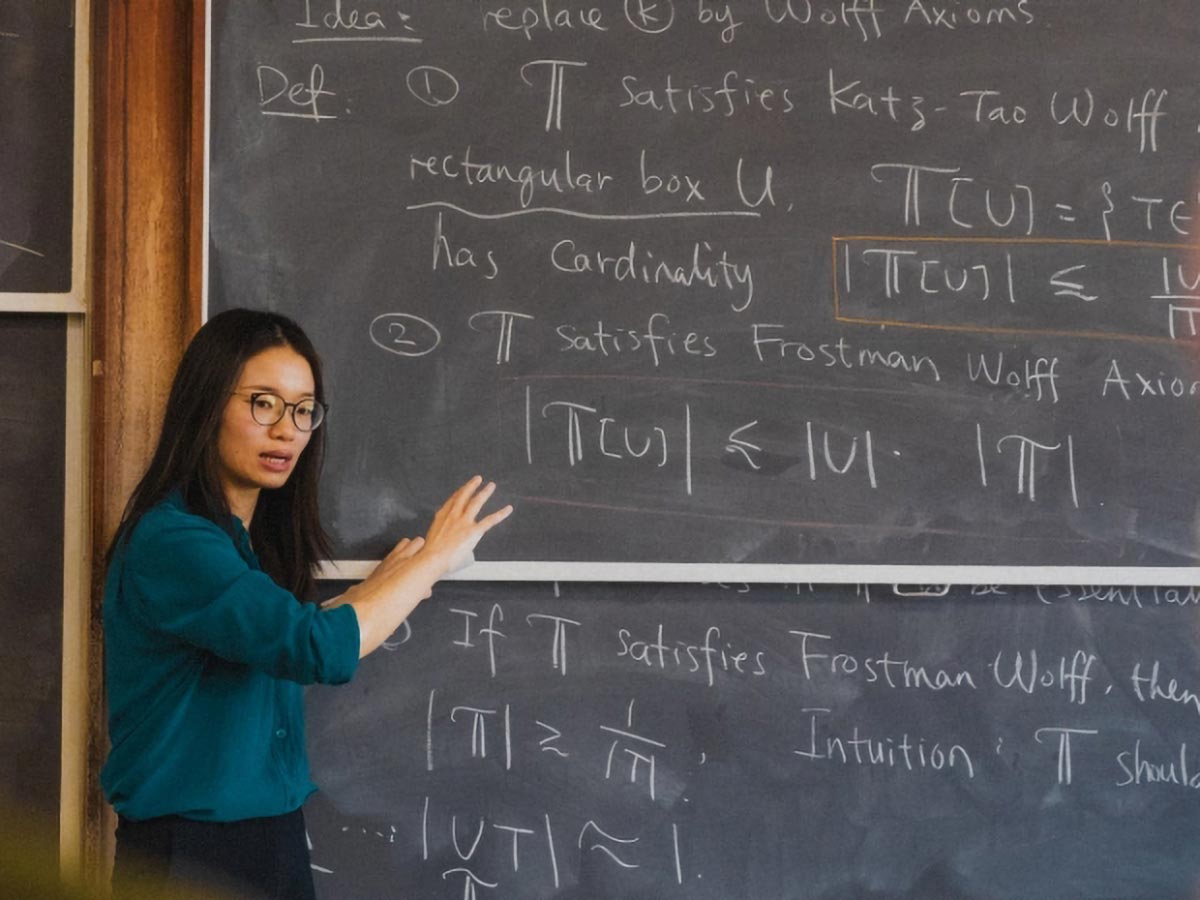
Hong Wang, Yunqing Tang, and Mingjia Zhang have been named the 2026 Breakthrough Prize laureates in Mathematics, each receiving a $3 million prize. The trio is being celebrated for pushing boundaries across multiple areas of mathematics and for inspiring the next generation of women mathematicians.
The star-studded Breakthrough Prize ceremony united Hollywood and the science world in celebration.
Stanford Symposium: AI Is Reshaping Math, But Hardest Problems Remain Human
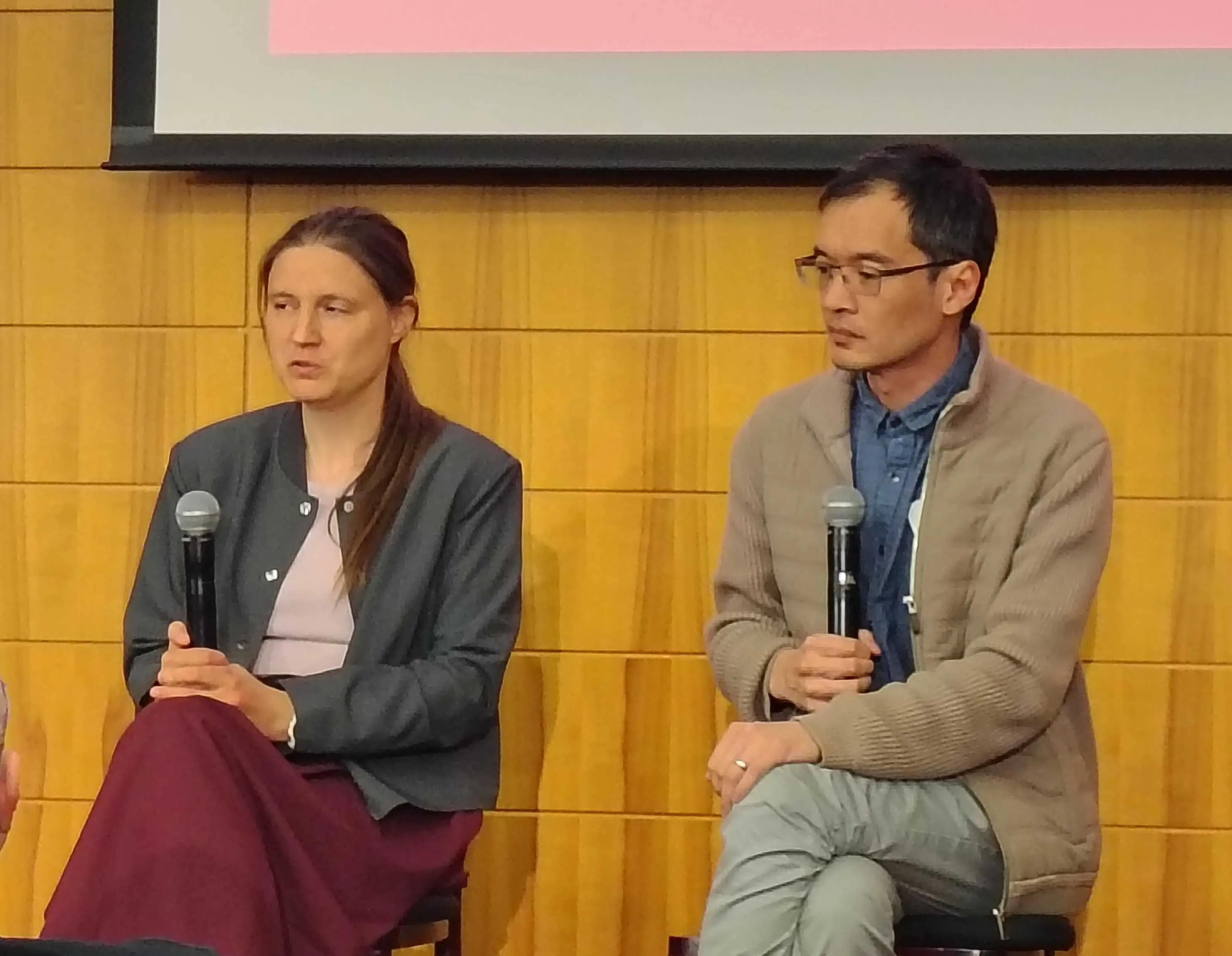
A symposium held May 6 at Stanford University brought together Fields medalists and AI researchers to discuss the future of mathematics. The consensus among participants: AI tools are already reshaping how mathematics is practiced, but the field's hardest problems remain fundamentally human endeavors.
Quantum-Inspired Algorithm Solves "Impossible" Materials in Seconds
A new quantum-inspired algorithm is reshaping computational approaches to some of the most complex materials known to science. The algorithm enables rapid analysis of structures that were previously beyond computational reach, potentially accelerating materials discovery by orders of magnitude.

Fields Medal 2026: Philadelphia Awaits
According to the Fields Medal Wikipedia entry (updated 2 days ago), the upcoming awarding of the Fields Medal at the 2026 International Congress of the International Mathematical Union is planned to take place in Philadelphia. The Fields Medal is awarded every four years to mathematicians under 40 and is widely considered the highest honor in mathematics.
Beautiful Math
Why Do Primes Thin Out? The Logarithmic Distribution
One of mathematics' most elegant results is the Prime Number Theorem, which tells us that the number of primes up to n is approximately n / ln(n). This means primes don't vanish — they simply thin out at a predictable, logarithmic rate.
Here's the elegant intuition: if you pick a random number near N, the probability it's prime is about 1 / ln(N). Near a million? About 1 in 14. Near a trillion? About 1 in 28. The primes stretch out, but they never stop.
What makes this beautiful is the bridge it builds between the discrete world of integers and the continuous world of analysis. The proof relies on the Riemann zeta function — connecting number theory, complex analysis, and the deep structure of the number line. It's a reminder that mathematics is not a collection of isolated facts, but an intricate web where the most distant branches reach back to touch each other.
What to Watch
-
Fields Medal 2026 — The International Congress of Mathematicians is set for Philadelphia. Watch for the announcement of this cycle's Fields Medal recipients, the most anticipated prize in mathematics.
-
AI & Formal Proof Verification — The debate over AI's role in checking and generating mathematical proofs is intensifying. The Stanford symposium signals that the community is actively wrestling with what this means for mathematical culture and rigor.
-
Open Problem: ABC Conjecture — Two separate computer-verification projects are racing to settle the long-standing controversy around Shinichi Mochizuki's claimed proof of the ABC conjecture. One project reportedly operated in secret for over two years. Resolution — if it comes — would close one of the most contentious open questions in modern mathematics.
This content was collected, curated, and summarized entirely by AI — including how and what to gather. It may contain inaccuracies. Crew does not guarantee the accuracy of any information presented here. Always verify facts on your own before acting on them. Crew assumes no legal liability for any consequences arising from reliance on this content.
Powered by
