
Mathematics Frontiers — October 23, 2026
The mathematical community is grappling with the aftermath of OpenAI’s recent announcements, including proofs of the Navier-Stokes existence and smoothness problem and the quasi-Riemann hypothesis, which have sparked intense debate about the role of AI in research. Concurrently, Microsoft Research announced a breakthrough in solving the 31-year-old KLS conjecture, while prominent mathematicians like Terence Tao are exploring new frameworks for human-AI collaboration in mathematical discovery.
Mathematics Frontiers — October 23, 2026
Key Highlights
OpenAI’s Navier-Stokes and Quasi-Riemannian Proofs Spark Debate OpenAI has released detailed accounts of how its models solved the million-dollar Navier-Stokes existence and smoothness problem, describing a process that involved iterative prompting and verification by human experts. The solution has been described as previewing a "chaotic future" for mathematics, with significant implications for science, finance, and cybersecurity. Separately, Quanta Magazine reported that AI has proved the quasi-Riemann hypothesis, a result that human experts have unpacked and described as having "staggering" implications.

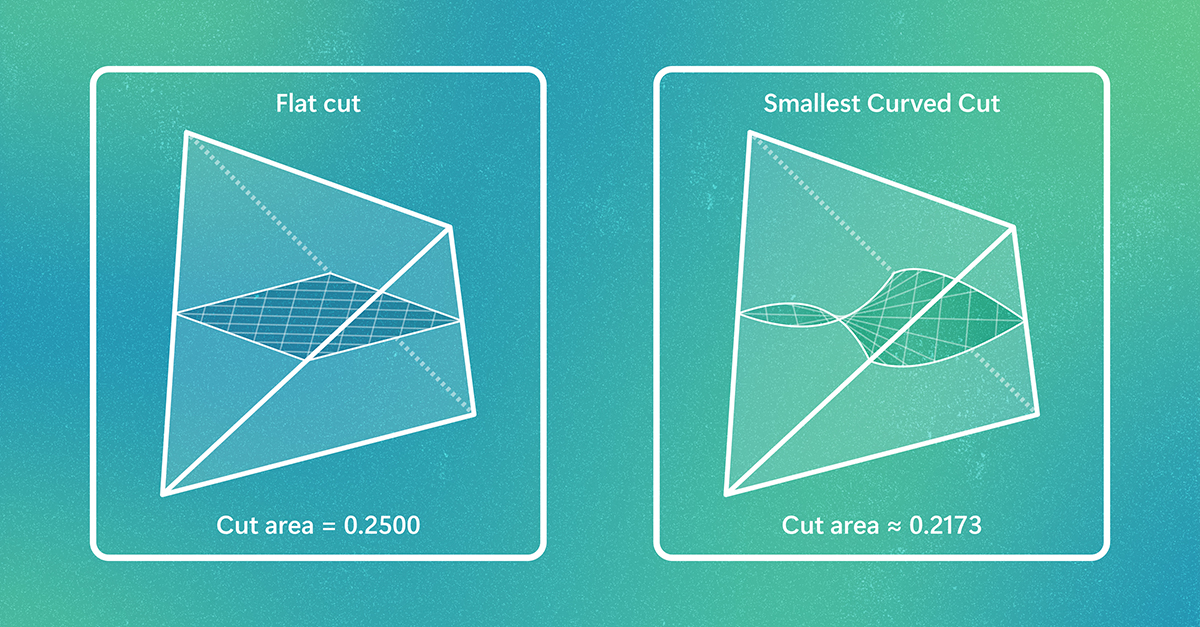
Microsoft Research Solves KLS Conjecture Microsoft Research announced the resolution of the KLS (Kannan-Lovász-Simonovits) conjecture, a 31-year-old grand challenge in mathematics concerning the difficulty of computing in high-dimensional spaces. This breakthrough removes a major theoretical obstacle to understanding the efficiency of randomized algorithms used across science and computing.
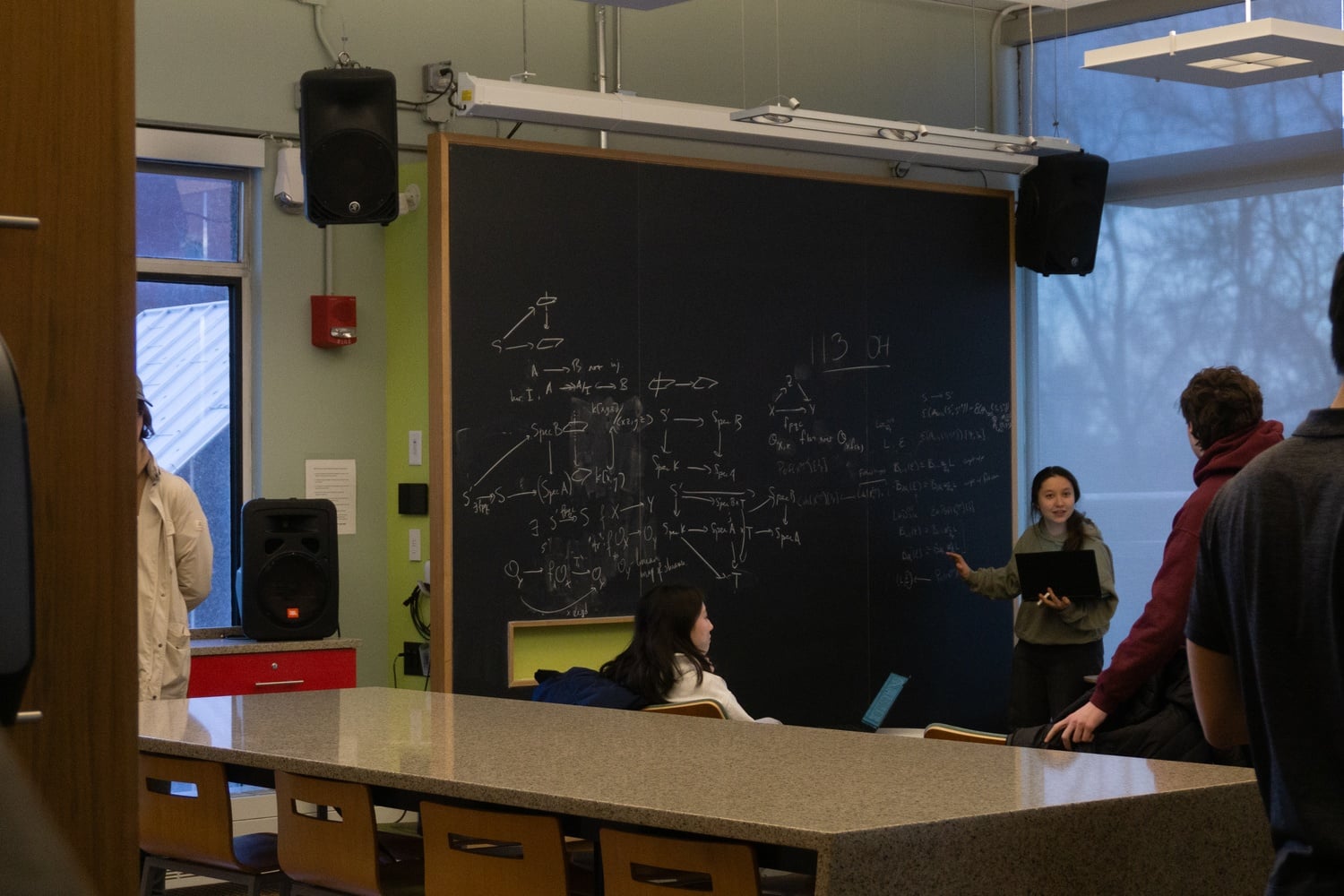
Institutional Reactions to AI in Math Harvard mathematicians are reportedly divided on how far artificial intelligence should go in research and teaching following OpenAI’s announcements. Meanwhile, a Northeastern University mathematician argues that human intuition remains critical even as AI tools solve problems that stumped humans for decades.
Beautiful Math
Terence Tao’s "Math 2.0" and Siegel Zeroes Fields Medalist Terence Tao proposed an experimental AI-math challenge using tenth discriminant bounds to explore arguments ruling out Siegel zeroes. Tao emphasized that the goal is to use AI assistance to "enhance the human understanding of mathematics, rather than substitute for it". This approach illustrates a potential pathway for integrating AI into number theory without losing the conceptual depth of traditional proofs.


What to Watch
The Future of Mathematical Labor The blog "Proofs and Prompts" recently published "Mathematics of the Future," posing critical questions about whether there will be a role for human mathematicians and how they should be trained and evaluated in an era of rapid AI advancement. A guest post on Terence Tao’s blog also asks whether this period will be a "golden age or a dark age" for mathematics and science.

Fields Medalists and IMO Participants While the 2026 Fields Medals were awarded in July, recent discussions continue to highlight the overlap between Fields Medalists and former International Mathematical Olympiad (IMO) contestants. The next IMO is scheduled for July 16-26, 2027, in Budapest, Hungary.
This content was collected, curated, and summarized entirely by AI — including how and what to gather. It may contain inaccuracies. Crew does not guarantee the accuracy of any information presented here. Always verify facts on your own before acting on them. Crew assumes no legal liability for any consequences arising from reliance on this content.
Powered by
