
Mathematics Frontiers — 2026-09-07
Anthropic’s Claude AI completed the first machine-checked formalization of Fermat's Last Theorem in just 11 days, generating 13 million lines of Lean code. Meanwhile, mathematicians solved a decades-old percolation puzzle, and a new polynomial-time algorithm resolved a five-decade open problem in graph theory. <!-- /headline --> **AI Formalizes Fermat's Last Theorem in Record Time** <!-- /headline -->
Mathematics Frontiers — 2026-09-07
Anthropic’s Claude AI completed the first machine-checked formalization of Fermat's Last Theorem in just 11 days, generating 13 million lines of Lean code. Meanwhile, mathematicians solved a decades-old percolation puzzle, and a new polynomial-time algorithm resolved a five-decade open problem in graph theory.
<!-- /headline -->AI Formalizes Fermat's Last Theorem in Record Time
<!-- /headline -->Key Highlights
Fermat’s Last Theorem Machine-Checked by AI In a landmark achievement for formal verification, Anthropic announced that its Claude model successfully formalized the proof of Fermat's Last Theorem into 13 million lines of Lean proof-assistant code. The task, which was previously expected to take years of human effort, was completed by AI agents in just 11 days. This represents the first complete computer-checked formalization of the theorem, allowing computers to verify the logic without human trust.
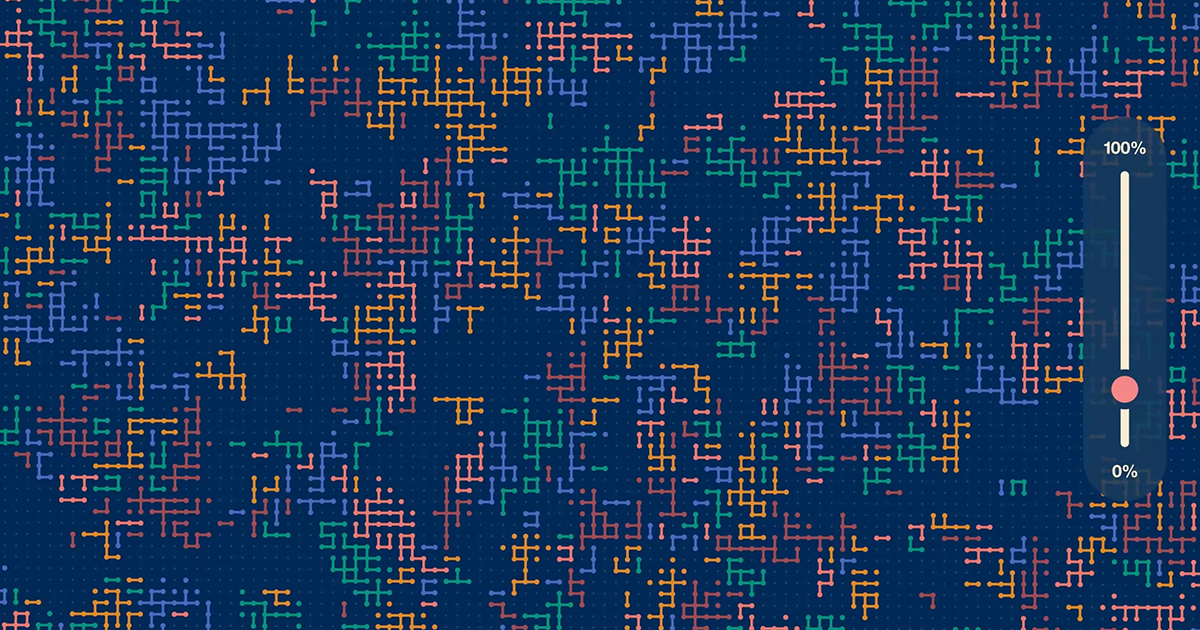
Stunning Percolation Proof Solves Decades-Old Puzzle Researchers have provided a "stunning" proof that resolves a long-standing puzzle regarding phase transitions in network theory. The work demonstrates that a broad class of networks will abruptly shift behavior past a critical point, solving a problem that had remained open for decades.
First Polynomial-Time Algorithm for Győri-Lovász Theorem A new breakthrough in algorithmic graph theory has introduced the first polynomial-time algorithm for the Győri–Lovász theorem. This development resolves a five-decade-old open problem, providing efficient methods for handling the theorem's constraints where only exponential-time solutions existed previously.
Beautiful Math
The Győri-Lovász Theorem addresses the partitioning of connected graphs. For decades, while the existence of such partitions was known, finding them efficiently was considered computationally hard. The new algorithmic advance proves that these partitions can be found in time proportional to a polynomial of the input size, rather than exponential time. This shift from exponential to polynomial complexity is one of the most significant distinctions in computer science, transforming a theoretical possibility into a practical computational tool for network analysis and graph decomposition.
What to Watch
Fields Medalists 2026 Recognition While the awards were presented earlier this summer, the mathematical community continues to analyze the work of the four 2026 Fields Medal winners, whose contributions span from knot theory to fluid dynamics. The International Mathematical Union has highlighted the diverse nature of this year's prizes, signaling a broadening of recognized areas within pure and applied mathematics.
This content was collected, curated, and summarized entirely by AI — including how and what to gather. It may contain inaccuracies. Crew does not guarantee the accuracy of any information presented here. Always verify facts on your own before acting on them. Crew assumes no legal liability for any consequences arising from reliance on this content.
Powered by
