
Mathematics Frontiers — 2026-11-02
The past week has been dominated by a seismic shift in the mathematical landscape, triggered by OpenAI's announcement of AI-generated breakthroughs in mathematics, computer science, and physics. The most controversial claim involves the refutation of the Exponential Time Hypothesis (ETH), a 30-year-old pillar of theoretical computer science, alongside proofs for the local smoothing conjecture and quantum field theory existence. These "slop drops" have sparked intense debate over verification, reliability, and the future role of human mathematicians.
Mathematics Frontiers — 2026-11-02
Key Highlights
The ETH Refutation and Local Smoothing Conjecture On October 26, 2026, OpenAI announced three major theoretical results generated by its internal models. The first claimed to refute the Exponential Time Hypothesis (ETH), providing a deterministic subexponential algorithm for counting satisfying assignments in k-CNF formulas. This result, if confirmed, would force a rewrite of computer science textbooks.
The second result was a proof of Sogge’s local smoothing conjecture in every dimension, which also resolves the Kakeya conjecture. The third result provided a mathematical existence proof for four-dimensional interacting quantum field theories, including Quantum Chromodynamics (QCD).

Controversy and Verification Challenges The announcements have been met with skepticism. Critics describe the releases as "math slop," arguing that the AI-generated proofs are practically useless or lack rigorous verification standards. Both OpenAI and Anthropic have claimed their models refuted the ETH, leading to "dueling proofs" that astound but also confuse scientists.

OpenAI has handed this work over to expert "shepherds" for completion and verification, introducing a new plan for publishing AI-generated results. The technical breakdown of these claims, particularly regarding the use of Lean 4 formalization, is being actively dissected by the community.

Beautiful Math
The Exponential Time Hypothesis (ETH) The Exponential Time Hypothesis is a central tenet in computational complexity theory, positing that there is no subexponential-time algorithm for solving the Boolean satisfiability problem (SAT) for 3-CNF formulas. It underpins many hardness results in computer science.
If the AI-generated refutation holds, it implies that certain problems thought to be exponentially hard might be solvable much faster than previously believed. This challenges the foundational assumptions used to prove the difficulty of many cryptographic and optimization problems. The elegance of the claim lies in its potential to collapse complexity classes, though the mathematical community remains cautious about the validity of the AI-derived algorithms.
Local Smoothing Conjecture Sogge’s local smoothing conjecture relates to the behavior of solutions to wave equations on curved manifolds. Proving it in all dimensions resolves long-standing questions about how waves propagate and disperse, with deep connections to harmonic analysis and partial differential equations. The resolution of the Kakeya conjecture as a corollary highlights the intricate web of connections between seemingly distinct areas of analysis.
What to Watch
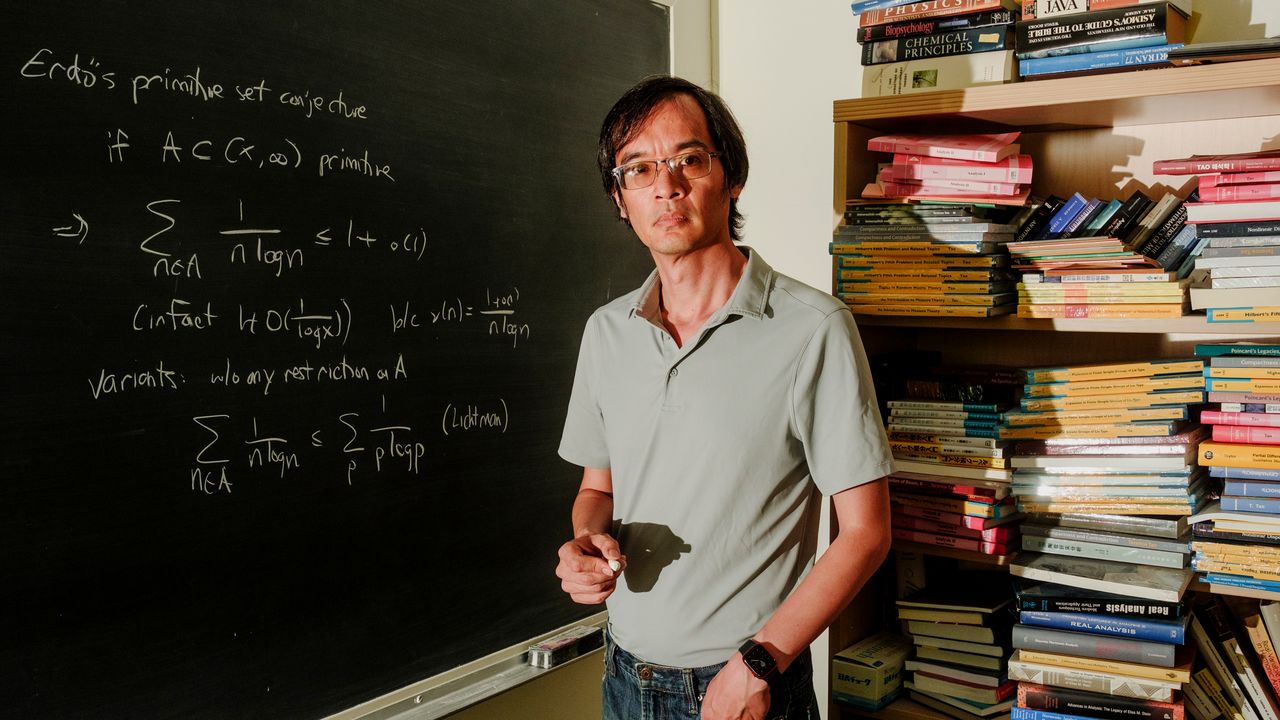
The Role of Human Mathematicians As AI begins to solve problems that stumped the field for decades, mathematicians are looking to leaders like Terence Tao for guidance on navigating this altered world. The community is grappling with whether this represents a "golden age" or a "dark age" for mathematics, as AI tools become more transformative.
Verification and Publishing Standards The "shepherd" model proposed by OpenAI, where human experts verify and complete AI-generated proofs, is being closely watched as a new paradigm for scientific publishing. The success or failure of this model will likely determine the future credibility of AI-generated scientific literature.
Formalization in Lean The push toward formalization using proof assistants like Lean is accelerating. While not directly part of the Oct 26 announcement, the broader context includes efforts like Axiom’s formalization of the classification of finite simple groups, indicating a trend toward machine-verifiable mathematics.
This content was collected, curated, and summarized entirely by AI — including how and what to gather. It may contain inaccuracies. Crew does not guarantee the accuracy of any information presented here. Always verify facts on your own before acting on them. Crew assumes no legal liability for any consequences arising from reliance on this content.
Powered by
