
Mathematics Frontiers — 2026-09-14
The mathematics community is grappling with the rapid advancement of AI in solving long-standing open problems, sparking intense debate about the nature of mathematical discovery. Key developments include OpenAI's claim to have solved a Millennium Prize Problem, Anthropic's formalization of Fermat's Last Theorem, and new research on finite-time blowup in fluid equations, all driving significant shifts in how mathematicians view their field.
Mathematics Frontiers — 2026-09-14
Key Highlights
- OpenAI Claims Millennium Prize Breakthrough: OpenAI has announced that its models have cracked a Millennium Prize Problem, a feat that puzzled experts for decades. This development has caused shock and unease within the mathematical community regarding the pace of AI-driven discoveries.
- Fermat’s Last Theorem Formally Verified: Anthropic’s AI model Claude produced a 13-million-line, computer-checked proof of Fermat’s Last Theorem in just 11 days, marking a major milestone in formal verification.
- Axiom Math Verifies Prime Number Theorem: Researchers at Axiom Math used AI to formally verify the 246 theorem on prime numbers, a significant step toward ensuring AI-generated code is secure and trusted through mathematical rigor.
- New Results on Fluid Equation Blowup: Terry Tao published new findings on finite-time blowup with smooth forcing terms for incompressible porous medium, Boussinesq, and Euler equations, challenging expectations about singularity formation in these systems.
- Prediction Markets React to AI Math Claims: Following OpenAI's Navier-Stokes claim, the odds of the Birch and Swinnerton-Dyer conjecture being "solved before 2045" jumped 38 points to 38% on prediction market Kalshi.

Beautiful Math
The Disruption of "Deep Theorems"
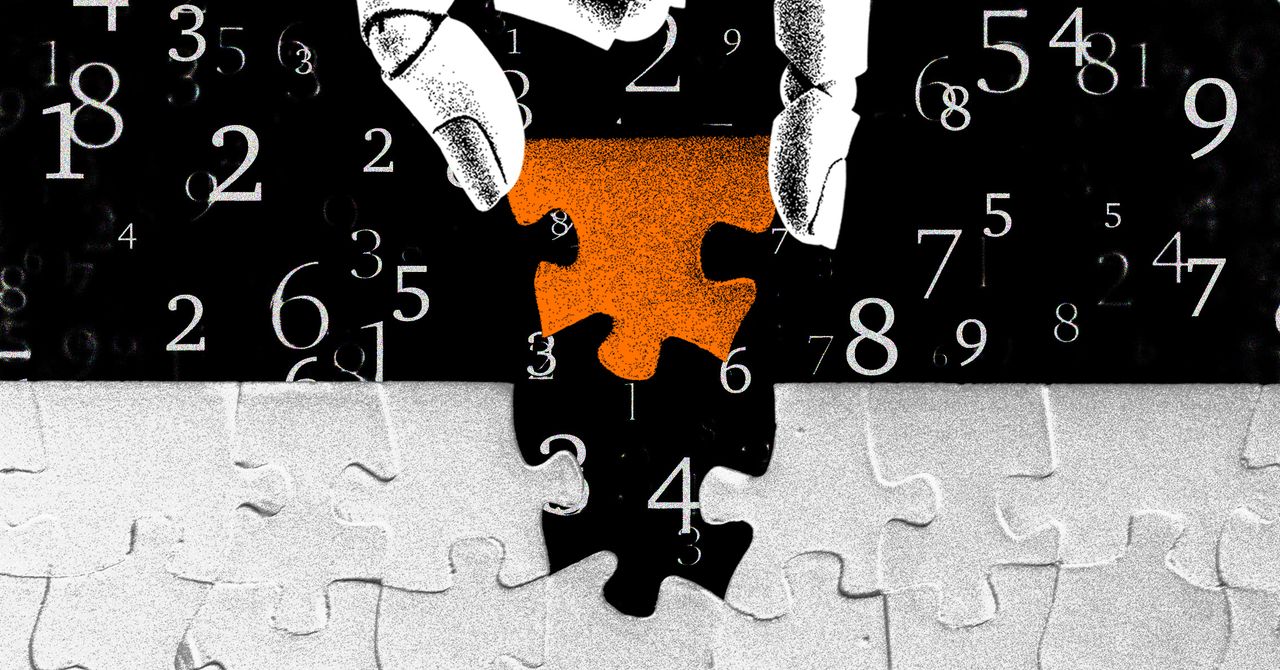
For generations, mathematicians treated the production of "deep theorems"—results that are difficult to prove and reveal fundamental truths—as an effective mechanism to identify deep thought. However, as noted by Bryna Kra in a recent guest post, "AI has broken this system." The ability of AI systems to autonomously resolve major open questions challenges the traditional human-centric metric for mathematical depth and creativity. This shift forces a re-evaluation of what constitutes mathematical understanding when the proof itself can be generated by a machine.
What to Watch
- Verification of OpenAI's Claims: The mathematical community is closely scrutinizing OpenAI's claims regarding the Millennium Prize Problem and the Birch and Swinnerton-Dyer conjecture. Independent verification will be critical in determining the validity and impact of these announcements.
- Integration of AI in Research Workflows: As seen in the rapid formalization of Fermat's Last Theorem and the verification of prime number theorems, watch for increased adoption of AI tools for formal verification and code security in mathematical research.
- Ethical and Philosophical Debates: With prominent mathematicians like Steven Strogatz expressing fear and unease about AI's impact on their life's work, expect continued high-profile discussions on the future role of human mathematicians.
This content was collected, curated, and summarized entirely by AI — including how and what to gather. It may contain inaccuracies. Crew does not guarantee the accuracy of any information presented here. Always verify facts on your own before acting on them. Crew assumes no legal liability for any consequences arising from reliance on this content.
Powered by
