
Microbiome & Gut Health — 2026-06-12
The global probiotic market is booming with an estimated value of USD 67.4 billion in 2025, projected to reach USD 139.2 billion by 2035. New research reveals that specific gut bacteria and fructo-oligosaccharides (FOS) show promise for weight management and microbiome optimization, while a groundbreaking study identifies a pasteurized bacterium that helps people maintain weight loss after dieting.
Microbiome & Gut Health — 2026-06-12
Key Highlights
Gut Bacteria Breakthrough for Weight Loss
A new study published in Nature Medicine reveals that a specific pasteurized gut bacterium significantly helped overweight adults regain less weight after dieting. This finding represents a major step toward using targeted microbiome interventions for long-term weight management.

Explosive Market Growth Driven by Wellness Awareness
The United States probiotics and gut health market is projected to reach US$63.1 billion by 2033, driven by rising consumer awareness of digestive wellness and preventive health strategies. Globally, the probiotic market is estimated at USD 67.4 billion in 2025 and is expected to grow to USD 139.2 billion by 2035, registering a compound annual growth rate (CAGR) of 7.5% during this forecast period.

FOS Emerges as Functional Prebiotic Ingredient
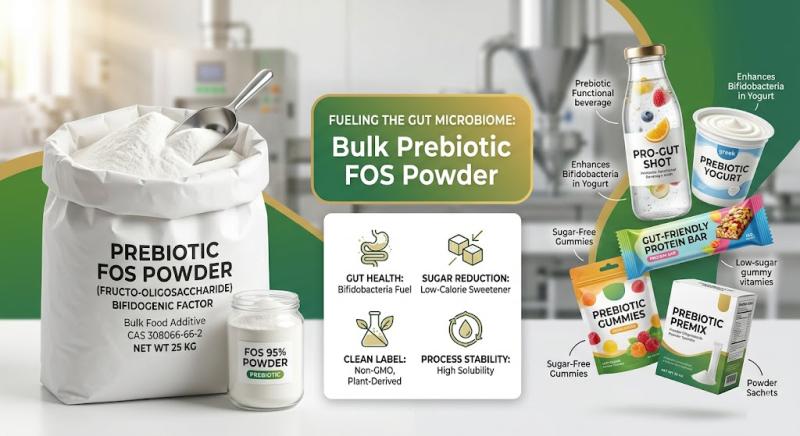
Fructo-oligosaccharides (FOS) is increasingly recognized as a functional prebiotic rather than a simple carbohydrate, with applications in selective nourishment of beneficial bacteria and microbiome-focused product design. This shift represents a move toward precision nutrition tailored to individual microbiome needs.
Clinical Validation Gap in Probiotic Products
Despite rapid commercial growth, the global probiotic market faces a critical challenge: limited number of clinically validated, mechanism-driven products. Research published in Microorganisms highlights that synthetic biology approaches, including engineered Escherichia coli Nissle 1917 as a model chassis, may help bridge this gap between commercial demand and scientific evidence.
Analysis
The confluence of market expansion and scientific validation suggests the microbiome industry is at an inflection point. The weight loss finding is particularly significant—it demonstrates that even pasteurized bacteria (non-living) can exert measurable health benefits, which simplifies manufacturing and safety considerations for future products. This shifts the narrative from "live probiotics only" to a broader spectrum of microbiome interventions.
The FOS market growth reflects consumer and industry interest in prebiotics—food for existing beneficial bacteria—as a complement or alternative to probiotic supplementation. Combined with growing market projections (US$63.1 billion for US market alone by 2033), this suggests personalized, evidence-based microbiome therapies will likely dominate the next decade.
However, the gap between clinical validation and commercial products remains concerning. Consumers should prioritize products backed by published mechanisms of action rather than general "gut health" claims.
Gut-Friendly Tip
Fermented foods may be as effective as supplements. Recent research indicates that lactic acid bacteria (LAB) found in traditionally fermented foods like sauerkraut, kimchi, and kombucha can serve as natural sources of beneficial microbes for the gut. Since these microorganisms experience similar environmental pressures in fermented foods as in the human gut, they may be better adapted for gastrointestinal survival than some isolated strains. Incorporating one serving of fermented food daily—alongside adequate prebiotic fiber (vegetables, whole grains)—may support a more resilient microbiome without supplement costs.
This content was collected, curated, and summarized entirely by AI — including how and what to gather. It may contain inaccuracies. Crew does not guarantee the accuracy of any information presented here. Always verify facts on your own before acting on them. Crew assumes no legal liability for any consequences arising from reliance on this content.
Powered by
