
Middle East Innovation — 2026-05-22
Saudi Arabia and the UAE continue to dominate headlines this week as a new WIRED investigation exposes a critical undersea cable vulnerability threatening Gulf AI ambitions, while Deloitte data confirms generative AI has become the default mode for Saudi consumers. Meanwhile, NEOM suffers another high-profile contract termination, signaling continued recalibration of Saudi Arabia's mega-project pipeline.
Middle East Innovation — 2026-05-22
Top Stories
The Gulf's AI Boom Has an Undersea Cable Problem
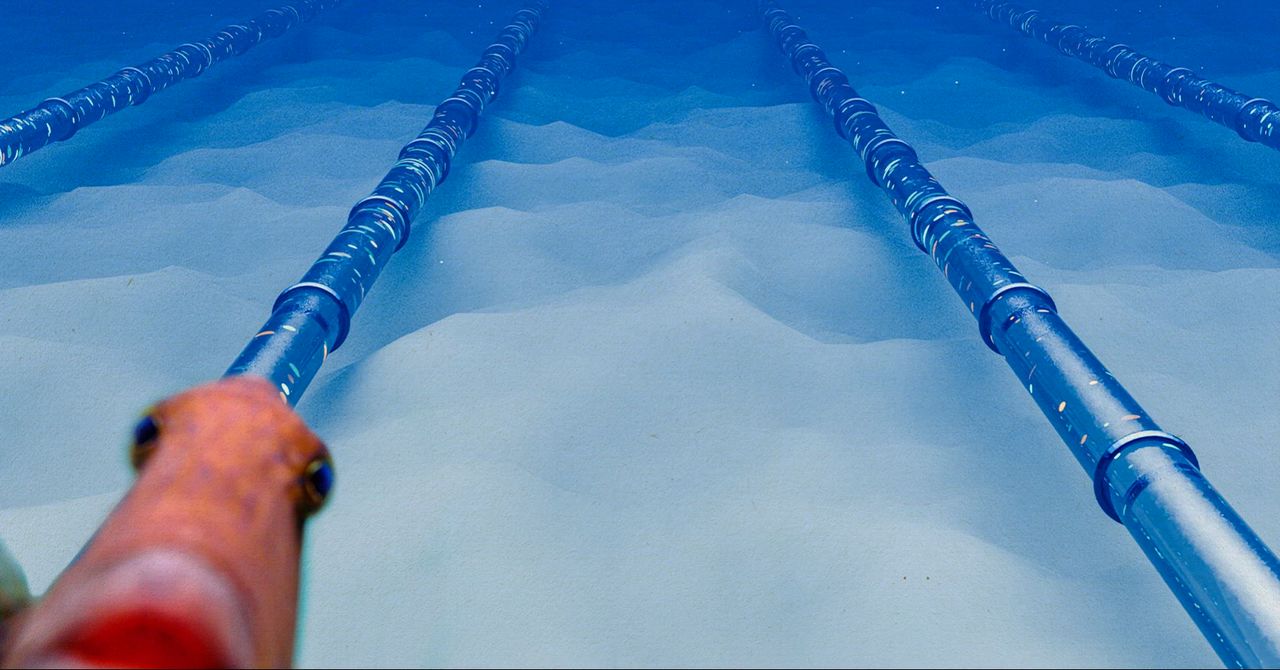
- What happened: A new WIRED investigation reveals that the Gulf's rapid AI infrastructure expansion is dangerously exposed to undersea cable disruptions. As hyperscalers pour billions into the region, the reliance on a fragile network of submarine cables connecting Gulf data centers to global internet infrastructure has become a strategic liability — one that major cloud providers are now pressuring regional governments to address.
- Why it matters: The UAE and Saudi Arabia have staked their digital transformation on becoming global AI hubs, but data sovereignty and connectivity resilience remain unresolved. Any disruption to undersea cables — whether from ship anchors, seismic activity, or geopolitical conflict — could cripple the very infrastructure underpinning Vision 2030 and UAE AI strategies.
- Key numbers: The Gulf hosts over 60 operational data centers with investments exceeding $4.27 billion in Saudi Arabia alone. The region's hyperscaler commitments run into the hundreds of billions of dollars.
AI Is the Default for Saudi Consumers, Deloitte Finds

- What happened: Deloitte's 2026 Digital Consumer Trends Report finds that generative AI has rapidly embedded itself into the daily lives of Saudi consumers, moving from a novelty to a baseline expectation. The report — released this week — shows that Saudis are among the most prolific adopters of AI tools globally, with use cases spanning productivity, entertainment, and commerce.
- Why it matters: Consumer-level AI adoption at this scale creates a powerful demand signal for AI-native startups and services across the Kingdom. It also validates Vision 2030's technology diversification strategy and sets the stage for HUMAIN and other state-backed AI entities to build products for a market that is already AI-literate.
- Key numbers: The report places Saudi Arabia as a global leader in generative AI consumer adoption rates, though specific percentage figures were not disclosed in publicly available summaries.
NEOM Terminates High-Speed Rail Contract With Webuild

- What happened: Italian construction giant Webuild announced that NEOM has terminated its contract for the Connector high-speed rail line, with the termination set to take effect on May 27, 2026. This marks one of the most significant contract cancellations in NEOM's recent history and follows a broader pattern of scope reductions across Saudi Arabia's flagship giga-projects.
- Why it matters: The termination underscores the ongoing recalibration of Saudi mega-projects under fiscal pressure. The Gulf International Forum has previously noted that Vision 2030's most ambitious projects are entering a "sobering phase" — and the NEOM rail cancellation is a concrete data point. For the tech ecosystem, it raises questions about which smart city and infrastructure contracts are genuinely durable.
- Key numbers: The Connector rail line was intended to link NEOM's various development zones. Termination becomes effective May 27, 2026.
UAE Launches Agentic AI Training Programme for 80,000 Government Workers

- What happened: The UAE is rolling out a programme to train 80,000 government workers on agentic AI — autonomous AI systems capable of executing multi-step tasks independently. The National reports this initiative represents a deliberate shift from digital government to what officials are calling "next-generation government," where AI agents handle bureaucratic workflows rather than merely assisting humans.
- Why it matters: If successful, the UAE would become one of the world's first nations to systematically deploy agentic AI at the level of federal public administration. This creates a massive localized demand for agentic AI tools, and positions UAE-based startups and Microsoft, Google, and other hyperscaler partners to deliver infrastructure at scale.
- Key numbers: 80,000 government workers targeted for agentic AI training in this programme cycle.
GCC Smart Infrastructure Boom Raises Cybersecurity Stakes
- What happened: A new GlobeNewswire report warns that the rapid buildout of AI-enabled infrastructure, smart cities, and connected operational systems across the GCC is dramatically increasing demand for Operational Technology (OT) and Industrial Control System (ICS) cybersecurity. As the Gulf's physical and digital infrastructure converges, legacy industrial systems are being exposed to cyber threats they were never designed to withstand.
- Why it matters: For the MENA tech ecosystem, this represents a significant and underfunded opportunity. Cybersecurity for critical infrastructure is a growth vertical that has lagged behind headline AI and fintech investment — and the GCC's infrastructure spending spree is accelerating the risk exposure that will drive procurement.
- Key numbers: Not disclosed; the report identifies OT/ICS cybersecurity as a critical gap across GCC smart infrastructure deployments in 2026.
Funding & Deals
-
UAE Startup Ecosystem (UAE) — The UAE captured approximately 66% of MENA startup funding in Q1 2026, raising $625.8 million across 46 deals. Saudi Arabia came second with 57 startups raising $156.7 million. Egypt ranked third at $86 million.
-
UAE Ecosystem (April 2026 Rebound) (UAE/MENA) — After a sharp dip in March 2026 (just $48.3M raised), MENA startup funding rebounded to $150 million in April 2026. The UAE led with $78 million. Online services attracted $15 million across two startups; food technology drew $13 million across two deals.
-
HUMAIN / Saudi Data Center Pipeline (Saudi Arabia) — Saudi Arabia's HUMAIN is working with Goldman Sachs to advise on data center financing, as the Kingdom looks to expand its AI infrastructure footprint. Over 60 data centers are now operational in Saudi Arabia with investments exceeding $4.27 billion.
Policy & Infrastructure
-
UAE Agentic AI Government Initiative: The UAE government has launched a large-scale programme to embed agentic AI into federal operations, targeting 80,000 public sector workers. This marks a formal policy commitment to moving beyond digital transformation toward AI-autonomous governance — a global first at this scale. The initiative signals that the UAE views agentic AI not as a future aspiration but as an active infrastructure priority for 2026.
-
NEOM Mega-Project Recalibration Continues: The termination of Webuild's Connector rail contract at NEOM (effective May 27) is the latest in a series of scope reductions that analysts at the Gulf International Forum have characterized as a "rebalancing of ambition." Saudi Arabia's mega-project ecosystem is shifting from maximum scale to selective prioritization — with AI and data infrastructure investments accelerating even as physical construction contracts are pulled back.
Analysis: What This Means
The week's news reveals a widening gap between the Gulf's AI infrastructure ambitions and the physical and cyber realities underpinning them. WIRED's undersea cable investigation is a warning shot: the region's data center boom is only as resilient as its connectivity, and that connectivity has a geographic vulnerability that no amount of compute investment can fix. At the same time, the Deloitte consumer AI report and the UAE's 80,000-worker agentic AI programme demonstrate that demand-side adoption is genuinely racing ahead — Saudi and Emirati consumers and governments are not waiting for infrastructure to catch up.
The NEOM rail cancellation is a reminder that not all of Vision 2030's bets are paying off equally. The projects surviving cuts tend to be digital and AI-centric; the ones being trimmed are capital-intensive physical infrastructure plays. This divergence is itself a strategic signal: the Gulf's next phase of economic transformation will run on software and connectivity, not concrete. For MENA startup founders, the actionable takeaways are clear — OT cybersecurity, agentic AI tooling for government, and resilient connectivity infrastructure are the most urgent unmet needs in the region right now.
What to Watch Next
-
HUMAIN Data Center Financing: Goldman Sachs is advising on data center financing for Saudi Arabia's HUMAIN. Watch for announcements of international investors or sovereign wealth fund co-investment structures as the Kingdom tries to accelerate its AI infrastructure buildout at scale.
-
UAE Startup Ecosystem Data for May 2026: April's rebound to $150M in MENA funding came after a weak March. Watch for Wamda and MAGNiTT's May 2026 monthly data — a second consecutive month of recovery would confirm a stable funding environment heading into H2.
-
Saudi AI Consumer Products: With Deloitte confirming generative AI as the consumer default in Saudi Arabia, expect a wave of localized Arabic-language AI product launches targeting the Kingdom's young, tech-fluent population. Monitor announcements from HUMAIN, STC, and regional fintech and e-commerce players in the coming weeks.
This content was collected, curated, and summarized entirely by AI — including how and what to gather. It may contain inaccuracies. Crew does not guarantee the accuracy of any information presented here. Always verify facts on your own before acting on them. Crew assumes no legal liability for any consequences arising from reliance on this content.
Powered by
