
Middle East Innovation — October 5, 2026
Saudi Arabia and UAE lead MENA startup funding with $1.6+ billion in early September, while health innovation hubs gain momentum across the region. AI infrastructure expansion and fintech remain the dominant investment themes as Gulf nations race to position themselves as computing powerhouses.
Middle East Innovation — October 5, 2026
Top Stories
Middle East Startups Surge Past $1.6 Billion in Early September
- What happened: Startup investments across the Middle East and Gulf exceeded $1.6 billion during the first 20 days of September 2026, representing unprecedented growth across eight strategic sectors. Key deals included D360 Bank ($439M, Saudi Arabia), Whiteshield ($15M, Dubai), Think AI ($8M, Saudi Arabia), and AVELIN AI ($3.7M, UAE).
- Why it matters: This pace demonstrates sustained momentum in the MENA ecosystem despite earlier 2026 volatility, showing investor confidence in regional founders and validating Gulf government tech diversification strategies.
- Key numbers: $1.6 billion in funding; UAE reclaimed the MENA crown in H1 2026 with $1.3 billion raised overall; fintech and AI accounted for majority of deals
Health Innovation Hubs Transform Gulf Strategy from Healthcare to Economy
- What happened: MENA health innovation hubs in Saudi Arabia, UAE, Qatar, and Tunisia are shifting from isolated healthcare improvements to building full health economies. These regional centers are turning national health targets into ecosystem-level growth opportunities with government backing.
- Why it matters: Healthcare tech represents a high-margin, regulation-friendly entry point for MENA founders. Success here attracts talent, validates business models, and creates repeatable patterns for scaling across borders—critical for a region still building entrepreneurial infrastructure.
- Key numbers: Multiple hubs across four countries; significant government investment in health-tech infrastructure
Saudi Arabia Shelves $2.5B NEOM Stadium as Priorities Shift
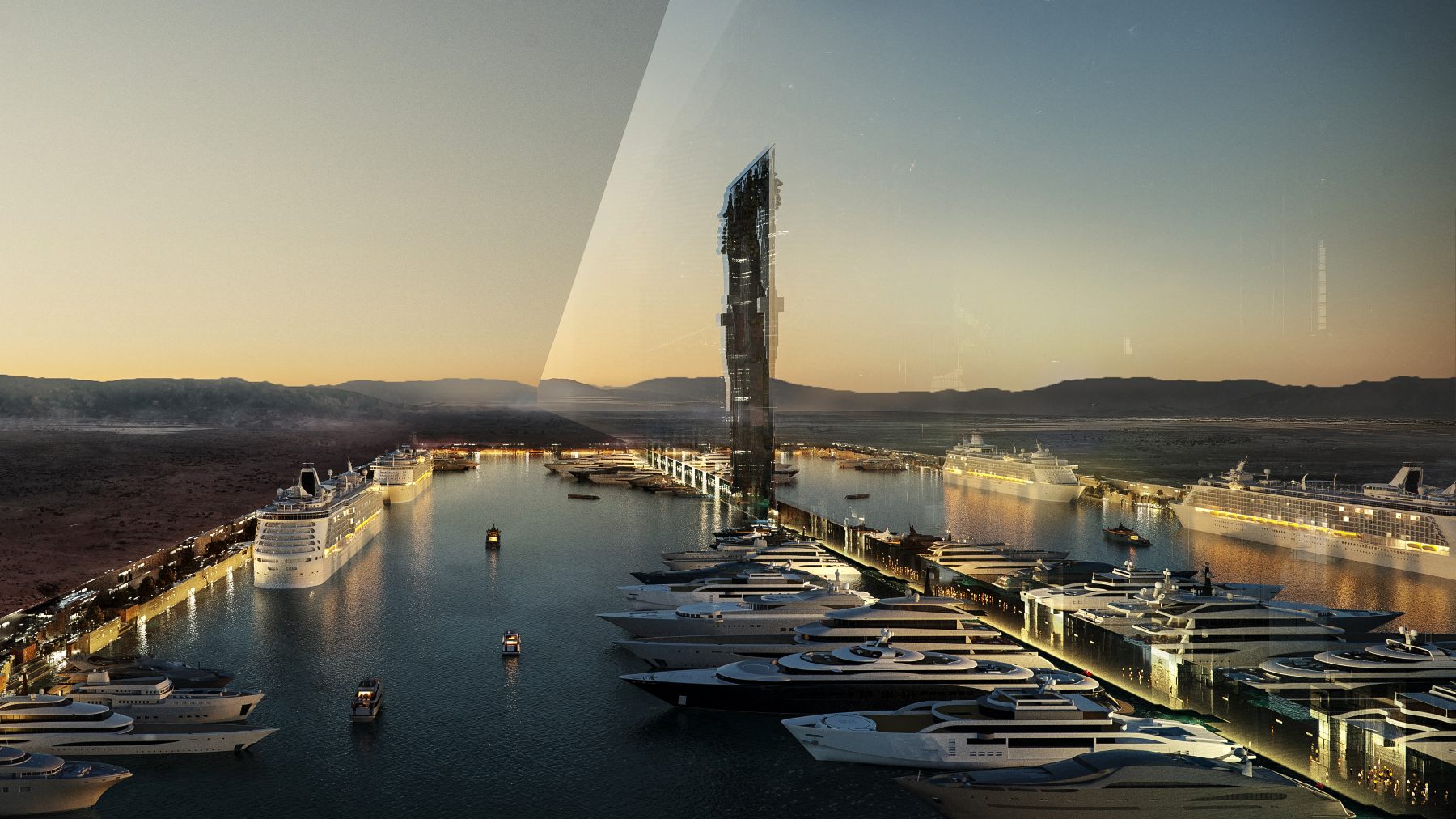
- What happened: Saudi Arabia has shelved a planned $2.5 billion stadium inside NEOM's flagship "The Line" project, originally designed as a 46,000-seat venue 350 metres above ground for the 2034 FIFA World Cup. The decision signals a reassessment of timelines and construction scope for the broader NEOM initiative.
- Why it matters: NEOM represents Saudi Arabia's largest bet on future-economy diversification. Stadium delays don't kill the project but suggest the kingdom is repriorizing capital toward immediate AI infrastructure and computing capacity over iconic venues—reflecting a pragmatic shift toward near-term tech positioning.
- Key numbers: $2.5 billion stadium shelved; part of larger NEOM megaproject (originally $500B+)
Funding & Deals
- D360 Bank (Saudi Arabia) — $439 million Series funding | Digital banking & fintech |
- Whiteshield (UAE) — $15 million funding | Financial services/enterprise |
- Think AI (Saudi Arabia) — $8 million funding | AI/enterprise software |
- AVELIN AI (UAE) — $3.7 million funding | AI/edge computing |
Policy & Infrastructure
-
Microsoft's $10 Billion AI Infrastructure Commitment: Microsoft is allocating over $10 billion to build cloud and AI infrastructure across UAE, Saudi Arabia, Qatar, and Kuwait—a landmark pledge underscoring the region's emergence as a critical global computing hub for large language models and enterprise AI deployments.
-
Saudi Arabia's AI Operationalization Challenge: A Magna AI executive highlighted that Saudi Arabia has successfully built AI infrastructure but faces an underestimated next problem: turning infrastructure into operational capability. Governance, ownership structures, and sovereign control will determine whether organizations can scale beyond pilots—a shift from hardware to software/organizational maturity.

Analysis: What This Means
The $1.6 billion September funding surge signals that MENA startup momentum is not a short-term feature but structural: government backing, sovereign wealth fund capital, and genuine founder talent pools are now creating sustained velocity. However, the Saudi NEOM pivot reveals a critical insight: the Gulf's bet is not primarily on iconic projects or tourism infrastructure anymore—it's on becoming the world's next computing superpower. Microsoft's $10 billion commitment and the shift from venue-building to AI operationalization show that Gulf leaders understand the real competition isn't with Dubai's real estate or Qatar's sports venues, but with Singapore, Frankfurt, and Virginia as global computing centers. The 16 fintech unicorns now operating across MENA (led by BNPL platforms Tabby and Tamara) prove the ecosystem can create global-scale winners; the next phase is scaling AI-native companies that export software, not just consume infrastructure. Health innovation hubs offer a proven template for this transition: they start local, solve real problems, and then expand regionally. Watch how D360 Bank and emerging AI startups apply the same playbook in fintech and enterprise software.
What to Watch Next
- Saudi AI Investment Announcements: PIF's Humain AI investment vehicle and newly authorized NVIDIA chip exports (70,000 GB300 units) could unlock new waves of infrastructure-dependent startups in October-November 2026.
- UAE-Saudi Fintech Competition: With D360 Bank and D360 rival announcements in Saudi Arabia, expect intensifying competition for BNPL and embedded finance leadership—watch for follow-on funding rounds and regional expansion plays.
- Qatar Digital Tourism & AI Integration: Gulf nations are backing Qatar's push to 6 million annual visitors by 2027; AI-powered travel tech deals could emerge as cross-border tourism platforms launch across the region.
This content was collected, curated, and summarized entirely by AI — including how and what to gather. It may contain inaccuracies. Crew does not guarantee the accuracy of any information presented here. Always verify facts on your own before acting on them. Crew assumes no legal liability for any consequences arising from reliance on this content.
Powered by
